
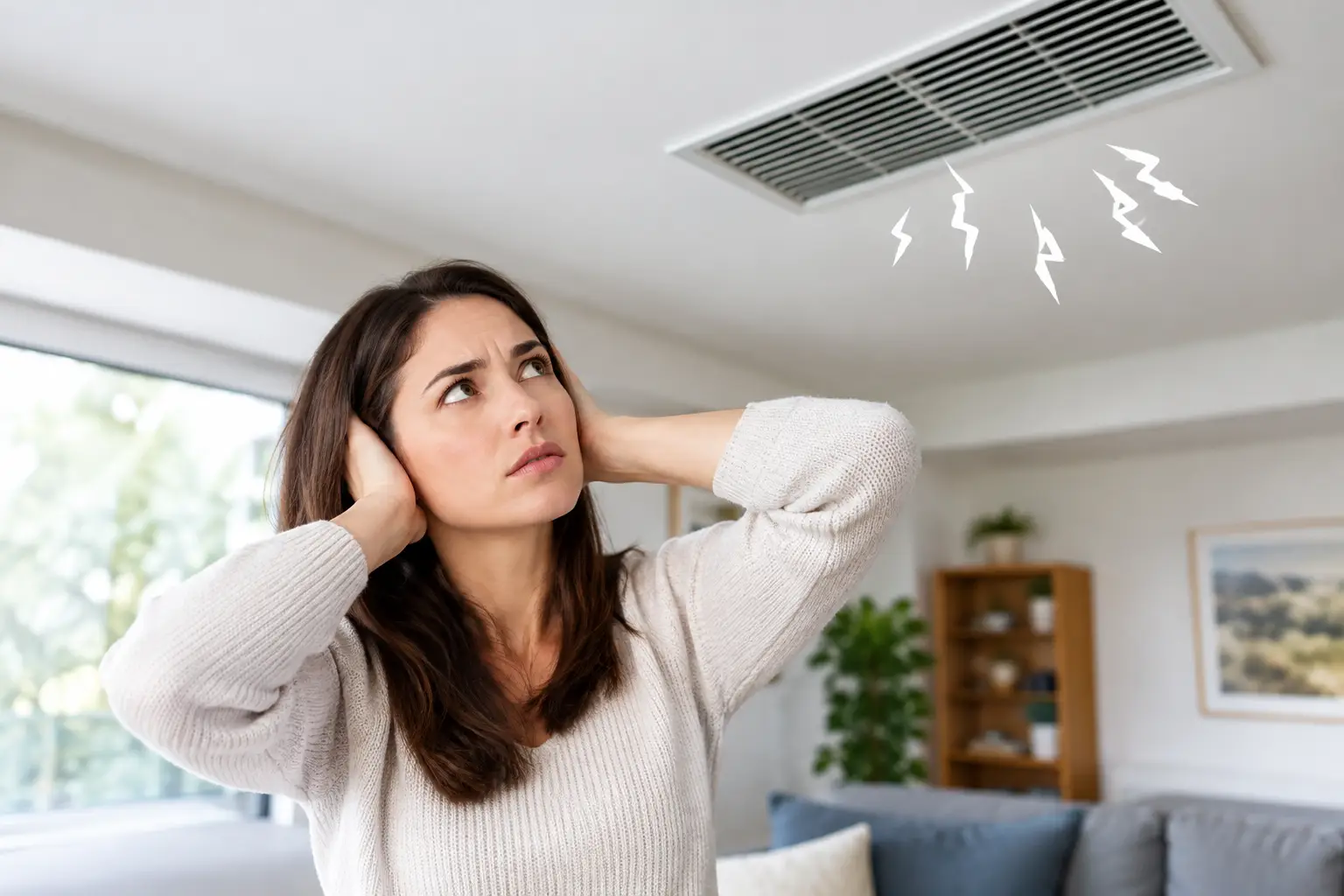
A quiet hum from the vents is part of normal winter comfort. A sudden rattle, bang or high-pitched squeal is not. If you are asking, “why is my ducted heating noisy?”, the sound can offer a useful clue about what is happening inside your system - and whether it needs a simple adjustment or professional attention.
Ducted heating systems have several moving parts: a fan, motor, return-air grille, ductwork, outlets and, depending on the system, gas burners or an outdoor unit. Noise can come from any one of them. The key is noticing when the sound occurs, where it is loudest and whether your heating performance has changed.
Why is my ducted heating noisy all of a sudden?
A change in noise is usually more meaningful than the normal operating sound you have always heard. Restricted airflow, loose components and ageing mechanical parts are common causes. In some cases, the issue is minor. In others, continuing to run the heater can place extra strain on the system or create a safety concern.
A dirty filter or restricted return-air grille
Your ducted system needs a clear path to draw air back through the return-air grille. When the filter is clogged with dust, pet hair or household debris, the fan has to work harder. This can create a louder rushing or whistling sound, particularly near the return-air grille.
Blocked or closed supply vents can create a similar problem. Air pressure builds in the ducts when too many outlets are shut, which may make the system whistle or roar. Check that furniture, curtains and rugs are not obstructing the return-air grille or floor and ceiling outlets.
Filters should be cleaned or replaced according to the manufacturer’s guidance. If the noise continues after the filter is cleaned and vents are opened, it is worth arranging a service rather than assuming the filter was the only cause.
Loose, damaged or undersized ductwork
Ductwork expands and contracts as warm air moves through it. A soft ticking or light popping sound shortly after the heater starts or stops can be normal, especially on colder Melbourne or Geelong mornings when roof spaces are cool.
Loud banging, persistent rattling or vibration is different. Flexible ducts can come loose, sag or rub against framing. Metal duct sections can also move if fixings have loosened. Damage from roof-space work, pests or age may allow air to escape, making rooms harder to heat while increasing noise.
Duct design also matters. If ducts are too small for the airflow produced by the system, air can move too quickly and become noticeably loud at particular outlets. This is not something a vent cover adjustment will reliably solve. A technician needs to assess the system layout, airflow and duct condition together.
A noisy fan, blower motor or belt
A squeal, screech, grinding sound or heavy vibration often points to a moving mechanical part. The blower fan circulates warm air throughout the home, so it can become noisy when its bearings wear, the fan wheel collects dirt or a component becomes unbalanced.
Older systems may use a belt-driven fan. A worn or misaligned belt can squeal when the heater starts, while loose mounting hardware can cause a humming cabinet or vibration through nearby walls and ceilings. These faults rarely improve on their own. Prompt repairs can help avoid further damage to the motor.
Rattling vents, grilles and access panels
Sometimes the heater itself is operating correctly, but a loose outlet grille, return-air cover or service panel is vibrating in the airflow. This often produces a light rattle that changes when the fan speed changes.
You can visually check for an obviously loose grille or panel while the system is switched off. Avoid removing covers or reaching into the unit. If tightening a visible grille does not resolve the noise, the source may be deeper in the ductwork or fan assembly.
Zone dampers making clicking or thudding sounds
A zoned ducted heating system uses dampers to direct air to selected areas of the home. A brief click when changing zones can be normal. Repeated clicking, a loud thud, or a zone that no longer heats properly may indicate a damper, actuator or control issue.
Because zoning affects airflow across the whole system, it is best not to keep adjusting controls in an effort to override the fault. A professional can check whether the dampers are opening and closing correctly and ensure the system is not being restricted by its zone settings.
Gas heating ignition or burner noises
If you have a gas ducted heater, pay close attention to noises that occur at start-up. A small click as the system ignites can be expected. A delayed whoosh, bang, repeated ignition attempts or unusual rumbling is not a sound to ignore.
These sounds can relate to ignition, burner or combustion issues and should be assessed by a suitably qualified technician. Do not attempt to investigate internal gas components yourself.
If you smell gas, notice soot or discolouration near the unit, experience headaches or dizziness, or your carbon monoxide alarm sounds, turn the system off if it is safe to do so, leave the building and seek urgent professional assistance. Never use a noisy gas heater as normal while waiting to see if the problem disappears.
Refrigerated ducted heating can involve the outdoor unit
Not all ducted heating is gas-fired. Reverse-cycle refrigerated systems use a heat pump, with an indoor fan coil and an outdoor unit. During heating, the outdoor unit can make a steady fan or compressor sound. It may also enter a defrost cycle in cold, damp weather, when you may hear a temporary change in operation.
However, metallic scraping, severe shaking, loud buzzing or repeated stopping and starting needs attention. The cause could be a fan, compressor, mounting, electrical component or refrigerant-related issue. Switch the system off and book a repair if the noise is pronounced or performance has dropped.
Which ducted heating noises need urgent attention?
Not every sound means a breakdown, but a few should move servicing higher on the priority list. Arrange professional help promptly if you hear grinding, screeching, banging from a gas unit, repeated ignition clicking, electrical buzzing, or strong vibration that can be felt through the ceiling or walls.
You should also act quickly if noise comes with weak airflow, burning smells, a system that cuts out, unusually high energy use or uneven heating between rooms. These symptoms suggest the system is working harder than it should, which can affect both comfort and running costs.
For gas ducted heating, any suspected gas smell, carbon monoxide alarm, soot or signs of illness are safety issues rather than routine maintenance matters. Do not continue using the appliance.
What you can check before booking a service
A few safe checks can help narrow down the problem. First, note when the noise starts: immediately at switch-on, only while air is moving, when a particular zone opens, or after the system shuts down. Next, identify the loudest location - the return-air grille, a single outlet, the indoor unit or the outdoor unit.
Then inspect the accessible filter and make sure supply outlets and the return-air grille are not blocked. If you have recently closed multiple vents or changed your zoning settings, return them to their usual position and see whether airflow improves. Do not open the heater cabinet, disconnect wiring, climb through the roof space or touch gas components.
A short video of the sound can also help a technician understand the issue before arriving. It is particularly useful for intermittent rattles, squeals and start-up noises that may not occur on demand.
How a professional service resolves noisy ducted heating
A proper diagnosis is more than tightening a noisy grille. A qualified technician can inspect the filter, fan, motor, ductwork, outlets, electrical connections and zoning controls, then test how the system performs under normal operation. For gas systems, servicing also includes safety-focused checks of ignition, burners and combustion-related components.
The right repair depends on the cause. It may involve cleaning the blower assembly, replacing a worn motor part, securing ductwork, repairing a damper or correcting an airflow restriction. Where an older system is becoming unreliable, your technician can explain whether repair remains the sensible option or whether a tailored replacement would deliver better comfort and energy efficiency.
Regular maintenance is the simplest way to catch many of these issues before a small vibration becomes a failed component on the coldest week of winter.
Keep the comfort, not the noise
Your ducted heating should make your home feel warm without demanding your attention from the ceiling or hallway. If a new or worsening sound is disrupting comfort, book a professional assessment rather than letting the system work under strain. Air Con Solutions can help homeowners and small businesses identify the cause, restore reliable operation and keep their heating ready for the season ahead.