
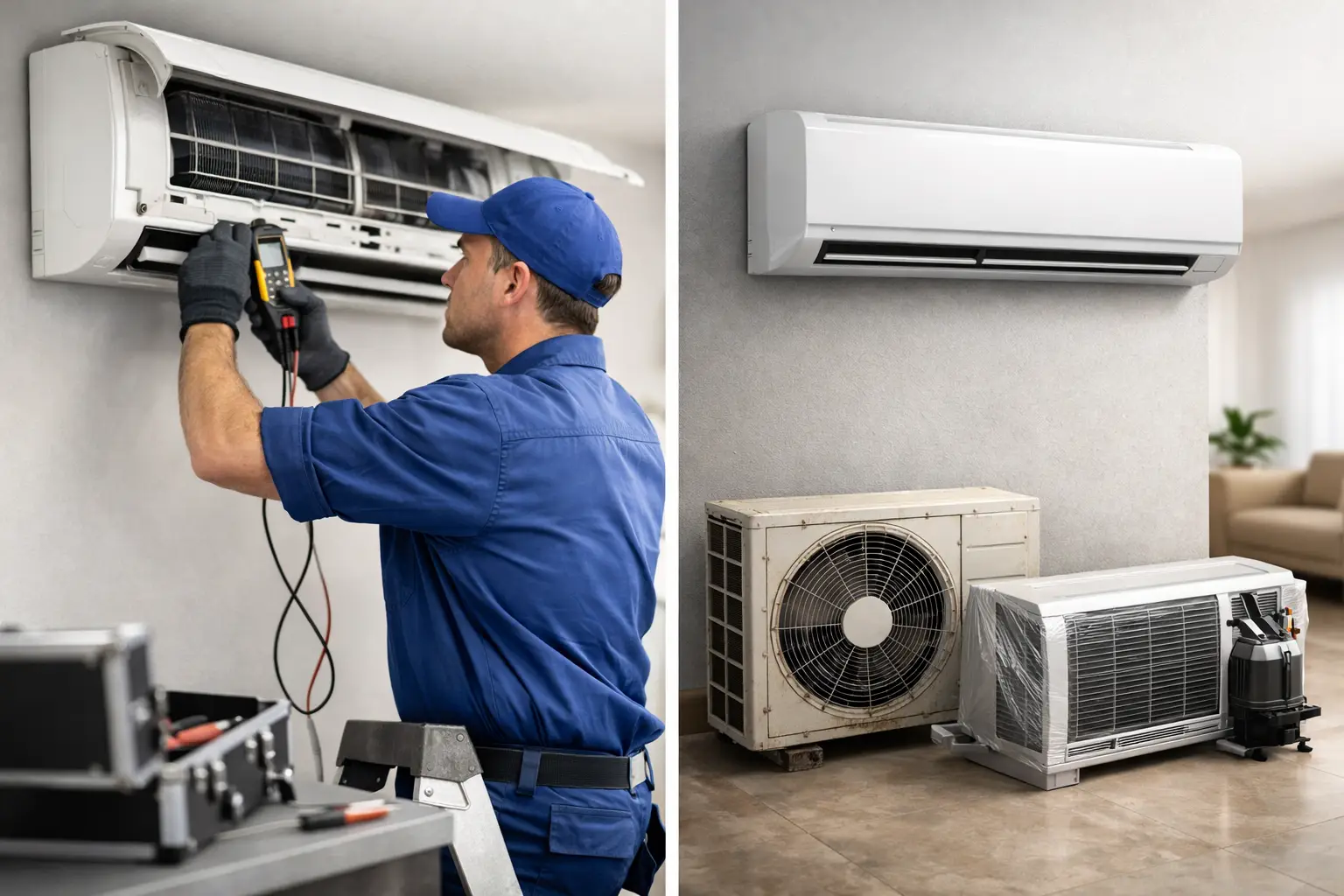
A Melbourne heatwave is not the time to discover your air conditioner has stopped cooling properly. When a system starts making unusual noises, leaking, cycling on and off or pushing up power bills, the question quickly becomes: aircon repair or replace? The right answer depends on more than the immediate fault. It comes down to the system’s age, condition, efficiency and how well it suits your home or business now.
A professional assessment gives you a clear picture before you spend money on a short-term fix or commit to a new installation. For many households across Melbourne and Geelong, a timely repair restores reliable comfort. In other cases, replacement is the smarter long-term investment.
Start with the fault, not the frustration
Some air conditioning issues look serious but can be resolved with targeted repairs or servicing. A blocked filter, dirty coil, worn capacitor, drainage issue or sensor fault can affect performance without meaning the entire unit has reached the end of its life.
If your system has previously been reliable, is reasonably modern and the repair is straightforward, fixing it often makes good financial sense. This is particularly true when the issue is caught early. Regular servicing can prevent small faults from putting unnecessary strain on compressors, fans and other major components.
However, a repair should improve reliability, not simply get the system through another season. If the same problem keeps returning, or one component failure follows another, the overall condition of the unit needs closer consideration.
When aircon repair is usually the practical choice
Repair is often the preferred option when the system is under 10 years old, has a good service history and has been correctly sized for the property. A qualified technician can diagnose whether poor performance is caused by a repairable mechanical issue, airflow restriction, electrical fault or maintenance need.
A repair can also be worthwhile if you are planning a renovation or move in the near future. Investing in a major new system may not be the best immediate decision if the property layout, room use or heating and cooling requirements are likely to change soon.
That said, avoid judging a repair only by its upfront price. A lower-cost repair is good value when it restores efficient operation and gives the system a realistic future. It is less attractive when the unit remains noisy, struggles on very hot or cold days, or needs another call-out within months.
Signs your system may be repairable
There is no single rule, but these signs commonly point towards repair or servicing rather than replacement:
- The unit is still within its expected working life and has been maintained regularly.
- Cooling or heating has reduced gradually, rather than stopping completely after repeated failures.
- The fault is isolated, such as a fan, electrical component, controller or drainage issue.
- Replacement parts are available and the system uses a current, serviceable refrigerant.
- Your home remains comfortable once the system is operating as intended.
An inspection is especially useful where the issue may be related to controls, zoning or airflow rather than the air conditioner itself. Ducted systems, for example, can lose performance because of duct leaks, blocked returns or zone settings that need adjustment.
When replacement makes better long-term sense
Air conditioners do not usually fail all at once. Many become less effective over several seasons. You may notice rooms that never reach the set temperature, longer run times, uneven comfort between zones or electricity bills that rise even though your usage has not changed much.
If your unit is 12 to 15 years old or older, replacement deserves serious consideration. Older systems can still run, but they are often less energy efficient and may rely on parts or refrigerants that are harder to source. A major failure, particularly involving the compressor, can make further investment difficult to justify.
Replacement can also be the better choice where your household’s needs have changed. An air conditioner selected for a smaller family, an older floorplan or occasional summer use may no longer suit a growing household, a home office or recently renovated rooms. The same applies to small commercial spaces where comfort affects staff, customers and daily operations.
A new reverse-cycle system can provide both heating and cooling with more efficient temperature control. Modern options can also support zoning and smart controls, helping you manage comfort room by room rather than conditioning areas that are not in use.
Clear signs it may be time to replace
Consider replacement if your system has frequent breakdowns, needs an expensive major component, or cannot maintain a comfortable temperature during peak weather. Excessive noise, recurring water leaks and weak airflow can also indicate broader wear, especially when repairs have already been attempted.
Another important consideration is energy use. Older equipment may consume significantly more power than a correctly selected modern system. While a new installation has a higher initial cost, lower running costs and improved reliability can make it a stronger value decision over time.
Compare total ownership costs, not just today’s invoice
The decision is rarely as simple as cheap repair versus expensive replacement. A better comparison looks at what each option is likely to cost and deliver over the next several years.
Ask how much the repair costs, what warranty applies to the work and whether related components are showing signs of wear. Then consider the likely running costs of your current system, its expected remaining life and the possibility of another repair next season. If a unit is near the end of its life, repeated repairs can add up quickly without improving comfort or efficiency.
For replacement, look beyond the purchase price. Correct sizing, quality installation, ductwork condition and system design all influence performance. An oversized system can cycle too frequently, while an undersized system may run continuously and still leave parts of the home uncomfortable. Neither outcome delivers the efficiency homeowners expect.
A tailored recommendation should account for your floorplan, insulation, ceiling height, sun exposure, window placement and the number of people using each space. These details matter in Victoria, where a system may need to handle sharp winter mornings as well as hot summer afternoons.
Efficiency and comfort should guide the decision
Replacing an old system is an opportunity to improve more than the unit itself. A well-designed solution can address hot bedrooms, cold living areas, noisy operation and inconsistent temperatures that have become normal in the home.
For ducted air conditioning, zoning can make a meaningful difference. It allows you to condition the rooms you are using instead of the entire house, supporting better comfort and more controlled energy use. Smart temperature management can add further convenience by giving you clearer control over schedules and settings.
If you are renovating, building an extension or changing the way you use your home, this is also the right time to review whether the existing system can be integrated effectively. In some properties, retaining suitable equipment and adapting the design is possible. In others, a new layout and system selection will provide a cleaner, more reliable result.
Why a professional assessment matters
Online advice can help you recognise warning signs, but it cannot diagnose the condition of your equipment. Refrigerant, electrical and airflow issues can present in similar ways, yet each requires a different response. Guesswork can lead to unnecessary spending or a repair that does not resolve the underlying problem.
A professional technician can test system performance, inspect key components, check airflow and identify whether the fault is isolated or part of a wider decline. You should receive straightforward advice on the repair required, the expected outlook for the system and whether replacement is worth considering.
At Air Con Solutions, this approach is built around practical, tailored recommendations. Whether the answer is a prompt repair, scheduled service or a new energy-efficient system, the aim is to help you make a confident decision based on your property and comfort needs.
Protect whichever option you choose
If you repair your air conditioner, book regular servicing to keep filters, coils, drains and moving parts in good condition. Address reduced performance early rather than waiting for a complete breakdown in extreme weather.
If you replace it, make sure the new system is selected and installed for the way your space is actually used. The right capacity, quality workmanship and suitable controls will have more impact on daily comfort than choosing equipment on price alone.
When the choice is aircon repair or replace, the best outcome is not simply the lowest immediate cost. It is reliable heating and cooling, sensible energy use and a system that keeps your home or workplace comfortable when you need it most.