
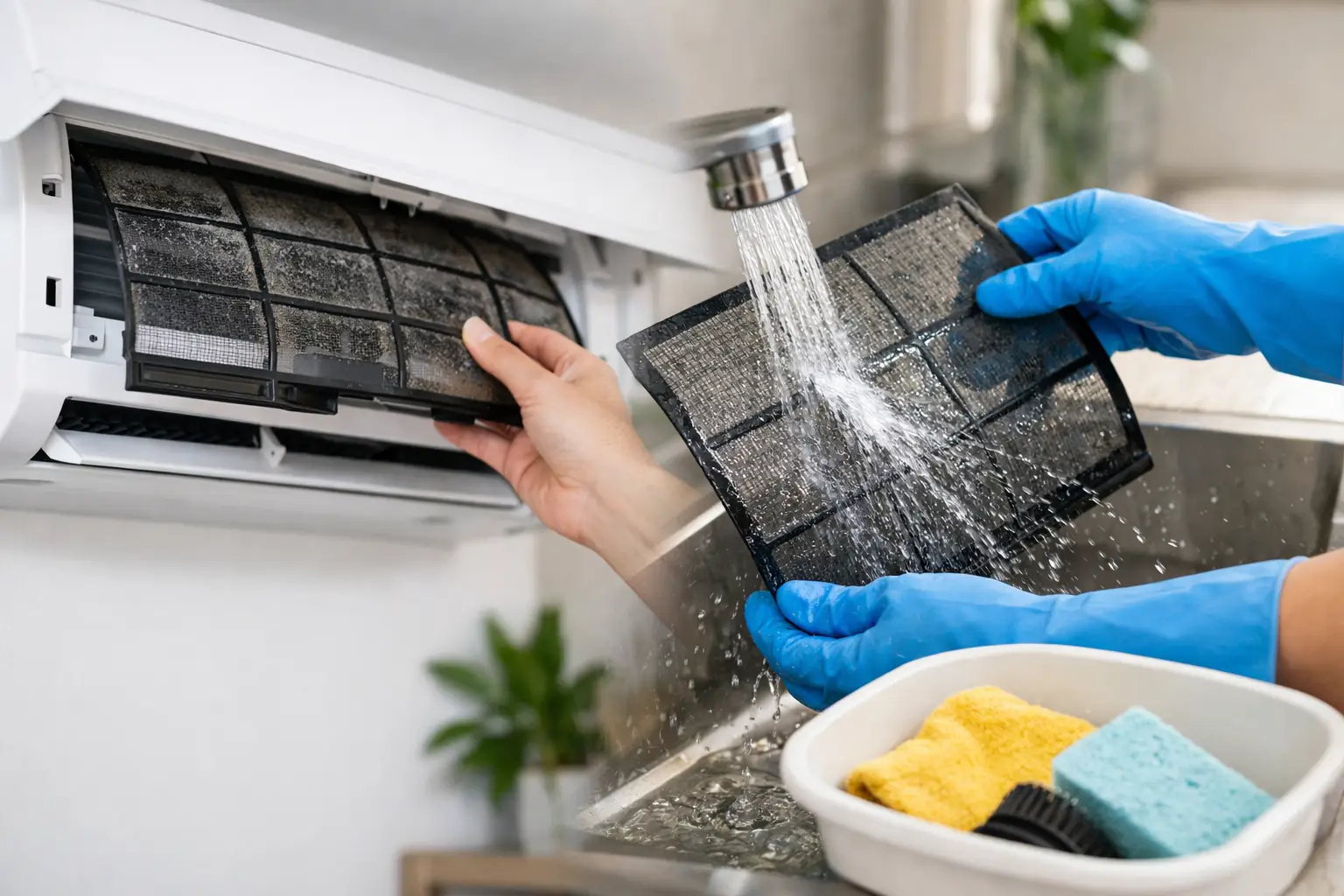
A filter that looks only slightly dusty can make an air conditioner work noticeably harder. If rooms are taking longer to cool, airflow feels weak or the system has developed a stale smell, learning how to clean aircon filters is one of the simplest maintenance tasks you can do between professional services.
Clean filters help your system move air freely, maintain more consistent temperatures and reduce the dust circulating through your home or workplace. The job is usually straightforward, but the right method depends on whether your unit has washable mesh filters, disposable filters or a ducted return-air filter.
Why cleaning aircon filters makes a difference
Your air conditioner draws room air through its filters before heating or cooling it. Over time, those filters collect dust, lint, pet hair, pollen and other airborne particles. As the build-up increases, less air can pass through the system.
Restricted airflow can leave bedrooms warmer than expected, create hot and cold spots, increase running time and place extra strain on internal components. A dirty filter will not necessarily cause a breakdown on its own, but leaving it unattended can contribute to poor performance and higher energy use.
For many Victorian homes, cleaning filters every one to three months is a sensible starting point. You may need to do it more often if you have pets, live near a busy road, use the system daily, are renovating or have household members affected by allergies. During periods of heavy heating or cooling use, a quick monthly check is worthwhile.
How to clean aircon filters in a split system
Most wall-mounted split systems have reusable mesh filters behind the front cover. Before starting, turn the unit off using the remote, then isolate power at the wall if it is safe and accessible. This prevents the fan from starting while you are handling the unit.
Open the front panel gently. It usually lifts from the lower edge and stays raised on hinges. You should see one or two large, thin mesh filters. Slide or lift them out carefully, following the direction indicated on the unit. Do not force clips or bend the filter frame.
Take the filters outside and remove loose dust with a vacuum cleaner fitted with a soft brush attachment. Vacuuming first prevents wet dust from turning into a stubborn film. If the filters are only lightly dusty, this may be all they need.
For a more thorough clean, rinse the filters under lukewarm running water. Use a small amount of mild detergent only if there is visible grime or grease. Avoid hot water, harsh household cleaners, bleach and abrasive brushes, as these can damage the mesh or frame.
Shake off excess water and allow the filters to dry completely in a shaded, well-ventilated area. Direct sun or a heater can warp some plastic frames. Never reinstall damp filters, as trapped moisture can encourage mould growth and lead to unpleasant odours.
Once dry, slide the filters back into place, close the cover securely and restore power. Run the system for a few minutes and check that airflow feels normal.
Do not wash every filter
Some systems include smaller deodorising, carbon, enzyme or air-purifying inserts in addition to the main mesh filters. These are not always washable. Depending on the model, they may need gentle vacuuming, replacement or a specific cleaning method set out in the manufacturer’s instructions.
If an insert is brittle, discoloured, torn or no longer sits correctly in its frame, replacement is usually the better option. Washing a filter that is designed to be replaced can reduce its effectiveness and create a mess inside the unit.
Cleaning filters in ducted air conditioning
Ducted systems commonly use a return-air grille filter, often located in a hallway ceiling, wall grille or central return-air box. This filter protects the indoor unit from dust and is particularly important because a ducted system moves air through multiple rooms.
Switch the system off before opening the return-air grille. Some grilles hinge down, while others have clips or screws. Support the grille as you release it so it does not drop suddenly. Remove the filter carefully and note which way it faces before taking it out.
Reusable ducted filters can generally be vacuumed and washed in the same way as split-system mesh filters. Because they are larger, it can help to rinse them gently with a shower-style hose attachment or outside with low water pressure. High-pressure hoses can stretch or tear the filter material.
Allow the filter to dry fully before fitting it back into the grille. Make sure it is seated evenly with no gaps around the edges. A poorly fitted filter can let dust bypass the filter and collect inside the system.
Some ducted units use disposable pleated filters rather than washable mesh. These should not be rinsed. Check their condition and replace them with the correct size and type when they appear heavily soiled or according to the manufacturer’s recommended interval.
A simple filter-cleaning routine
A regular routine makes this task quick rather than inconvenient. For most households, the following approach works well:
- Check filters monthly during summer and winter when the system is used most.
- Vacuum reusable filters whenever visible dust has collected.
- Wash reusable mesh filters every one to three months as needed.
- Replace disposable or specialist filters according to the unit instructions.
- Book professional servicing if airflow remains poor after the filters are clean.
Set a reminder on your mobile at the start of each season. It is an easy habit that supports comfort when you need heating or cooling most.
What not to do when cleaning aircon filters
It is tempting to spray the inside of the unit while the cover is open, especially if there is dust around the vents. Avoid spraying water, cleaning products or fragrance products into the indoor unit. Electrical parts, sensors, coils and drainage components sit behind the filters and should only be cleaned using appropriate methods.
Also avoid operating the system without filters installed. Even for a short period, this allows dust to enter areas that are much harder to access. The filters are there to protect both indoor air quality and the air conditioner itself.
If you notice black marks, a persistent musty odour, water leaking from the indoor unit, ice forming on pipes or an error code on the controller, filter cleaning may not be the whole answer. These signs can point to drainage, refrigerant, electrical or internal cleanliness issues that need professional attention.
When a professional aircon service is the better choice
Cleaning filters is valuable home maintenance, but it is not a replacement for a complete air conditioning service. A technician can inspect the indoor and outdoor units, test operating performance, check electrical connections, clean components that are not safely accessible and identify wear before it becomes a larger repair.
This matters particularly for ducted systems, older units and air conditioners that have been noisy, inefficient or unreliable. If your energy bills have risen without a clear reason, or the system is no longer keeping up on very hot Melbourne or Geelong days, arranging a professional assessment can provide a clearer answer than repeated filter cleaning alone.
At Air Con Solutions, we see clean filters as the first step in protecting day-to-day comfort, not the final step in maintaining your system. A little regular care keeps airflow moving, while timely servicing helps ensure the whole system continues to perform as it should.
The best time to check your filters is before the next heatwave or cold snap arrives. A few minutes of practical maintenance now can help your home feel more comfortable when the weather puts your air conditioner to work.