
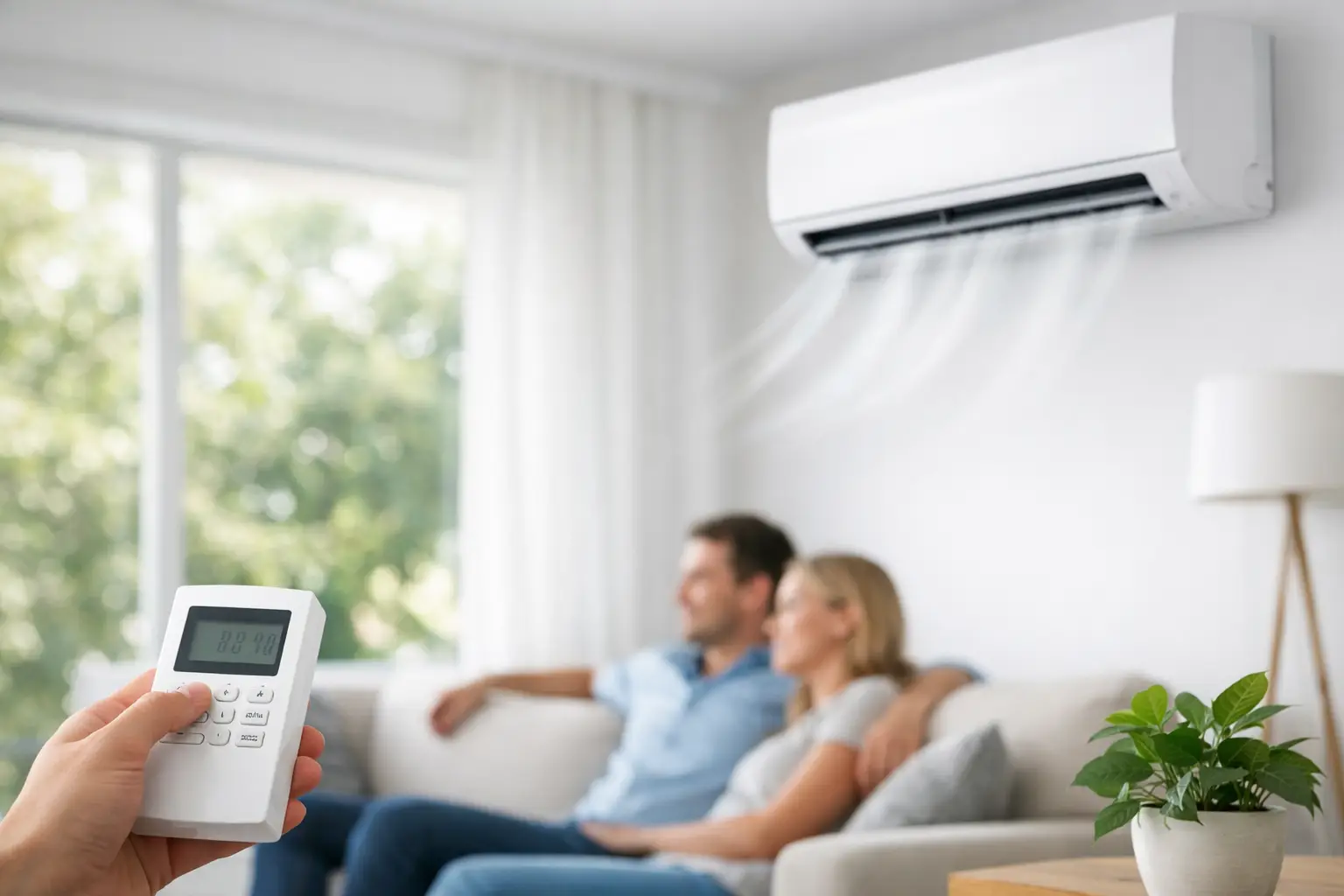
A hot Melbourne afternoon can quickly expose the weak points in a cooling system. Rooms furthest from the unit stay warm, the system runs constantly, and the power bill arrives with an unpleasant surprise. Energy efficient air conditioning addresses all three issues, but it is not simply a matter of buying the unit with the highest star rating. The right result comes from matching the system, installation and controls to the way your property is used.
For homes and light commercial spaces across Melbourne and Geelong, efficient climate control should feel straightforward: consistent comfort when you need it, sensible running costs and a system you can rely on through changing Victorian weather.
What makes air conditioning energy efficient?
An efficient system produces the heating or cooling your space needs without using more electricity than necessary. Modern reverse-cycle air conditioners are particularly effective because they move heat rather than generate it in the same way as an electric resistance heater. In winter, they draw warmth from outside air and bring it indoors. In summer, they remove indoor heat and transfer it outside.
That efficiency is measured through performance ratings, including cooling and heating efficiency figures and the star rating shown on eligible systems. These labels are useful for comparing similar units, but they are only one part of the decision. A highly rated unit that is too large, poorly located or connected to unsuitable ductwork may still cost more to run than it should.
The best system is one that suits your floor plan, insulation, windows, ceiling height, household size and daily routine. A compact, well-insulated townhouse has very different needs from a large family home with west-facing windows or a shop with frequent door traffic.
Choose the right system before focusing on features
System type has a direct impact on comfort, appearance and energy use. Split systems are often an efficient choice for single rooms or open-plan living areas. They allow you to cool or heat the spaces you use most without conditioning the entire property.
Ducted air conditioning can be an excellent option for whole-home comfort, particularly when it includes properly designed zoning. Rather than sending conditioned air to every room at once, zones let you run only the areas in use. This can make a noticeable difference for households where bedrooms are mainly used at night and living areas are busiest in the morning and evening.
For properties with limited roof space, difficult layouts or renovation constraints, the design stage matters even more. Indoor and outdoor unit locations, duct routes, return-air placement and grille positioning all affect airflow and performance. A tailored design avoids the common problem of installing a capable system that struggles to deliver even temperatures.
Why bigger is not always better
Oversizing is one of the most common mistakes in air conditioning selection. A system that is too powerful can cool a room very quickly, then switch on and off repeatedly. This short cycling can waste energy, create uneven temperatures and place unnecessary wear on components.
An undersized system has the opposite problem. It may run for long periods without reaching the target temperature during a heatwave or cold snap. The result is higher consumption and less comfort.
Professional load calculations consider more than room dimensions. They account for sun exposure, glazing, insulation, occupancy, appliances and the character of the building. This is why a quick online capacity estimate can be a starting point, but should not be the final basis for a major installation.
Smart controls make efficient systems easier to use
A well-designed system can still waste energy if it is operated without a plan. Smart controls make it easier to maintain comfort without leaving the air conditioning running longer than needed.
Programmable schedules can warm the home before the family wakes up or cool key spaces shortly before you arrive home. Temperature sensors can provide more accurate control in the rooms that matter, rather than relying on a single thermostat in an unrepresentative location. With compatible smart zoning, you can direct heating or cooling to occupied areas and reduce output elsewhere.
The goal is not to constantly adjust the system from a mobile. It is to set practical routines that suit your day. For example, a moderate temperature setpoint and a scheduled start are generally more efficient than demanding rapid cooling after the house has been closed up all day.
In summer, setting the thermostat excessively low will not cool a room faster. It simply asks the system to run longer once the room reaches a comfortable temperature. A setting around 24 to 26 degrees is often a sensible starting point, adjusted for personal comfort, humidity and the conditions outside. In winter, a moderate setting around 18 to 20 degrees can help balance warmth and energy use.
The property itself affects running costs
Air conditioning is only one part of your comfort system. Heat enters and leaves a building through windows, gaps, walls, ceilings and doors. If the home cannot hold conditioned air, even an efficient unit has to work harder.
Simple improvements can support better performance. Closing blinds or external shading before afternoon sun reaches the glass can reduce heat gain. Sealing noticeable draughts, using ceiling insulation and keeping doors to unused rooms closed all help the system maintain a stable indoor temperature.
Airflow also matters. Furniture should not block wall-mounted indoor units, return-air grilles or vents. Outdoor units need clear space around them so heat can be released effectively. A unit crowded by plants, stored items or enclosed screens may become noisier, less efficient and more prone to faults.
Servicing protects efficiency and reliability
When an air conditioner has dirty filters, restricted coils, worn components or a developing refrigerant issue, it may still run but consume more energy to deliver less comfort. Regular servicing identifies these problems before they become a breakdown on the hottest or coldest day of the year.
Homeowners can usually clean or wash reusable filters as recommended by the manufacturer, particularly during periods of frequent use. Beyond that, professional servicing can check airflow, electrical connections, drainage, system operation and overall condition. Ducted systems may also need attention to zones, grilles, ductwork and return-air pathways.
Warning signs worth acting on include rooms that no longer reach temperature, weak airflow, unusual noises, water leaks, unpleasant odours or a sudden rise in energy bills. Prompt diagnosis is often more cost-effective than continuing to run a system that is struggling.
Practical habits for lower energy use
Efficiency improves through a series of small, consistent choices. Use the fan setting when conditions are mild, because air movement can make a room feel more comfortable without heavy cooling. In summer, ceiling fans can work alongside air conditioning to circulate cool air, allowing a slightly higher thermostat setting.
Avoid leaving doors and windows open while heating or cooling is operating, unless the system has been designed for a naturally ventilated commercial setting. On cooler evenings, switch off the air conditioning and use fresh air where practical. During heatwaves, closing up the home early can prevent indoor temperatures from climbing as quickly.
For ducted systems, use zones purposefully. There is little benefit in conditioning spare rooms all day, but shutting too many outlets can also affect airflow on some designs. The right approach depends on the system, which is why installation advice and service recommendations should be followed rather than relying on a one-size-fits-all rule.
When an upgrade is worth considering
Older systems can remain serviceable, but they may lack the efficiency, zoning and control options available in newer equipment. If repairs are becoming frequent, comfort is inconsistent or running costs have risen despite regular maintenance, it may be time to assess replacement options.
An upgrade is most worthwhile when it solves a known problem: an undersized unit, poor room coverage, an outdated system without zoning or a setup that no longer suits a renovation or changed household routine. Air Con Solutions can assess the property as a whole and recommend a tailored pathway, whether that means a repair, service, smart control upgrade or new installation.
The most effective energy saving is rarely a single feature on a brochure. It is a properly sized, professionally installed system that is easy to control, maintained well and matched to the spaces you actually use. Start with the comfort problem you want to solve, and the right air conditioning solution will be far easier to choose.