
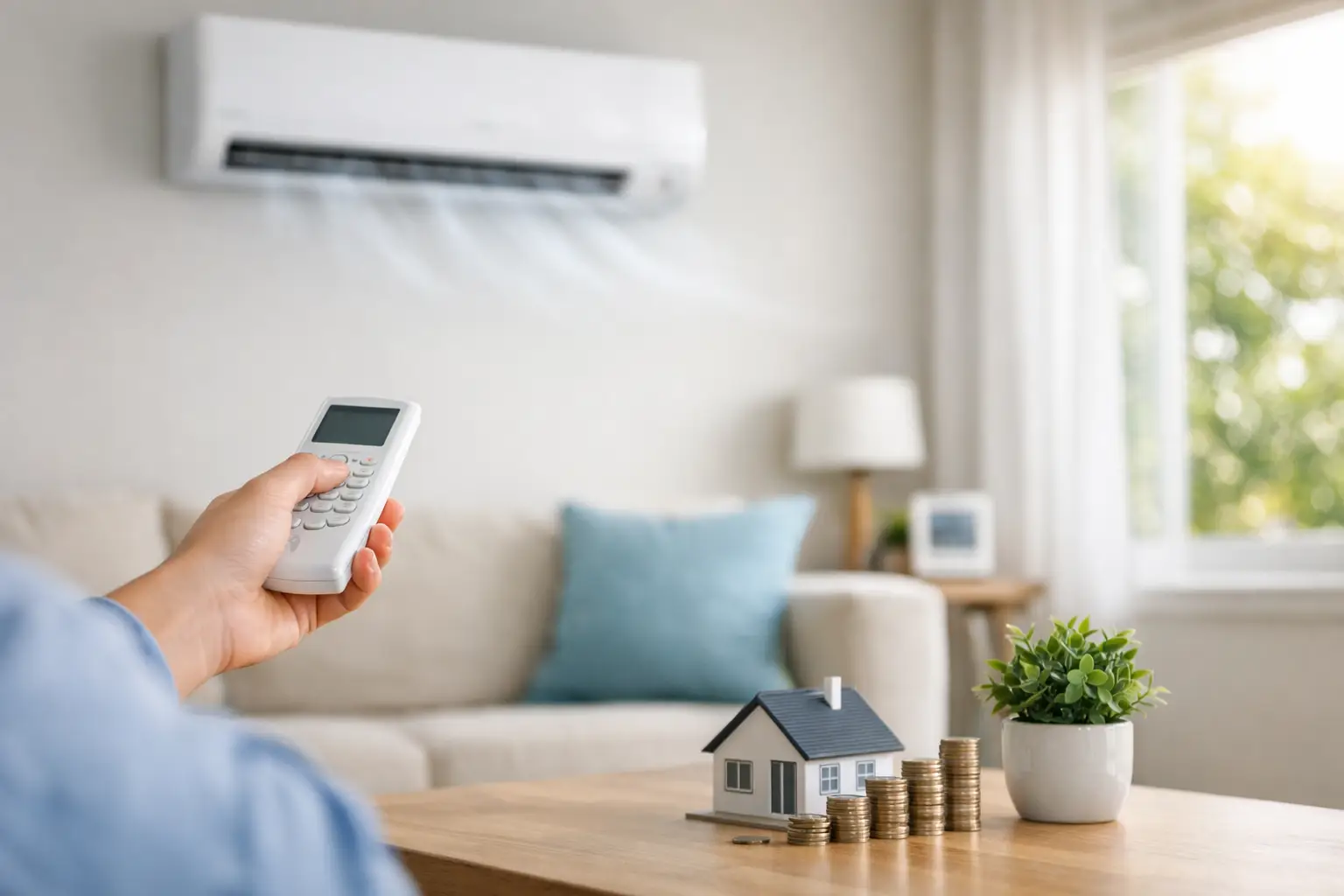
A Melbourne heatwave can turn a comfortable home into an expensive one surprisingly quickly. The good news is that learning how to reduce cooling energy bills does not mean putting up with stuffy rooms or switching the air conditioner off altogether. It comes down to using the system efficiently, keeping cool air where it belongs, and making sure your equipment is suited to the space.
For many Victorian households, the largest savings come from a few practical changes made consistently. Others need a professional service, better zoning or a system upgrade to see a meaningful difference. The right approach depends on your home, your system and how you use it.
Set your air conditioner for efficient comfort
Setting the thermostat lower will not cool a room faster. It simply makes the system run longer, which increases energy use and may leave the room uncomfortably cold.
During summer, aim for around 24 to 26°C when you are at home. Each degree lower can add noticeably to running costs, especially across a long hot spell. A moderate setting gives your system a realistic temperature target while still keeping the home comfortable.
If your system has a fan setting, use it well. Ceiling fans and air conditioner fans help circulate cooled air, allowing you to set the thermostat a little higher without losing comfort. Make sure ceiling fans run anti-clockwise in summer to push air down into the room.
Avoid running cooling in rooms no one is using. With a ducted system, zoning is particularly valuable because it lets you condition the living area during the day and bedrooms later in the evening, rather than cooling the entire house at once.
Stop heat before it reaches the room
Air conditioning works hardest when the sun has already heated your floors, walls and furnishings. Blocking that heat early reduces the workload on your system and improves comfort between cooling cycles.
Close blinds, curtains or external shutters before the afternoon sun reaches west-facing windows. External shading is often most effective because it intercepts heat before it passes through the glass, but well-fitted internal block-out coverings can still make a clear difference.
On milder mornings and evenings, open windows to let cooler air through the home. Once outdoor temperatures rise, close windows and doors to hold the cooler air inside. This simple routine matters most in homes with large glazed areas or open-plan living zones.
Also look for gaps around external doors, windows and exhaust fans. Draught sealing is not just a winter measure. Every gap that lets warm air enter in summer makes your cooling system work harder.
Use smart controls to reduce cooling energy bills
Smart temperature management gives you more control than manually switching the system on when the house is already hot. A programmable controller or integrated smart system can cool the home only when it is needed, rather than operating all day out of habit.
Set a schedule that matches your household routine. For example, cool key living spaces shortly before people arrive home, then shift to bedroom zones later in the evening. If your routine changes frequently, app-based controls can make adjustments easier without leaving the system running unnecessarily.
The goal is not to cycle the system on and off every few minutes. Frequent short bursts can be inefficient and may not manage humidity or comfort well. Instead, use sensible temperature settings and planned operating times.
For households with solar, daytime cooling can also be worth considering when solar generation is strongest. It will not remove all energy costs, particularly on extreme days, but using more of the electricity you generate can improve the value of your system.
Keep your air conditioner clean and serviced
A dirty filter restricts airflow, forcing an air conditioner to use more energy to deliver less cooling. In many homes, filters should be checked every few months during regular use and cleaned according to the manufacturer’s instructions. Homes with pets, renovations or nearby dust may need more frequent attention.
Outdoor units need clear airflow too. Remove leaves, grass clippings and other debris around the unit, and do not stack stored items against it. The unit needs room to reject heat effectively. If it is boxed in or obstructed, performance and efficiency can suffer.
Regular professional servicing goes beyond cleaning filters. A qualified technician can check refrigerant performance, electrical components, drainage, airflow, controls and overall operation. Small issues such as a failing fan, blocked drain or worn component can gradually increase running costs before a complete breakdown occurs.
If your air conditioner takes longer to cool, makes unusual noises, smells musty or delivers uneven temperatures, arranging a service promptly can prevent higher bills and a more costly repair later.
Match cooling capacity to your home
An oversized system can cool a room quickly but may cycle on and off too often, limiting effective humidity control and wasting energy. An undersized system may run continuously on hot days without ever reaching the set temperature. Neither outcome delivers the comfort or efficiency you expect.
Correct sizing considers more than floor area. Ceiling height, insulation, window size and orientation, household size, room layout and local climate all affect the capacity required. A sun-exposed open-plan living area in Geelong may have very different cooling needs from a shaded bedroom in Melbourne, even if the rooms are the same size.
This is particularly important during renovations and extensions. Adding a room, changing window coverings or opening up an internal layout can alter how your existing system performs. A tailored assessment can identify whether adjustments to ductwork, zoning or capacity are needed instead of assuming the current system will cope.
Make ducted cooling work harder in the right places
Ducted air conditioning offers whole-home comfort, but its efficiency depends on design and use. Keep doors and windows closed in the areas being cooled, and avoid closing too many supply vents unless your system has been designed to handle that operating pattern. Restricting airflow can place unnecessary strain on some systems.
Zoning is the more effective option. It allows you to direct cooling to occupied areas and avoid conditioning unused rooms. For a family home, that might mean running only the main living zone in the afternoon, then cooling selected bedrooms at night.
If one part of the home is always warmer than the rest, the cause may be more than a thermostat setting. Poor insulation, strong western sun, ductwork issues or an unsuitable zone layout can all contribute. A professional inspection can identify the source rather than masking the problem by lowering the temperature across the whole house.
Choose household habits that support your system
Cooling costs are affected by heat generated inside the home as well. Use exhaust fans while cooking, run heat-producing appliances such as dryers and ovens outside the hottest part of the day where possible, and switch off electronics that are not in use.
Bedrooms can often stay comfortable with a combination of pre-cooling, closed blinds and ceiling fans rather than very low overnight thermostat settings. In living areas, keeping internal doors closed to unused spaces may help, provided your ducted system and return-air pathway are operating as intended.
It is also worth reviewing your electricity plan periodically. An efficient air conditioner will still cost more to run if most of its use falls in a high-priced tariff period. Understanding when your household uses the most cooling can help you make better decisions about schedules and settings.
When an upgrade is the better saving
Maintenance and good habits can improve almost any system, but there is a point where an older unit becomes expensive to keep running. If repairs are becoming frequent, cooling is inconsistent or the system struggles through normal summer conditions, replacement may offer better long-term value.
Modern high-efficiency systems, well-designed ducted layouts and smart zoning can reduce unnecessary operation while improving day-to-day comfort. The best choice is not automatically the most powerful unit or the cheapest installation. It is the system designed for your property, usage patterns and budget.
For homeowners and small businesses across Melbourne and Geelong, Air Con Solutions can assess system performance, provide servicing and recommend a tailored cooling solution where needed. A timely check can turn an unreliable, costly system into a more comfortable and predictable part of your home.
Start with the changes you can make this week: clean the filters, lift the thermostat a degree or two, close the afternoon sun out and review which rooms genuinely need cooling. If comfort is still uneven, expert advice can help you spend less energy without settling for less comfort.