
A west-facing living room can feel like a different house from the bedrooms down the hall. Add a busy kitchen, a home office used only during the day and family members with different comfort preferences, and one thermostat quickly becomes a compromise. This guide to smart climate zoning explains how tailored temperature control can make your home more comfortable without conditioning every room the same way.
A guide to smart climate zoning that fits real life
Smart climate zoning divides a ducted heating and cooling system into separate areas, or zones. Each zone has its own temperature control or operating schedule, allowing you to heat or cool the spaces you are using while reducing conditioning in empty rooms.
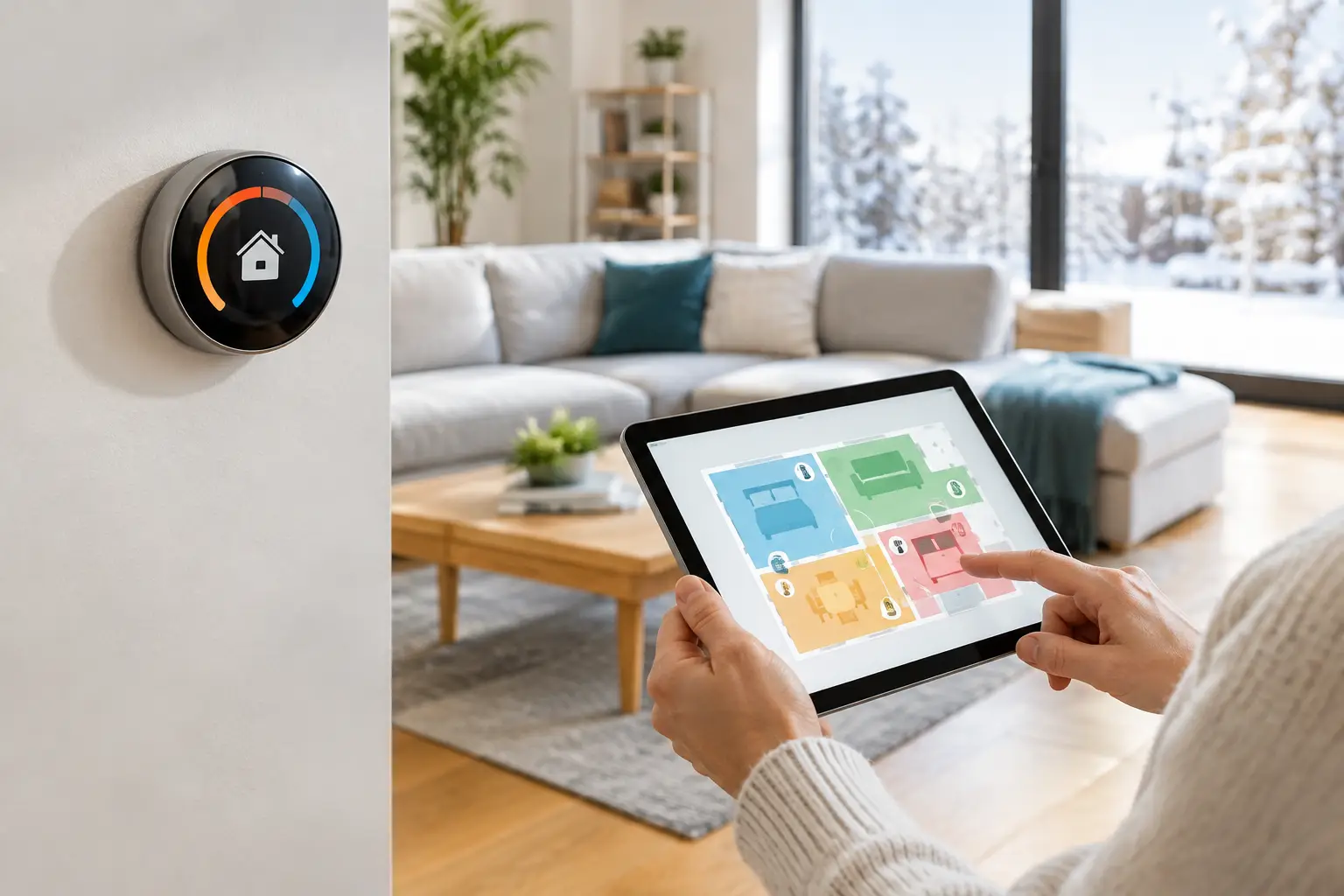
A typical home might have a living zone, a bedroom zone and a separate zone for a study or upstairs area. Rather than running the whole property at one setting, the system can direct conditioned air where it is needed. With compatible smart controls, you can adjust settings from a wall controller or mobile device, set schedules and, in some systems, monitor how each area is operating.
The practical benefit is control. You may want the family room cool in the late afternoon, bedrooms comfortable before bedtime and the study conditioned only during work hours. Zoning helps the system reflect that pattern.
It is not a promise of identical temperatures in every room. Sun exposure, insulation, ceiling height, window coverings and open-plan layouts still affect comfort. A well-designed system accounts for those factors instead of relying on zoning alone.
Why zoning can lower running costs
Heating and cooling is often one of the larger energy costs in a Victorian or NSW home, particularly during a run of hot days or cold mornings. When a whole-home ducted system runs at full demand to condition unused rooms, energy can be spent where it brings little benefit.
By closing off or reducing airflow to unoccupied areas, zoning can reduce the amount of space being conditioned at a given time. The savings depend on the home, the size of each zone, system efficiency and how the controls are used. A large home with rarely used guest rooms may see a stronger benefit than a compact apartment where every room is occupied most of the day.
Smart scheduling adds another useful layer. Instead of leaving the system operating all day, you can set it to prepare occupied rooms shortly before you need them. This approach is often more effective than dramatic temperature changes, which can make the system work harder to catch up.
For efficient everyday operation, choose sensible setpoints. In summer, setting the temperature a little higher than an icy indoor setting can reduce strain and still feel comfortable. In winter, avoid overheating rooms simply because one colder area needs attention. The right temperature is personal, but steady, realistic settings usually support lower energy use.
Plan zones around how you use the property
The best zoning plan starts with people, not products. Think about where household members spend time, when each room is used and which areas regularly run hotter or colder.
Separate day and night spaces
For many homes, dividing living areas from bedrooms is the logical starting point. Living rooms, kitchens and dining areas usually need conditioning in the morning and evening, while bedrooms need it later. This arrangement lets you avoid heating or cooling sleeping areas unnecessarily during the day.
If the home has multiple storeys, upstairs and downstairs often work better as separate zones. Heat naturally rises, and upper levels can gain more heat through the roof. A single thermostat downstairs may not reflect what is happening in an upstairs bedroom.
Give high-use rooms their own control where it matters
A home office, media room or main bedroom may justify an individual zone if it has regular use at different times from the rest of the house. This is especially helpful for shift workers, young children or households where someone works from home.
There is a balance to strike. More zones provide more control, but they can also increase design complexity and installation cost. Very small zones may not suit every ducted system, as the equipment needs adequate airflow to operate correctly. A professional assessment can determine whether a room should be its own zone, combined with nearby rooms or supported by another solution.
Factor in the home itself
The rooms that cause the most frustration deserve close attention. A north or west-facing lounge with large windows may need different airflow from a shaded bedroom. An extension with limited roof space, a renovated home with altered room layouts or a light commercial tenancy with changing occupancy may require a more tailored duct and controller design.
Good zoning works alongside insulation, draught sealing and suitable window coverings. If a room is losing heat rapidly in winter or absorbing strong afternoon sun, controls can help manage it, but they cannot fully solve a building-performance issue.
The technology behind smart zoning
In a ducted system, motorised dampers in the ductwork open and close to manage airflow to each zone. A zoning controller coordinates those dampers with the air conditioning unit and the selected temperatures. Depending on the setup, individual rooms or grouped spaces may have dedicated sensors or controllers.
Smart controls can make this easier to manage without making it complicated. Useful features may include daily schedules, temporary overrides, remote access, zone status displays and temperature adjustment for different parts of the home. AirSmart-integrated solutions can be particularly useful where homeowners want refined control while keeping wall controls and system operation straightforward.
However, the controller is only one part of the outcome. Correct unit sizing, duct design, return-air placement and commissioning all influence how well a zoned system performs. Installing smart controls on an undersized unit or poorly designed ductwork will not create the comfort you expect.
For existing ducted systems, a zoning upgrade may be possible, but suitability varies. The condition of the unit, available ceiling space, duct layout, electrical requirements and compatibility of existing controls all need to be checked first.
Avoid the common zoning mistakes
The most common mistake is treating zoning as a simple on-off switch for every room. Turning too many zones off at once can restrict airflow beyond what the system is designed to handle. Your installer should set up the system so it maintains safe, effective operation across the likely combinations of zones.
Another issue is placing temperature sensors in poor locations. A controller near a sunny window, cooking area, exterior door or supply-air outlet may get an inaccurate reading. The sensor should represent the area you want to keep comfortable, not the hottest or coldest point in the room.
It also helps to keep internal doors in the position assumed during design. If a bedroom zone was planned with doors closed but the doors are usually open, air can move between areas and affect results. Small habits such as closing blinds before afternoon sun and using schedules consistently can make a noticeable difference.
Keep a smart system performing well
Zoning equipment needs the same care as any heating and cooling system. Clean or replace filters as recommended, keep external units clear of leaves and debris, and arrange professional servicing at suitable intervals. A service visit can identify issues such as airflow restrictions, damper faults, sensor problems or refrigerant-related performance concerns before they become a breakdown.
If one zone suddenly feels weak, do not assume the controller is the only cause. The issue could relate to a blocked filter, a duct connection, a damper, the outdoor unit or a broader system fault. Prompt diagnosis protects comfort and can prevent a smaller issue becoming a more expensive repair.
A reliable zoning setup should feel simple after installation. You should understand which zones serve each area, how to change a schedule, what normal airflow feels like and when to request help. Clear handover and tailored advice matter as much as the equipment itself.
When rooms are regularly too hot, too cold or unnecessarily expensive to condition, smart zoning is worth discussing as part of a new installation or ducted-system upgrade. A tailored assessment from an experienced provider such as Air Con Solutions can turn the way your household actually lives into a practical plan for year-round comfort.