
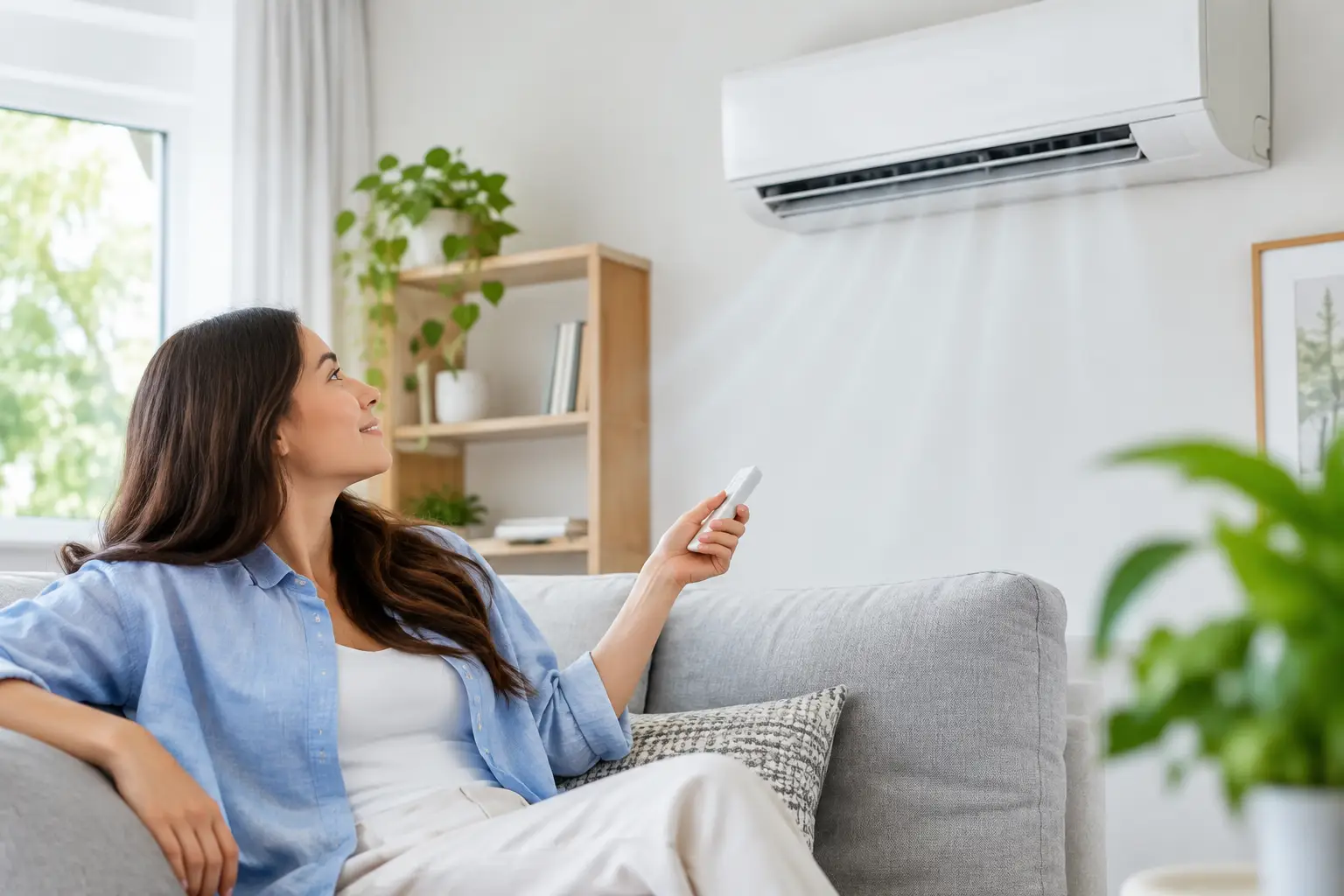
A hot afternoon can make it tempting to turn the aircon down as far as it will go. But that quick fix often leads to a bigger power bill without making the home comfortable any sooner. Knowing how to lower aircon energy use comes down to helping your system work steadily, rather than forcing it to fight heat, humidity and poorly managed airflow.
For households across Victoria, the biggest savings usually come from a few practical changes: choosing a sensible temperature, limiting heat entering the home, using zones properly and keeping the system in good working order. None of these changes need to compromise the comfort your family relies on.
How to lower aircon energy use with the right temperature
Your thermostat setting has a direct effect on running costs. In cooling mode, a setting around 24°C to 26°C is a sensible starting point for most homes. Every degree you set below this can increase the energy your system uses, particularly during a run of hot weather.
The ideal setting depends on the room, how much sun it receives, the number of people inside and the level of insulation. A west-facing living room in the late afternoon may feel warmer than a shaded bedroom at the same temperature. Rather than setting the whole house colder, adjust airflow, close blinds and use zoning to deal with the warmer area.
Avoid dropping the thermostat to 18°C in the hope that the house will cool faster. Air conditioners cool at the rate their system capacity allows. A much lower set temperature simply tells the unit to run longer, often well after the room has become comfortable.
Stop outdoor heat from becoming indoor work
Your air conditioner uses less energy when your home holds onto cool air. Before the hottest part of the day, close curtains, external blinds or shutters on sun-facing windows. This is especially valuable on large glass doors and west-facing rooms, where direct afternoon sun can quickly raise indoor temperatures.
Close doors and windows while the aircon is running. A small gap in a frequently used external door may not seem significant, but it continually lets warm air and humidity back inside. In older homes, draught seals around doors, windows and ceiling access points can make a noticeable difference to comfort and energy use.
Ceiling insulation also matters. If rooms heat up quickly despite regular cooling, the issue may not be the air conditioner itself. Heat entering through the roof space can keep the system running for longer than necessary. During renovations or a new installation, it is worth considering the whole home, not just the unit on the wall or the ducts in the ceiling.
Use your aircon’s smart settings properly
Modern systems offer more than a basic on and off switch. Using the right mode can reduce unnecessary running time while maintaining a comfortable indoor environment.
Fan mode can help circulate air when the room is already close to the desired temperature. Dry mode may feel more comfortable on humid days by reducing moisture in the air, although its performance varies between systems and conditions. It is not always the best choice on very hot, dry Melbourne days, when normal cooling mode will usually be more effective.
Timers and scheduling are equally useful. Set the system to start shortly before the household wakes up or returns home, rather than leaving it running all day. If your system has app controls or smart temperature management, you can make adjustments when plans change without cooling an empty house.
A ceiling fan can also reduce the need to lower the thermostat. Moving air makes people feel cooler, so a fan used alongside air conditioning may allow you to raise the set temperature by a degree or two. Just remember to switch fans off when the room is empty - fans cool people, not the room itself.
Use zoning to cool the rooms that matter
Ducted air conditioning becomes far more efficient when it is matched to how you use your home. There is little value in cooling every bedroom, spare room and hallway when the family is gathered in one living area.
If you have zone controls, close or limit zones that are not in use and direct cooling where it is needed. For example, you might run living zones in the afternoon, then switch to bedroom zones closer to bedtime. This reduces the area your system needs to condition and can make the active spaces feel more consistently comfortable.
Zoning needs to be configured correctly. Closing too many outlets or zones can restrict airflow and place strain on some systems. The best approach depends on your unit, duct design and the controls installed. A professionally designed ducted system with well-planned zones is usually more efficient than trying to manage comfort room by room with an oversized single system.
For larger homes, smart zoning options such as AirSmart-integrated controls can offer more precise temperature management. They are particularly useful where household routines, room layouts or sun exposure vary throughout the day.
Keep filters, coils and ducts in good condition
A system that has to push air through a clogged filter works harder than it should. Dirty filters restrict airflow, reduce cooling performance and can contribute to higher energy use. Check return-air filters regularly during heavy-use periods and clean them according to the manufacturer’s instructions.
The outdoor unit also needs room to breathe. Keep leaves, grass clippings, stored items and garden growth clear of the unit. If airflow around the condenser is blocked, heat cannot be released efficiently, causing the system to run longer. Shade can help in some situations, but it must not obstruct ventilation around the unit.
Professional servicing addresses the parts homeowners cannot easily inspect, including coils, electrical connections, refrigerant performance, condensate drainage and duct condition. A refrigerant issue, leaking ductwork or a failing component can make an air conditioner less efficient well before it stops working altogether.
Air Con Solutions can assess both system performance and the practical causes of high running costs, helping homeowners identify whether a service, repair, control upgrade or system adjustment is the right next step.
Make sure the system suits the space
Bigger is not automatically better. An oversized air conditioner can cool a space quickly but may cycle on and off too often, creating uneven temperatures and reduced efficiency. An undersized system may run continuously on hot days without ever catching up.
The right capacity depends on more than room size. Ceiling height, insulation, window area, orientation, occupancy and open-plan layouts all affect the load on the system. This is why a tailored assessment is more reliable than selecting a unit based only on square metres or a neighbour’s recommendation.
Older units can still be worth servicing, but there comes a point where repeated repairs and poor efficiency make replacement the more practical option. Newer systems often provide improved inverter control, quieter operation and more accurate temperature management. The trade-off is upfront cost, so compare likely running costs, repair history and the expected life of the existing unit before deciding.
Signs your aircon may be using more energy than it should
A sudden increase in power use is worth investigating, particularly if your household habits have not changed. Common warning signs include:
- rooms taking much longer to cool than they used to
- weak airflow from vents or indoor units
- frequent cycling, unusual noises or water leaks
- temperatures that vary significantly between rooms
These symptoms do not always mean you need a new system. A blocked filter, control setting, duct issue or minor repair may be the cause. Prompt attention can prevent a small efficiency problem from becoming a breakdown during the busiest part of summer.
The most effective energy-saving approach is one that fits the way you live: cool the rooms you use, keep heat outside where possible and give your system the care it needs to perform well. A comfortable home should not require the aircon to run flat out all day.