
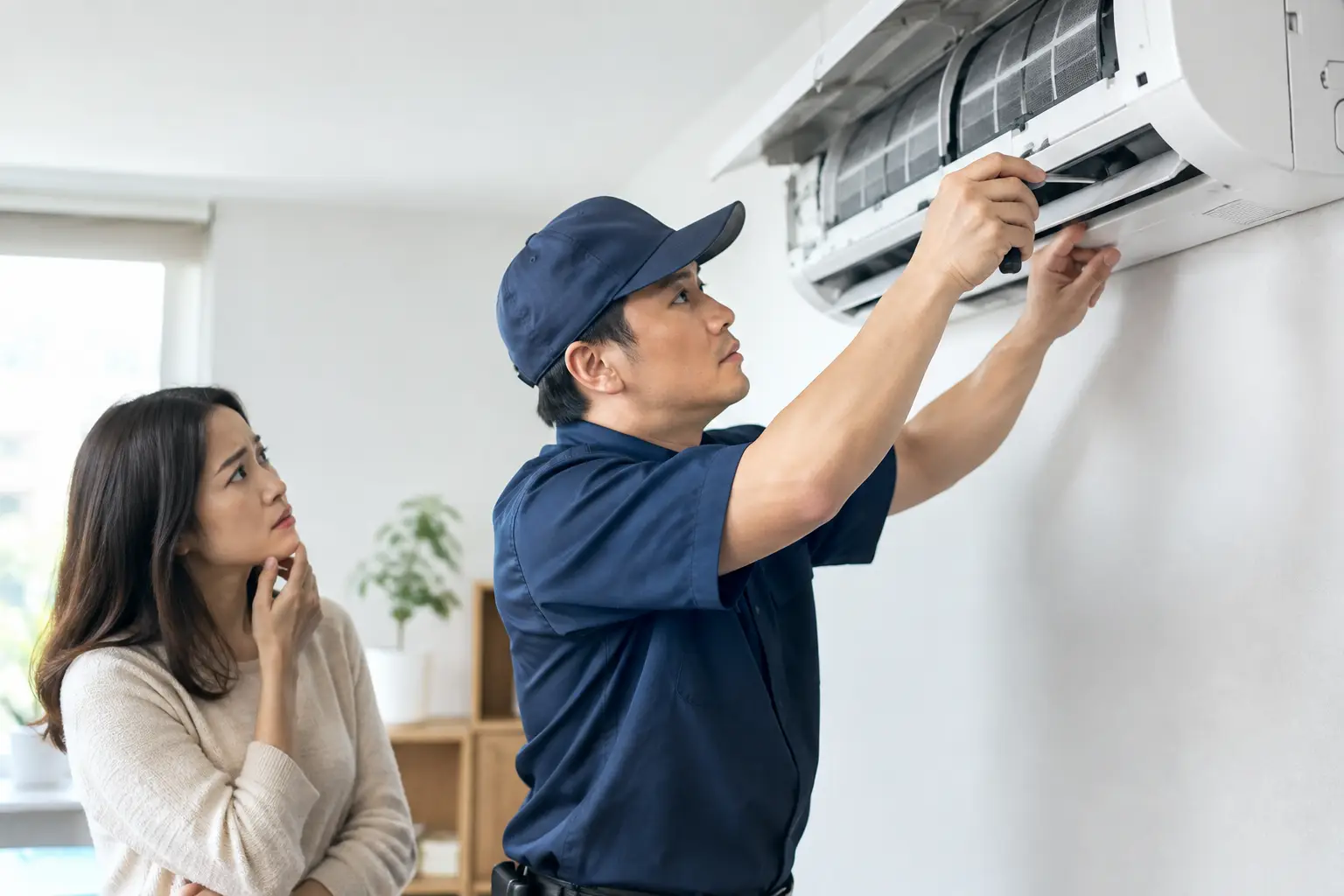
A Melbourne heatwave is not the time to wait and see whether an air conditioner will start behaving again. If your system has stopped cooling, is leaking heavily, smells like something is burning, or is tripping the power, it is time to book emergency aircon repair and take a few sensible steps to protect your home, workplace and system.
An urgent fault does not always mean the unit needs replacing. In many cases, prompt professional diagnosis can prevent a smaller electrical, drainage or mechanical issue from becoming a more expensive repair. The priority is restoring safe, reliable comfort while identifying the cause rather than simply restarting the system.
When an aircon fault needs urgent attention
Not every air conditioning problem is an emergency. A system that is slightly noisier than usual or takes longer to cool can often be booked as a standard repair or service. But some warning signs should be treated with more urgency, particularly during very hot or cold weather, or where vulnerable family members, tenants or customers are affected.
Turn the system off and arrange professional help promptly if you notice a burning smell, smoke, sparks, a buzzing electrical sound, repeated circuit breaker trips, or water pooling around the indoor unit. These signs can point to electrical faults, blocked drainage or component failure. Continuing to run the system may cause further damage and, in some cases, create a safety risk.
A complete loss of heating or cooling can also be urgent when indoor temperatures are becoming unsafe or disruptive. This is especially relevant for households with young children, older residents, people with health conditions, or small businesses that rely on a comfortable environment for staff and customers.
Poor airflow, ice forming on the unit, loud grinding or rattling, and sudden error codes are other reasons to arrange a repair quickly. They do not all carry the same level of risk, but they rarely improve by being ignored.
What to do before you book emergency aircon repair
Start with safety. Switch the air conditioner off at the controller. If there is a burning smell, smoke, visible damage or water near electrical connections, turn it off at the isolator or switchboard only if it is safe to do so. Do not remove covers, touch exposed wiring or attempt to reset a breaker repeatedly.
For a leak from the indoor unit, place towels or a container beneath dripping water if you can do so safely. Move furniture, electronics and valuables out of the affected area. A small amount of condensation from an outdoor unit may be normal, but water coming through a ceiling, wall-mounted head or ducted grille needs attention.
There are a few low-risk checks worth making. Confirm the controller is set to the right mode and temperature, check whether the batteries need replacing, and make sure the return-air filter is not heavily blocked with dust. If your system is ducted, check that accessible vents are open and unobstructed. These checks can rule out simple issues, but they are not a substitute for diagnosis when the system is shutting down, leaking or making unusual noises.
When booking, share the make and model if you have it, the type of system, when the fault began, and any error message displayed. Let the technician know about symptoms such as leaks, loss of power, smells or noises. Clear details help the right tools and likely replacement parts be considered before the visit.
What a qualified technician will check
Emergency aircon repair is not just about getting cool air flowing again. A qualified technician should assess the fault in the context of the whole system, including safety, performance and the likelihood of recurrence.
The inspection may include the electrical supply and controls, filters, fan operation, condensate drain, refrigerant circuit, indoor coil and outdoor unit. For ducted systems, the technician may also assess airflow, zoning controls, accessible ductwork and the condition of the return-air path. The exact process depends on the system and its symptoms.
For example, an indoor leak can be caused by a blocked condensate drain, a dirty filter that has contributed to coil icing, or an issue with the condensate pump. A unit that runs but does not cool may have airflow restrictions, a failed capacitor, a control fault or a refrigerant-related issue. Each requires a different repair, which is why a quick guess can be costly.
A reliable repair process explains what has failed, what is required to rectify it, and whether there are options to consider. If a component can be replaced and the rest of the system is in good condition, repair is often the sensible path. If an older unit has multiple faults, poor efficiency or unavailable parts, replacement may offer better long-term value. It depends on the age of the system, its condition, repair cost and your comfort needs.
Why fast repairs can protect your energy bills
A struggling air conditioner often uses more electricity while delivering less comfort. A blocked filter, failing fan motor, refrigerant issue or sensor fault can make the system run longer than it should. In a ducted system, poor airflow or a control issue may leave some rooms uncomfortable while the unit continues working hard.
Fast repair can reduce the risk of this inefficient cycle continuing for weeks. Once the immediate problem is resolved, it is worth asking whether routine servicing, filter cleaning, zoning adjustments or smarter temperature settings could help avoid a repeat issue.
Smart controls can make a practical difference in homes and light commercial spaces with changing occupancy. The aim is not to run the system harder. It is to heat or cool the spaces that are being used, at sensible temperatures, with the system operating as efficiently as possible.
Repair or replacement: making the right call
When an air conditioner fails unexpectedly, replacement can feel like the only answer. It is not always necessary. A relatively new, well-maintained system with an isolated fault may be economical to repair. In contrast, a system nearing the end of its working life may continue to need attention after a major repair.
Consider the full picture: the system's age, previous repair history, cooling or heating performance, energy use, availability of parts and whether the current layout still suits the property. Renovations, new room use and changes to household routines can expose limits in an older system that were not obvious before.
For ducted air conditioning, replacement also creates an opportunity to review zoning and controls. A tailored solution may improve comfort in rooms that have always been difficult to manage, rather than simply replacing like for like.
How to reduce the chance of another breakdown
Many urgent breakdowns have warning signs. Reduced airflow, inconsistent temperatures, unusual cycling, odours and water marks should be checked before they become a hot-day failure. Regular professional maintenance helps identify worn parts, drainage problems and performance issues while they are still manageable.
Homeowners can support system performance by cleaning or replacing filters according to the manufacturer guidance, keeping outdoor units clear of leaves and stored items, and avoiding extreme temperature settings. Setting cooling to a reasonable temperature places less demand on the system than trying to make the house feel like a fridge on a 40-degree day.
If your air conditioner is showing a safety concern or has stopped delivering the comfort your household or business relies on, act early. A clear repair booking and a qualified assessment can bring the fault into focus, protect the system from further damage and help you make a confident next decision.