
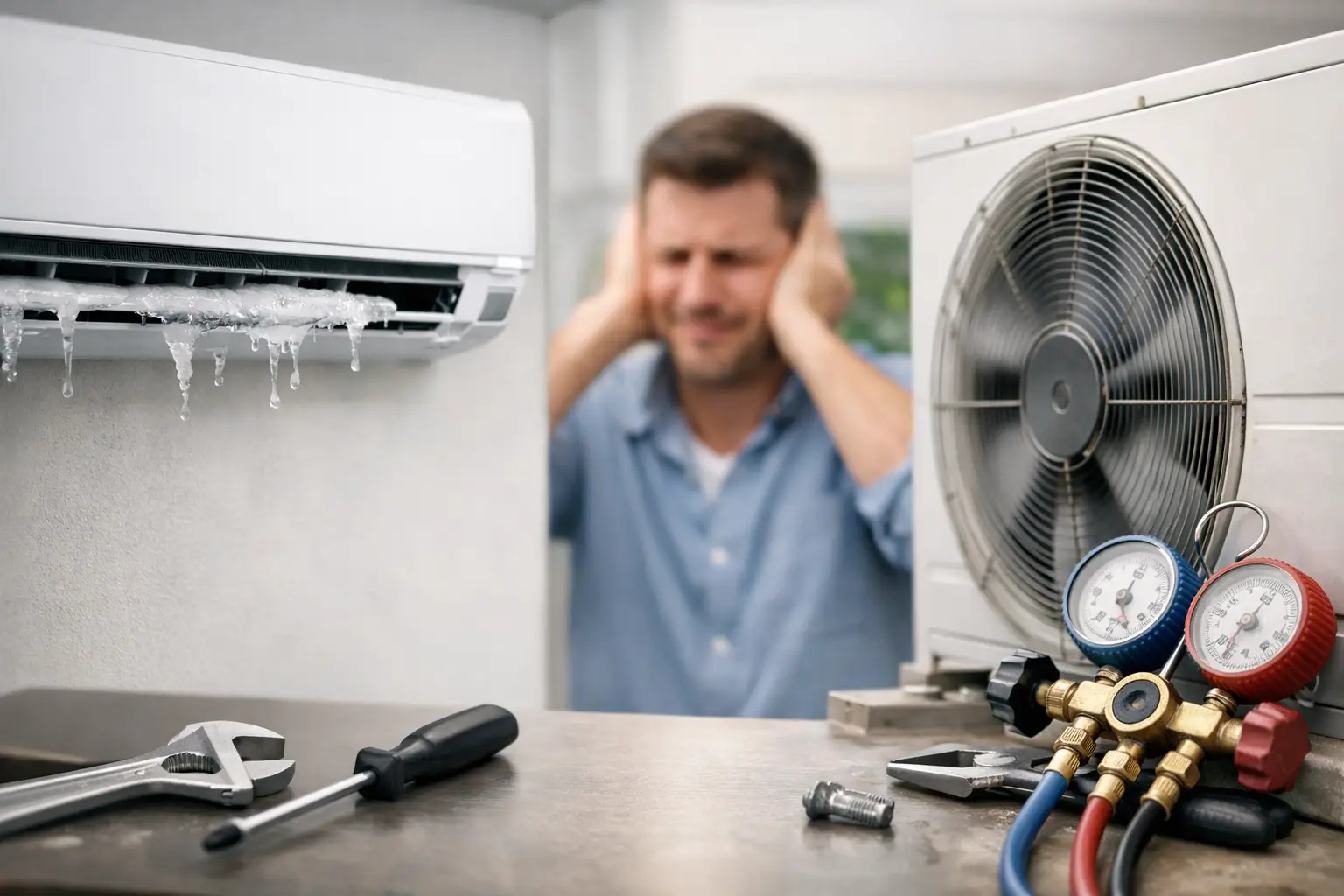
A new noise from your air conditioner is easy to dismiss when the system is still cooling or heating. But aircon noise causes can range from a loose return-air grille to a failing fan motor or an electrical fault. Knowing the difference helps you protect your comfort, avoid a larger repair and make a sensible call on whether the system can keep running.
Some sounds are part of normal operation. Others are your system asking for attention. The key is to notice when the noise started, where it is coming from and whether it occurs alongside weak airflow, unusual smells, leaks or higher energy use.
When is aircon noise normal?
Most air conditioners make some level of sound. A gentle rush of air at the vents, a low hum from the outdoor unit and an occasional click as the system starts or stops are usually expected. Ducted systems may also make a brief ticking or popping sound as ducts and metal components expand or contract with temperature changes.
What is not normal is a sound that becomes noticeably louder, continues after shut-down, appears suddenly, or comes with reduced heating or cooling. A system should not rattle through the house, squeal on start-up, grind while running or produce a burning smell.
The type of system matters too. A wall-mounted split system can transmit vibration through its indoor head unit or wall bracket, while a ducted system may amplify airflow or movement through its grilles and ceiling spaces. An experienced technician will trace the sound to its source rather than treating every noise as the same problem.
Common aircon noise causes by sound
Rattling, tapping or vibrating
Rattling is often one of the more straightforward aircon noise causes. A loose cover, screw, grille, filter, duct connection or outdoor-unit panel can vibrate as the fan runs. Leaves, sticks or other debris around an outdoor condenser can also create tapping sounds, particularly after strong winds or storms.
In a ducted system, a return-air grille may rattle when airflow is high, or a loose duct may knock against a timber frame or ceiling structure. In split systems, vibration may travel into the wall if the outdoor unit is not sitting securely on its base or mounting bracket.
Start by checking only the accessible, safe items. Make sure indoor filters are fitted correctly and that nothing is leaning against the outdoor unit. Do not remove electrical covers or try to tighten parts inside the unit. If the rattle persists, a service technician can secure panels, inspect mounts and check for worn fan components.
Humming or droning
A quiet hum is normal while an air conditioner operates. A louder-than-usual hum, however, can point to vibration, a fan motor working under strain, or an issue with electrical components such as a capacitor or contactor.
Outdoor units commonly become noisier when they have restricted airflow. Dirt on the coil, plants growing too close to the unit or debris around the fan can make the system work harder and increase operating noise. This also affects efficiency, so a noise that seems minor may contribute to higher running costs over time.
Droning may also be linked to the unit’s location. An outdoor system installed close to a bedroom wall, timber deck or lightweight fence can transfer vibration into the building. In this case, the solution may involve checking the unit’s feet, bracket, clearances and overall installation rather than replacing a major component.
Squealing, screeching or whistling
A squeal or screech often suggests a moving part needs attention. Fan motor bearings can wear over time, causing a high-pitched sound that may be most obvious at start-up or while the fan changes speed. In older systems, other mechanical components may also be responsible.
Whistling is different. It can be caused by air being forced through a restricted filter, a partially closed grille, a poorly sized return-air opening or ductwork with a leak or gap. If your ducted system suddenly whistles after a renovation, new door installation or zoning change, airflow balance may need to be assessed.
Cleaning or replacing a dirty filter can sometimes reduce airflow noise. If it does not, do not keep increasing the fan speed to compensate. That can make the noise worse and place extra pressure on the system.
Grinding, scraping or metal-on-metal sounds
Grinding and scraping require prompt attention. They may indicate a fan blade contacting a housing, worn motor bearings or another mechanical problem inside the indoor or outdoor unit. Continuing to run the system can turn a repairable fault into damage to the fan, motor or surrounding components.
Switch the air conditioner off if you hear a loud grinding or scraping sound. Once it is safe to do so, check whether there is obvious debris around the outdoor unit, without reaching through guards or removing panels. Arrange a professional inspection before restarting the system.
Buzzing, crackling or repeated clicking
A single click at start-up or shut-down is usually normal. Repeated clicking, loud buzzing, crackling or an electrical smell is not something to ignore. These sounds can be associated with a failing electrical part, loose wiring, a struggling compressor or a control-board fault.
Turn the system off at the controller and isolate it at the switch if there is a burning smell, smoke, visible damage or persistent electrical buzzing. Do not attempt a reset until a qualified technician has inspected the unit. Air conditioning repairs involving electrical components and refrigerant circuits need the right training, equipment and licences.
Hissing, bubbling or gurgling
Brief hissing can occur as refrigerant moves through the system, especially during changes in operating mode. But ongoing hissing, bubbling or gurgling can indicate a refrigerant issue, moisture in the system or a blocked condensate drain.
If the sound is paired with poor cooling, ice on pipework, water leaking indoors or the system running for long periods without reaching the set temperature, book a repair. Refrigerant is not something to top up as a routine fix. If levels are low, the technician needs to locate and repair the cause before recharging the system.
Why ducted air conditioners can sound louder
Ducted systems are designed to be discreet, but noise can become more noticeable when airflow is restricted or the system is not balanced for the home. A blocked return-air filter makes the fan work harder. Closed doors can alter return-air paths. Zoning dampers, undersized ducts or loose flexible ductwork can create rushing, thumping or fluttering sounds.
The setting can also make a difference. Running the fan at maximum speed may cool a room faster, but it can increase noise at the grilles and place more demand on the system. A tailored ducted design, correct zoning and sensible temperature settings generally provide a quieter result than forcing a system to work at full output all day.
For homes with smart controls, use programmed temperature changes rather than frequent manual on-and-off adjustments. This supports steadier comfort and can reduce the abrupt changes in airflow that make noise more noticeable.
Safe checks you can make before booking a repair
Before arranging a visit, note whether the noise comes from the indoor unit, outdoor unit, ductwork or a particular vent. Record when it happens: at start-up, continuously, only in heating mode, or only when a zone is open. This gives your technician a clearer starting point.
You can also clean washable filters according to the manufacturer’s instructions, make sure vents are open and unobstructed, and remove loose leaves from around the outdoor unit. Leave adequate space around it for air to circulate. Avoid spraying water into electrical areas, bending coil fins or opening the cabinet.
If a noise is new but mild and performance is normal, schedule a service before the next season of heavy use. Regular maintenance can catch loose fittings, worn parts and airflow issues before they interrupt comfort on a hot summer afternoon or a cold Victorian morning.
When to switch your air conditioner off
Switch the unit off and arrange professional help if you hear grinding, loud scraping, persistent electrical buzzing or sharp banging. The same applies if there is a burning smell, smoke, water entering the property, tripped circuit breakers, ice on the unit or a clear drop in heating and cooling performance.
For a mild rattle or airflow whistle, the urgency is usually lower, but it still deserves attention if it continues. Small mounting, filter or duct issues are often quicker and less costly to resolve before they place strain on larger components.
Air Con Solutions can assess unusual system noises as part of a repair or maintenance visit, identifying the underlying fault and recommending a practical path back to quiet, reliable comfort. A well-maintained air conditioner should fade into the background, leaving you with the temperature you want rather than another sound to worry about.