
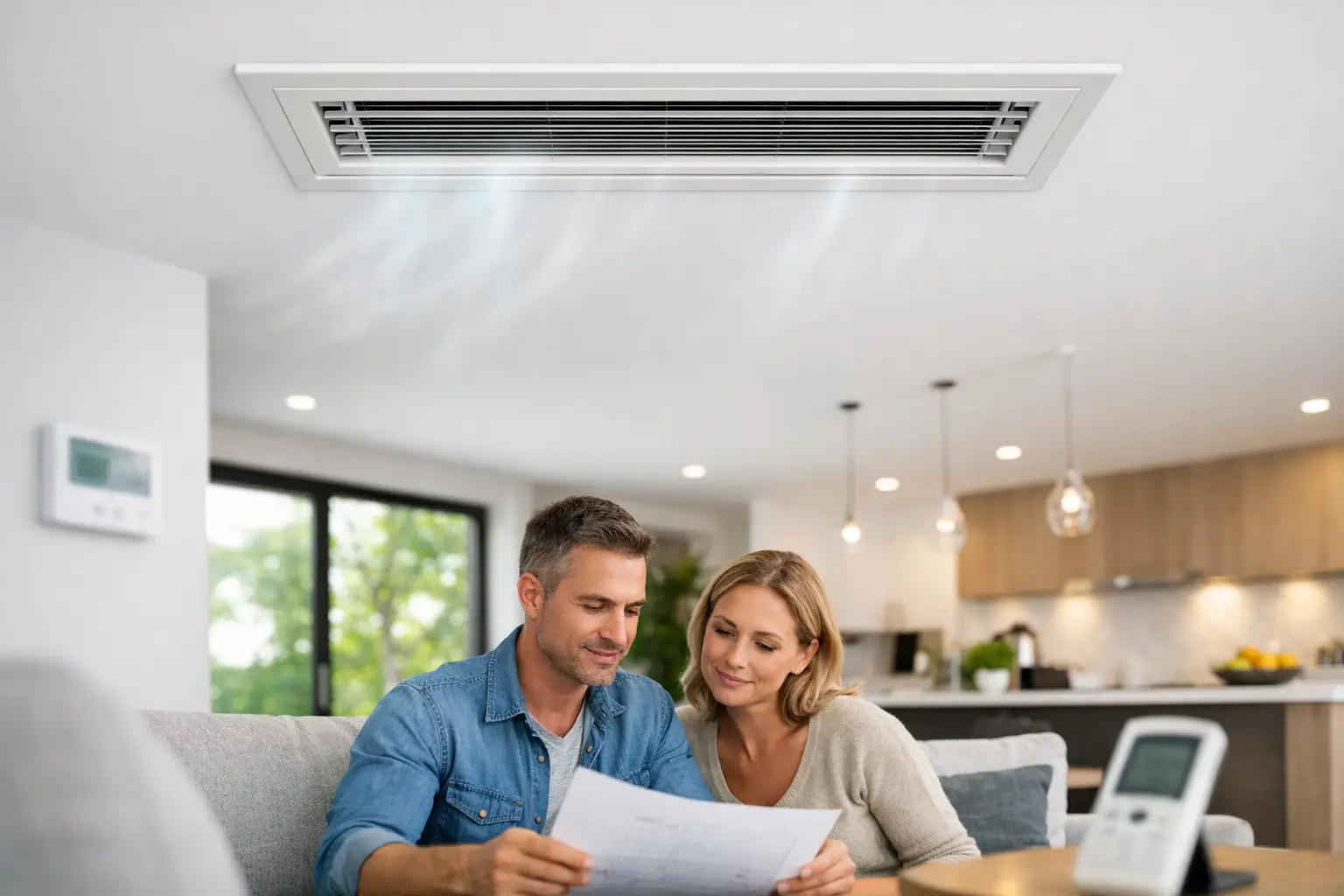
A ducted system should make every room feel more comfortable without making your power bills harder to manage. The challenge is that the right setup is rarely determined by the size of the house alone. When working out how to choose ducted air conditioning, you need to consider your layout, insulation, daily routine, ceiling space and the way different areas of your home are used.
For Melbourne and Geelong homes, heating performance matters just as much as cooling. A well-designed reverse-cycle ducted system can provide reliable year-round temperature control, while zoning and smart controls help avoid conditioning rooms that do not need it. The best outcome comes from matching the system to the property, rather than choosing a unit based only on a headline capacity or purchase price.
Start with your home, not the air conditioner
Before comparing brands or features, look closely at the home itself. A compact, well-insulated single-storey house has very different heating and cooling demands to a large double-storey home with high ceilings, west-facing glazing and open-plan living areas.
Room size is one part of the equation, but it is not the whole calculation. Ceiling height, window size and orientation, insulation levels, building materials, air leakage and the number of occupants all affect the load on your system. Kitchens also generate extra heat, while bedrooms may need gentler overnight conditioning than living spaces during the day.
An experienced installer should assess the property and calculate the likely heating and cooling requirements room by room. This helps prevent two common and costly mistakes: installing a system that is too small to keep up on a hot summer afternoon or cold Victorian morning, or installing one that is oversized.
An oversized unit may sound safer, but it can cycle on and off too often, use more energy than necessary and create uneven comfort. Correct sizing gives the system the best chance of running efficiently and maintaining a stable temperature.
How to choose ducted air conditioning capacity
Ducted air conditioning capacity is generally measured in kilowatts. While online estimates can offer a rough starting point, they cannot account for the details that make one home perform differently from another. Treat any simple square-metre guide as a conversation starter, not a final answer.
A professional assessment considers whether the system will serve the entire house or only selected zones. It also considers whether you are replacing an older unit, renovating, adding rooms or changing the way the home is used. For example, converting a spare bedroom into a home office can increase daytime demand in a zone that was previously used only occasionally.
If you are building or renovating, share your plans early. This allows ductwork, return-air grilles and outlets to be designed around the home before ceilings are closed. It usually produces a neater finish and avoids compromises later, particularly where roof space or bulkhead room is limited.
Choose zoning that matches your routine
Zoning is one of the most valuable features in a ducted system. It divides the home into separate areas so you can heat or cool only the spaces in use. Instead of conditioning empty bedrooms during the day, you might run the living zone and kitchen. At night, you can switch to bedrooms and reduce energy use elsewhere.
A practical zoning plan often separates living areas from bedrooms, but every household is different. A family with young children may want bedrooms grouped differently from a couple who use a study throughout the working week. Double-storey homes commonly benefit from separate upstairs and downstairs zones because heat naturally rises.
More zones are not automatically better. Too many small zones can add cost and complexity, and a system needs enough open outlets to operate properly. The goal is useful control without creating a design that is difficult to use or poorly balanced. Your installer should explain which zones can run together, any minimum airflow requirements and how the controls will work in everyday use.
Look beyond the purchase price
The initial quote matters, but the cheapest system is not always the most economical choice over its life. Energy efficiency, system design, controls, installation quality and maintenance all influence your long-term running costs.
When comparing options, ask about the energy rating, inverter technology and expected performance in both heating and cooling. Inverter systems can adjust their output to better match demand, rather than operating at full capacity all the time. This can improve comfort and help manage electricity consumption, especially when the system runs for longer periods.
The ductwork itself also deserves attention. Poorly sized, poorly sealed or poorly insulated ducts can lose conditioned air before it reaches the rooms where it is needed. Quality duct design and insulation are particularly important in roof spaces, where summer temperatures can become extreme.
Controls can make a meaningful difference too. A straightforward wall controller may suit some households, while others benefit from app control, timers and smart temperature management. AirSmart-integrated solutions can be useful where you want more precise control over zones and room temperatures. The right choice depends on whether you value simple operation, detailed scheduling or the ability to adjust settings from your mobile.
Plan for the parts you do not see
A ducted system is more than the indoor and outdoor units. Its performance depends on the placement and design of outlets, return-air grilles, ducts, electrical connections and drainage.
Supply outlets should be positioned to distribute air effectively without blowing directly onto beds, dining tables or regular seating areas. Return-air placement is equally important because it helps the system circulate air efficiently. Inadequate return-air design can lead to noise, weak airflow and inconsistent temperatures.
Roof space, ceiling access and the location of the outdoor unit can all affect the installation approach. In tighter properties, a tailored design may be needed to work around structural elements, limited cavity space or a preference for minimal visual impact. This is where site-specific advice is more valuable than a standard package.
For small businesses, consider operating hours, customer comfort and noise as well as capacity. A light commercial space may need zoning that reflects staff areas, reception, meeting rooms and areas with high solar exposure. The best design supports comfort without unnecessarily conditioning unused parts of the premises.
Compare quotes on scope, not just the final figure
Two ducted air conditioning quotes can look similar while including very different work. Read the scope carefully before making a decision. It should clearly identify the system model and capacity, number of zones, controller type, ductwork specification, outlet and return-air locations, electrical work, any building modifications and commissioning.
It is also worth asking who will install the system, whether the work is completed by qualified technicians and what support is available after installation. A professional installation includes testing and balancing the system, confirming drainage and electrical safety, and showing you how to use the controls.
Before accepting a quote, make sure you understand these practical details:
- What is included in the ductwork, grilles, zoning and controller?
- Are there potential extra costs if access is difficult or electrical upgrades are required?
- How will the system be commissioned and checked for balanced airflow?
- What warranty applies to the equipment and installation work?
Clear answers reduce the chance of surprises and give you a better basis for comparing value.
Think ahead to servicing and maintenance
Ducted air conditioning is designed to be discreet, but it should not be forgotten once it is installed. Regular servicing helps protect efficiency, air quality and reliability. Filters need cleaning or replacement, drainage and electrical components need checking, and a technician can identify wear before it becomes a breakdown during peak weather.
The service schedule depends on how often the system runs, the household environment and the manufacturer’s recommendations. Homes with pets, renovations underway or family members sensitive to dust may benefit from more frequent filter checks. If airflow becomes weaker, rooms feel uneven, unusual noises develop or energy bills rise unexpectedly, arrange an inspection rather than waiting for the system to fail.
A ducted system is a long-term investment in daily comfort. Take the time to get a proper assessment, choose controls and zoning that fit your life, and work with an experienced local team that can support installation and ongoing care. The right system should quietly do its job in every season, leaving your home comfortable when you need it most.