
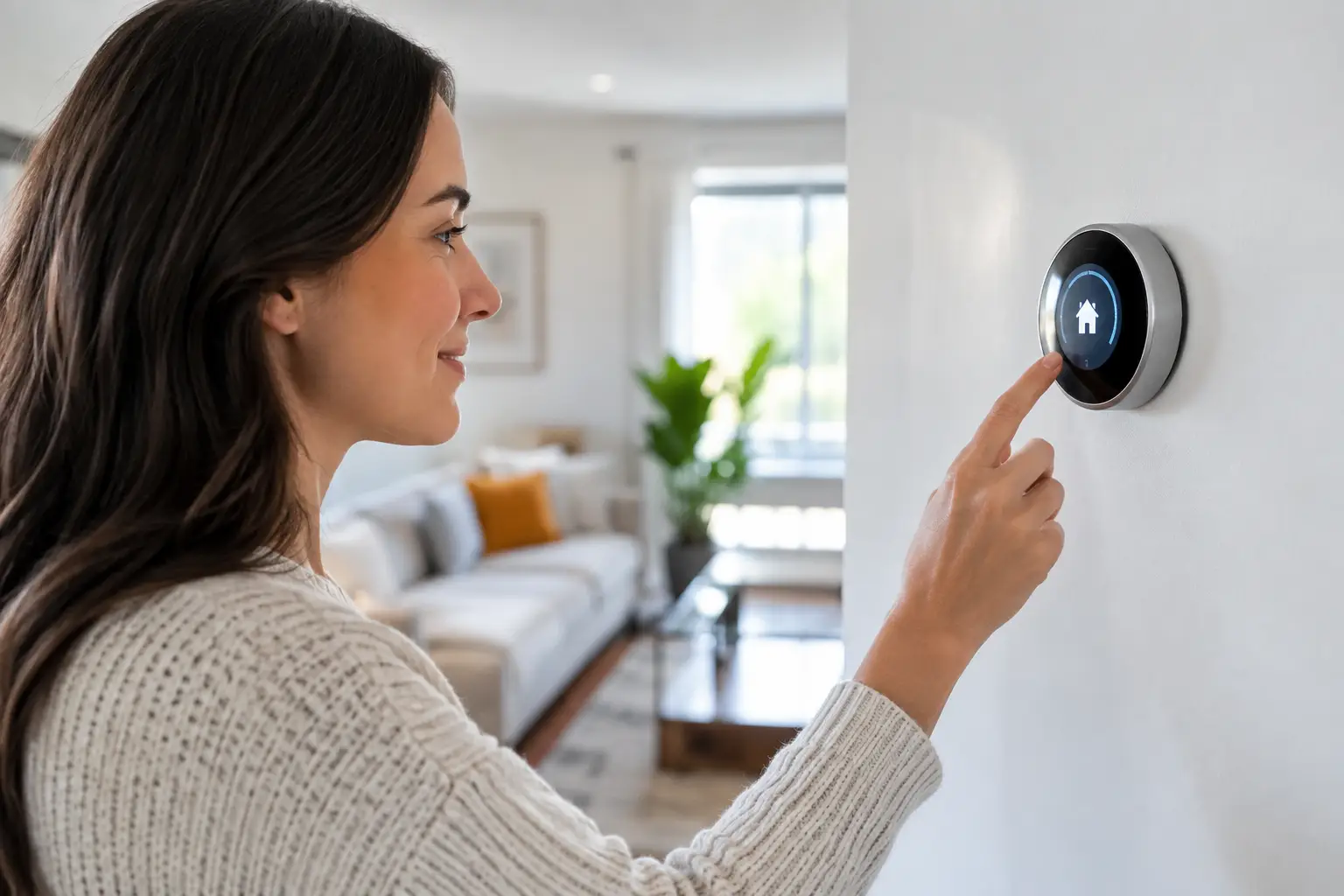
A thermostat can look like a small part of your heating and cooling system, but it has a big say in how comfortable your home feels and how much energy you use. So, are smart thermostats worth it? For many Victorian and NSW households, the answer is yes - provided the controller suits the system, the home and the way the household actually lives.
A smart thermostat gives you more control than a basic wall controller. Rather than setting one temperature and hoping for the best, you can schedule comfort around your routine, make adjustments from your mobile and, in some setups, manage different areas of the home independently. The real value is not the screen or the app. It is reducing the gap between the climate control you need and the energy your system uses when nobody needs it.
What a smart thermostat actually does
A smart thermostat or smart controller connects your heating and cooling settings to a more flexible control system. Depending on the unit and your air conditioning setup, it may let you set daily schedules, adjust temperatures remotely, create zones, monitor usage or automate settings around occupancy.
For a family with a ducted reverse-cycle system, that could mean warming the living areas before everyone gets up, then reducing output once the house is empty. In summer, it might mean cooling bedrooms before bedtime without running the whole system at full capacity all afternoon.
Many modern controllers also make it easier to see what the system is doing. Instead of walking to a wall control and guessing whether the unit is set to heating, cooling, fan or an old timer program, you have a clearer view of the current setting. That simplicity can make a genuine difference in busy households.
Are smart thermostats worth it for lower energy bills?
Potential energy savings are usually the first reason homeowners consider a smart controller. Heating and cooling can account for a significant share of household energy use, especially in homes with long operating hours, poor scheduling habits or rooms that are conditioned when no one is using them.
A smart thermostat cannot make an inefficient system efficient on its own. It will not fix leaking ductwork, a blocked filter, an ageing unit or inadequate insulation. What it can do is prevent unnecessary run time. Small changes such as turning the system down overnight, avoiding heating empty rooms and not cooling the home hours before you return can add up across a season.
The biggest savings tend to come from better habits, not extreme temperature settings. Setting heating very high in winter or cooling very low in summer does not make the system reach comfort faster. It simply asks it to work harder, often for longer. A well-programmed controller helps maintain a sensible, steady temperature instead of repeatedly overcorrecting.
Your results will depend on the size and condition of the system, your electricity plan, the home’s insulation and how often heating or cooling is used. A household that is already disciplined about switching the system off may see modest savings. A household where the air conditioning often runs in an empty home may notice a more meaningful change.
Comfort is often the better reason to upgrade
Energy efficiency matters, but reliable comfort is what most people notice first. Melbourne’s weather can shift quickly, and a home with hot upstairs rooms, cold living areas or competing temperature preferences can be difficult to manage with a basic controller.
Smart temperature management gives you more ways to tailor the system to the property. Scheduling avoids the uncomfortable rush of arriving home to a stuffy house or waking up to a cold one. Remote access is useful when plans change. If you are delayed at work, out for the day or heading home early, you can adjust the system without leaving it operating unnecessarily.
For ducted systems with zoning capability, the benefits can be greater. You may be able to direct conditioned air to the rooms in use rather than treating the entire home as one space. This is particularly useful in larger homes, double-storey properties and households with different routines. A well-designed zoning setup can improve comfort while reducing waste, but it needs to be configured correctly for the system’s airflow requirements.
Compatibility matters more than the app
Not every smart thermostat works with every air conditioning system. This is where a little professional guidance can prevent an expensive and frustrating upgrade.
Some split systems and ducted systems have proprietary controls, meaning they are designed to work with a particular controller or smart integration platform. Others can accept compatible third-party controls. Older systems may have limited options, while newer systems may already include app-based control that simply needs to be set up properly.
It also matters whether your home uses ducted heating, ducted reverse-cycle air conditioning, wall-mounted split systems or a combination of equipment. A controller that is excellent for a single-zone system may not deliver the same benefit in a zoned ducted home. Likewise, adding zoning to an existing system is not always as simple as changing the wall controller.
Before choosing a product, have the system assessed. An experienced technician can confirm compatibility, identify whether upgrades such as zone motors or sensors are required and explain what the controller can realistically do. This protects system performance and helps avoid controls that look smart but do not solve the household’s comfort problem.
The costs and trade-offs to consider
A smart thermostat has an upfront cost, and installation may involve more than replacing a wall panel. The final price depends on the controller, your existing system, required wiring, Wi-Fi connectivity and whether zoning or other system changes are involved.
There is also a learning curve. The best schedules are built around your real routine, which can take a week or two to fine-tune. Some people prefer the simplicity of a standard controller and may not use the app features enough to justify a premium upgrade.
Wi-Fi-dependent functions can be limited during an internet outage, although the system should still have local controls. It is also worth choosing a reputable solution with clear support and a practical interface. If every temperature change feels complicated, the technology will not improve daily comfort.
Privacy is another consideration for app-connected devices. Check what information the platform collects, how accounts are secured and whether you can manage access for other household members. These are sensible checks for any connected home device.
When a smart controller makes the most sense
Smart thermostats are usually a strong investment when your household has changing routines, a large home, a ducted system with zones or a tendency to leave heating and cooling running longer than needed. They are also useful during a renovation or new build, when the controller, zones and system design can be planned together instead of added as an afterthought.
They may be less urgent if your existing unit is nearing the end of its life, struggles to maintain temperature or has not been serviced in years. In that situation, start with the fundamentals. A professional service can identify performance issues, improve airflow and confirm whether an upgrade is better spent on repairs, maintenance or a new energy-efficient system.
For small businesses, smart scheduling can also be valuable. It can help align operating hours with heating and cooling times, while allowing managers to check settings without being on site. The right approach depends on the size of the premises, the number of rooms and how consistently the space is used.
Getting the most from your smart thermostat
Once installed, use the controller to support steady comfort rather than constantly changing settings. Create a simple weekday schedule, then adjust it after seeing how the home responds. Keep filters clean and arrange regular servicing, because a smart controller works best with equipment that is operating properly.
If you have a ducted system, ask whether your zoning setup and temperature sensor locations are suited to the way you use the home. A controller placed in the wrong area can make the system respond to a temperature that does not reflect where people spend their time. Tailored advice is particularly worthwhile where rooms heat up differently or the property has challenging layouts.
A smart thermostat is most worthwhile when it becomes an easy part of everyday life: comfort where you need it, when you need it, with less energy wasted in the background. If you are considering a new system, an upgrade or a smarter way to manage your existing air conditioning, a professional assessment can help you choose controls that genuinely fit your home rather than adding technology for its own sake.