
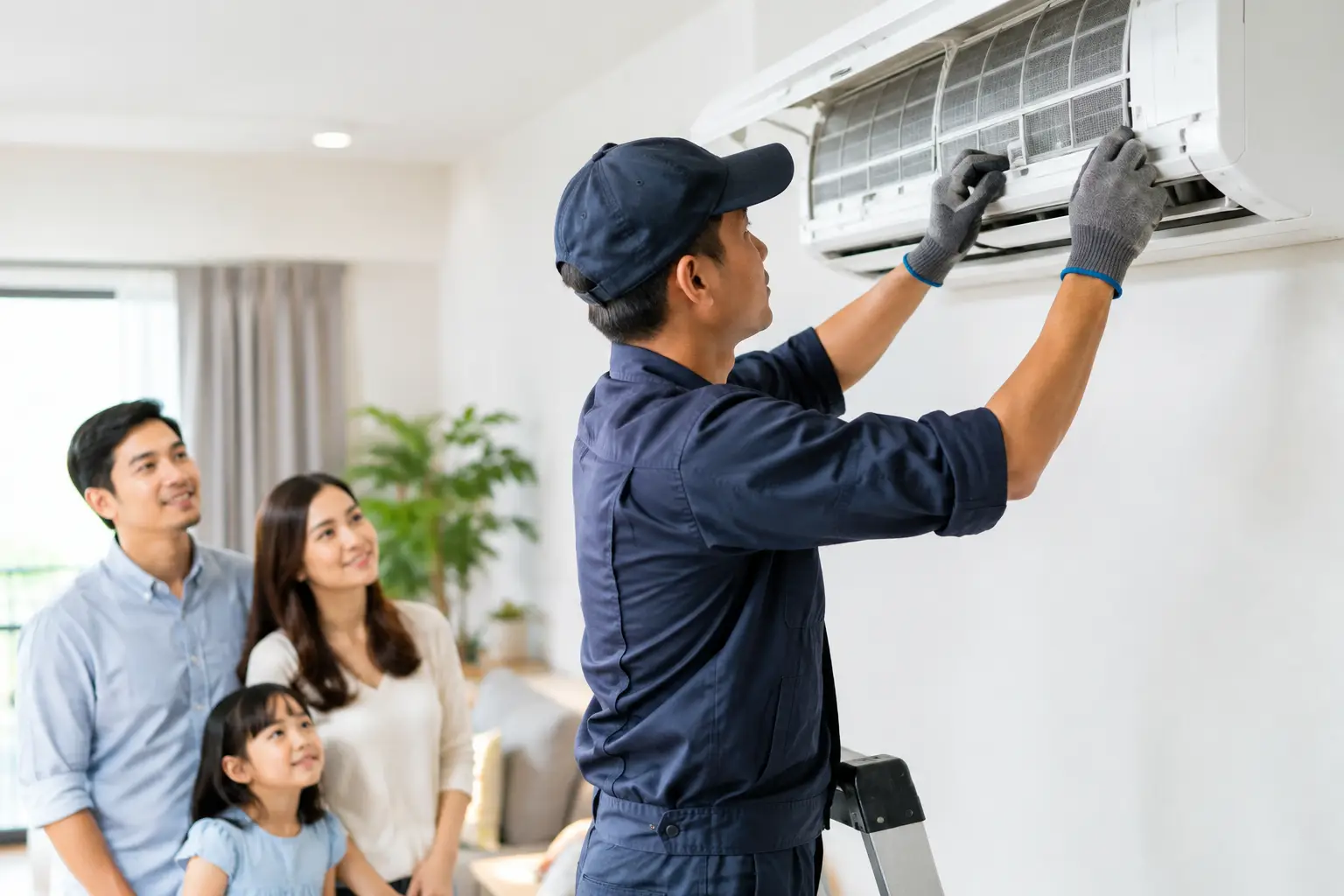
A split system that trips the switchboard halfway through a Melbourne heatwave is more than an inconvenience. It can point to an electrical fault that needs prompt attention. Aircon electrical safety is about protecting your household, property and system by recognising warning signs early and leaving electrical work to qualified professionals.
Your air conditioner draws a significant amount of power, particularly when it starts up, heats a large space or runs during extreme weather. When the unit, wiring or electrical circuit is not in good condition, the risks can range from repeated outages and costly component damage to electric shock or fire. The good news is that most issues show clear signs before they become serious.
Why air conditioners need dedicated electrical care
Air conditioning combines refrigeration components, motors, controls and electrical connections in one hard-working system. Ducted units, multi-head split systems and larger light commercial systems can place a substantial load on a property’s electrical supply. That load needs to be correctly assessed during installation.
A professionally installed system will have suitable cabling, isolation, circuit protection and earthing for its size and design. The exact requirements depend on the unit’s capacity, the property’s existing switchboard, cable run and whether other high-demand appliances are operating at the same time.
Older homes can present particular challenges. A new, efficient air conditioner may be the right choice for comfort and running costs, but an ageing switchboard or undersized circuit may not be ready for it. This does not mean every older home needs a full electrical upgrade. It does mean the electrical setup should be checked before installation, rather than treated as an afterthought.
Aircon electrical safety warning signs to act on
Your air conditioner should operate quietly and consistently. A small amount of sound from fans and airflow is normal, but electrical faults often produce changes that are difficult to ignore. If something feels unusual, turn the system off and arrange a professional assessment.
Common warning signs include:
- The safety switch or circuit breaker trips when the air conditioner starts or runs.
- You notice a burning smell, hot plastic smell, smoke or visible sparking near the indoor unit, outdoor unit or switchboard.
- The power point, isolator switch, cabling or wall area around the unit feels hot.
- The system hums but will not start, cuts in and out, or causes lights to flicker.
- You receive a tingling sensation when touching the unit, grille, controller or nearby metal surface.
- There is visible damage to cables, exposed wiring, cracked covers or water around electrical components.
A tripped breaker is not something to repeatedly reset in the hope it will hold. Circuit protection is designed to interrupt power when it detects a fault or overload. Resetting it once may be reasonable after an isolated event, but if it trips again, stop using the air conditioner until the cause has been identified.
If you see smoke, flames or active sparking, switch off power at the main switch only if it is safe to do so, move people away from the area and call emergency services. Do not touch wet equipment, damaged cables or the outdoor unit.
Water and electricity need careful separation
Air conditioners naturally create condensation as they remove humidity from the air. That water should drain safely away through correctly installed pipework. When a drain blocks, leaks or overflows, water can reach walls, ceilings, electrical terminals or nearby appliances.
An indoor unit dripping water is therefore not just a mess to manage with towels. It may be a blocked drain, a poorly installed condensate line or an issue with the unit’s operation. Turn the system off if water is leaking near electrical controls, power outlets or wiring, then book a repair.
Outdoor units also need attention. They are designed to operate outside, but they should not sit in standing water or be sprayed directly with a high-pressure cleaner. Keep garden hoses, sprinklers and loose debris away from electrical connections. After severe weather, check from a safe distance for storm damage, fallen branches or displaced covers before using the system.
Safe use at home starts with simple habits
Most households do not need to understand the technical details of air conditioning wiring. A few practical habits, however, make a meaningful difference to safety and system reliability.
Avoid running an air conditioner through an extension lead or double adaptor. Fixed air conditioning equipment should be connected as designed, not adapted to suit an inconvenient power point. Extension leads can overheat, become damaged or fail to handle the required electrical load.
Keep the area around the outdoor unit clear. Boxes, garden furniture and overgrown plants restrict airflow, forcing the system to work harder. They can also make it difficult for a technician to inspect isolators and cabling safely. Indoors, do not cover vents or push furniture tightly against wall-mounted units.
Use the controller as intended and avoid tampering with covers, wiring or electrical switches. Changing a filter is a normal owner task on many systems, provided the unit is switched off and the manufacturer’s instructions are followed. Anything involving electrical panels, hardwired connections, circuit breakers or internal components belongs to a licensed professional.
Professional installation is the first safety measure
The safest time to address electrical requirements is before a system is installed. A proper site assessment considers more than room size and unit placement. It should also account for the property’s electrical capacity, the location of the switchboard, cable pathways, outdoor-unit access and how the system will integrate with the building.
This is especially valuable for ducted air conditioning, where equipment, zoning controls and concealed services must work together across the home. A tailored design can improve comfort and energy efficiency while ensuring the electrical side of the installation is planned correctly.
In Victoria and NSW, electrical work must be completed by appropriately licensed tradespeople. Depending on the work involved, an air conditioning technician may coordinate with a licensed electrician to ensure the system is connected, protected and tested correctly. Ask who will manage the electrical component of your installation and what documentation will be provided when the work is complete.
Choosing the cheapest installation option can create false savings if it skips the assessment, uses unsuitable components or leaves the system difficult to service. A quality installation is an investment in dependable comfort, electrical safety and long-term performance.
Servicing helps prevent electrical faults
Regular air conditioning servicing is not only about cooler air in summer and reliable warmth in winter. It gives a technician the opportunity to inspect key electrical and mechanical components before a minor issue becomes a breakdown.
During a service, the exact checks will depend on the system, but a technician may inspect wiring condition, terminals, capacitors, fan motors, electrical isolation and overall operation. They can also clean components, check drainage, assess airflow and identify wear that may affect efficiency or safety.
How often your system needs service depends on usage, location and the type of unit. A home system used seasonally may have different needs from a light commercial system operating most days. Homes near the coast, properties with heavy dust exposure, and households that rely on heating and cooling year-round may benefit from more frequent checks.
Do not wait for a complete failure if the system is becoming noisier, less responsive or more expensive to run. Early diagnosis can protect expensive parts such as compressors and control boards, while reducing the chance of an inconvenient outage on the hottest or coldest day of the year.
What to do when something does not seem right
Start by switching the air conditioner off at the controller. If there is a burning smell, water near electrical equipment, repeated tripping or visible damage, do not restart it. Take note of what happened, including any error code, unusual noise or switchboard behaviour, as this information can help with diagnosis.
For a straightforward maintenance concern, such as reduced airflow or a dirty filter, arrange a service. For electrical warning signs, book a repair promptly and make clear that the unit has tripped power or shown signs of overheating. This helps ensure the right support is arranged from the outset.
At Air Con Solutions, professional assessment is focused on finding the cause, not simply getting the unit running again. That approach gives homeowners and small business operators confidence that their system is safe, efficient and suited to the way they use their space.
Comfort should never come at the expense of safety. If your air conditioner is sending warning signs, switching it off early and arranging expert help is the simplest way to protect the people and property that matter most.