
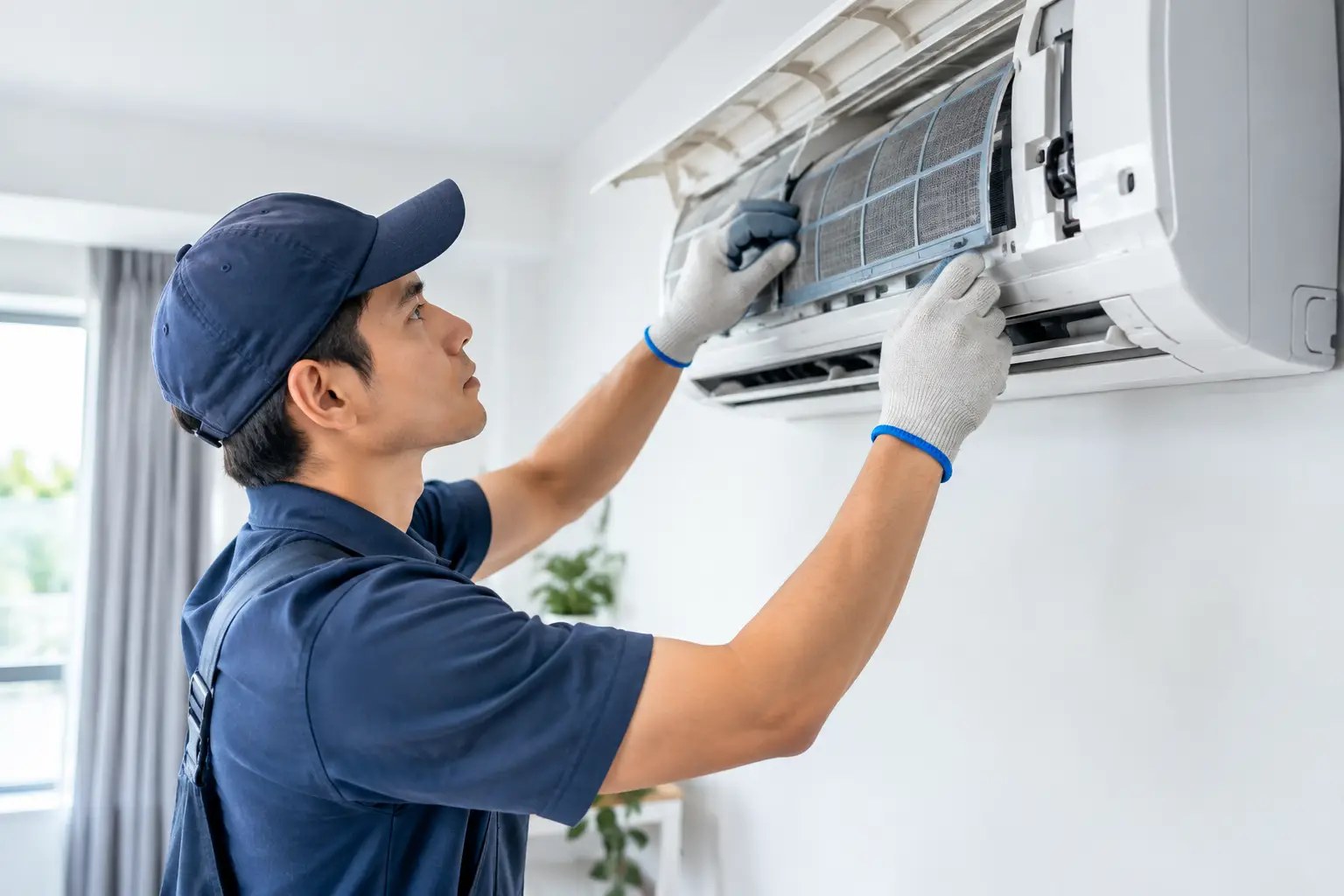
A system that cools one room but leaves another stuffy, runs longer than it used to, or sends your power bill climbing is asking for attention. Professional aircon servicing helps keep your heating and cooling working as intended, so your home or workplace stays comfortable without unnecessary energy use or surprise breakdowns.
For most households, the best time to service an air conditioner is before the season puts it under pressure. That means checking cooling performance before a hot Victorian summer and testing heating before the colder months arrive. A small issue that is easy to resolve during a routine visit can become far more inconvenient when the system is working at full capacity.
What aircon servicing actually covers
Air conditioning is not a single appliance with a single moving part. Whether you have a wall-mounted split system, ducted reverse-cycle air conditioning or a system serving a small commercial space, several components need to work together properly. Servicing is about assessing that whole system, not simply cleaning what is visible.
A qualified technician will inspect the indoor and outdoor units, test operation, check electrical connections and assess airflow. They can clean accessible components, review drainage, inspect filters and look for signs of wear, leaks or faults that could affect efficiency and reliability. For ducted systems, attention may also be given to zones, return-air pathways, vents and controls.
The exact work depends on the system, its age and its condition. A newer unit in a lightly used home may need a straightforward maintenance visit. An older system, or one that has worked hard through several peak seasons, may require more detailed diagnosis. The aim is always practical: identify what is affecting comfort now and help prevent a larger repair later.
Why regular servicing makes a difference
A clean, correctly operating air conditioner does not have to work as hard to move conditioned air through your rooms. When filters are blocked, airflow is restricted or parts are starting to fail, the system can run for longer while delivering less comfort. That can mean uneven temperatures, more noise and higher running costs.
Routine servicing also gives you a clearer picture of your system’s condition. Rather than waiting for a complete failure on a very hot or cold day, you can make informed decisions about repairs, upgrades or ongoing maintenance. This is particularly useful for ducted systems, where issues can be less obvious than they are with a wall-mounted unit.
For homes with smart controls or AirSmart-integrated systems, servicing can also include checking that temperature settings, zones and control functions are responding as they should. Smart climate control should make daily comfort easier, not add another layer of uncertainty.
How often should you book a service?
For most residential systems, an annual professional service is a sensible starting point. If your air conditioner is used heavily for both heating and cooling, serves a larger household, or supports a home office that needs consistent comfort every day, more frequent checks may be worthwhile.
Small businesses may need a different schedule. Systems in offices, shops, consulting rooms and other light commercial settings can experience longer operating hours and greater demand. Regular maintenance helps reduce disruption for staff and customers, particularly during busy trading periods.
There is no single schedule that suits every property. Usage, system type, the surrounding environment and manufacturer requirements all matter. A technician can recommend a maintenance plan that reflects how your system is actually used rather than applying a one-size-fits-all approach.
Signs your air conditioner needs attention sooner
You do not need to wait for the annual service if something feels off. Changes in performance are often the first indication that a component needs to be checked. A unit that takes much longer to cool or heat, delivers weak airflow, produces unusual smells or makes new rattling, grinding or buzzing sounds should be assessed promptly.
Water dripping from the indoor unit is another common reason to book a visit. It may relate to drainage, condensation or a blocked component, and it is best not to ignore it. Likewise, if the system repeatedly turns on and off, trips a circuit, displays an error code or fails to respond to its controller, a professional diagnosis is the safest next step.
A sudden increase in energy use can also be relevant, although the cause is not always the air conditioner alone. Extreme weather, changed household routines and electricity tariffs can all affect bills. Servicing helps rule out poor airflow, inefficient operation or developing faults before you assume the system needs replacing.
What you can do between service visits
There are a few simple habits that support better performance between professional appointments. Cleaning or washing reusable filters according to the manufacturer’s instructions is one of the most useful. Dirty filters restrict airflow and can make a system work harder than necessary.
Keep the area around the outdoor unit clear of leaves, grass clippings and stored items so it can release heat properly. Inside, make sure vents and return-air grilles are not blocked by furniture, curtains or boxes. If you have a ducted system, keep an eye on whether rooms are heating or cooling evenly, especially after renovations or changes to furniture layouts.
These checks are helpful, but they do not replace professional aircon servicing. Electrical work, refrigerant issues and internal repairs need appropriately qualified technicians. Attempting a fix without the right equipment or experience can create safety risks and may cause further damage.
Repair, service or replacement?
A service visit does not automatically mean you need a new system. In many cases, a repair or adjustment is the most cost-effective option. Replacing a worn part, clearing a drainage issue or restoring airflow can bring a system back to reliable operation.
Replacement becomes worth considering when repairs are frequent, performance remains poor, or the unit is nearing the end of its useful life. An older system may also use more energy than a modern, correctly sized alternative. For a renovation, extension or property with difficult layout constraints, a tailored ducted or split-system design may improve comfort far more than repairing an unsuitable setup.
The right choice depends on the condition of the existing system, the cost of repairs, your comfort goals and the way you use the space. Clear advice should explain the options, expected outcomes and trade-offs, allowing you to decide with confidence.
Book before peak season arrives
The busiest time to look for help is often the least convenient time to need it. Booking ahead gives you more flexibility and helps ensure your system is prepared before it is called on every day. It also gives a technician time to address minor concerns before they interrupt your comfort.
With more than 15 years of experience, Air Con Solutions provides tailored servicing, repairs and ongoing maintenance for homes and light commercial properties. If your system is overdue for a check or has started showing signs of trouble, arranging a professional assessment is a straightforward way to protect comfort, efficiency and peace of mind.
A well-maintained air conditioner should fade into the background: steady temperatures, cleaner airflow and dependable performance when the weather changes. Booking service before you need an urgent repair is one of the simplest ways to keep it that way.