
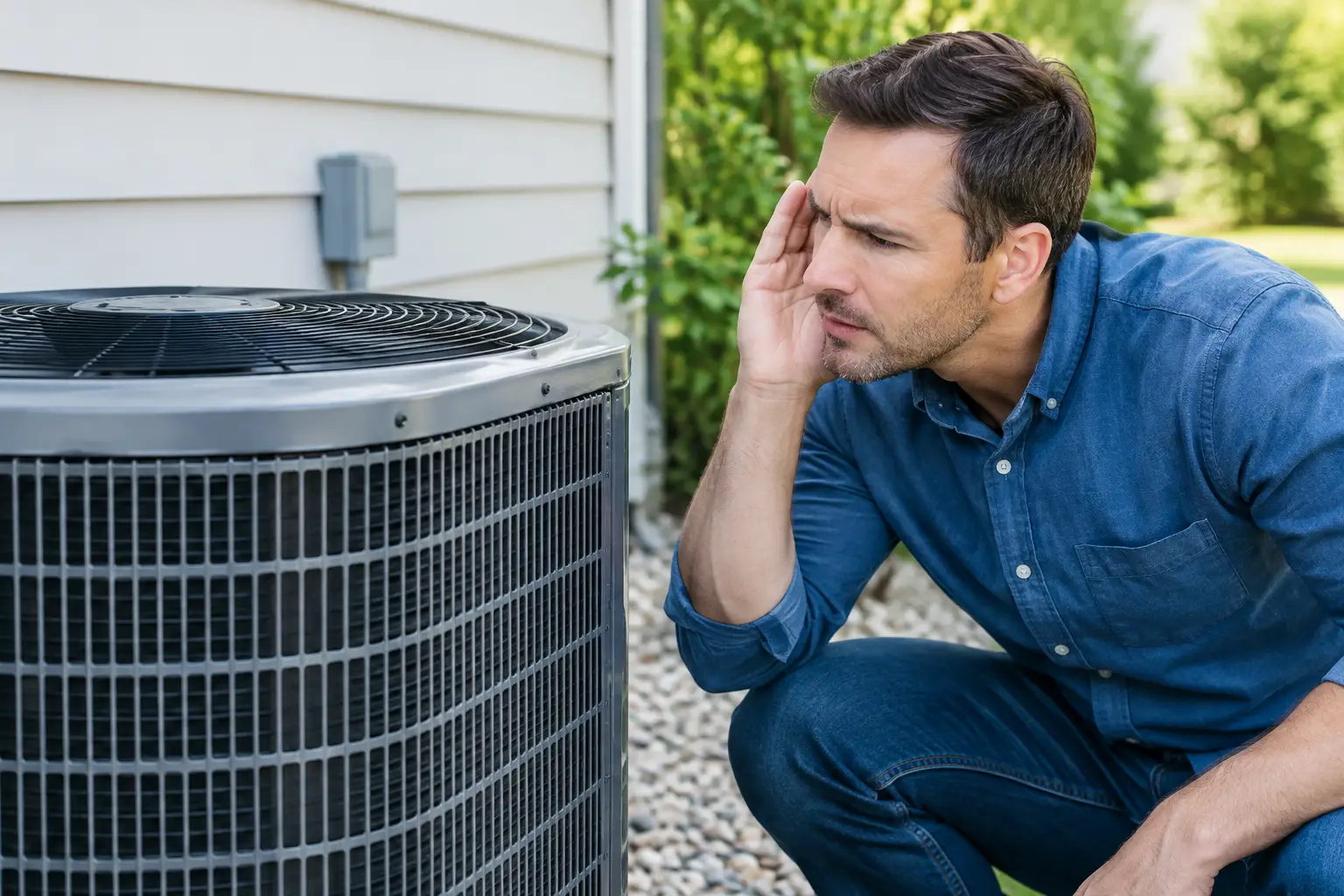
A new air conditioner noise is easy to put off when the system is still cooling or heating your home. But unusual sounds are often your system’s early warning sign. A loose component may be a simple repair today, while a grinding motor or persistent hissing sound can lead to a breakdown, higher running costs or more extensive damage if left unattended.
The sound alone cannot always confirm the fault. Where it comes from, when it occurs and whether your comfort has changed all help narrow down the cause. Here is what common air conditioning noises can mean, when it is safe to monitor them and when to arrange professional help.
When air conditioner noise is normal
No air conditioning system is completely silent. Ducted units, split systems and reverse-cycle systems all make some operational noise as fans move air, compressors start and stop, and components expand or contract with temperature changes.
A soft airflow sound from vents, a brief click as the thermostat calls for heating or cooling, and a low outdoor-unit hum are generally expected. You may also hear a light ticking from ductwork as temperatures change, particularly just after the system starts or stops. In a quiet home at night, sounds that are normally hidden by daily activity can seem more noticeable.
The key difference is consistency. Normal sounds are typically low-level, short-lived and familiar. A noise that is suddenly louder, repeats continuously, starts alongside weak airflow or causes the system to cycle off deserves attention.
What common air conditioner noises can mean
Rattling or vibrating
Rattling is one of the more common calls for service. It can be caused by a loose panel, screw, cover or mounting bracket. On outdoor units, leaves, twigs or other debris can also become caught near the fan guard and create vibration.
Sometimes the issue is not inside the unit at all. Ductwork can rattle against a ceiling space, or pipework can touch a wall or bracket as the system runs. While a minor rattle may not be urgent, it should still be checked if it is getting louder. Ongoing vibration can loosen additional parts and place unnecessary stress on the system.
Banging, clunking or knocking
A single clunk at start-up or shut-down may be normal for some systems. Repeated banging or a heavy knocking noise is different. It can indicate a loose fan blade, a damaged blower wheel, worn motor mounts or an issue within the compressor.
Turn the system off and avoid restarting it if the sound is loud, sudden or accompanied by shaking. Continuing to run a unit with a moving component out of balance can cause further damage quickly. A qualified technician can inspect the fan, motor assembly and compressor safely.
Squealing, screeching or high-pitched whistling
A sharp squeal often points to a fan motor, bearing or belt issue in systems that use belts. The sound may begin quietly and worsen as the unit warms up or runs for longer. Bearings and motors do not usually improve with use, so early assessment can help prevent a complete failure on a very hot or cold day.
A high-pitched whistle can have a different cause. It may be air being forced through a restricted return-air grille, a dirty filter or an incorrectly sized duct opening. In some cases, it can also be related to refrigerant pressure. Because refrigerant work must be completed by appropriately licensed professionals, do not attempt to investigate pipes or fittings yourself.
Hissing or bubbling
A short, faint hiss after the system stops can be part of normal refrigerant pressure equalising. A continuous hissing sound, particularly near the indoor head unit, pipework or outdoor unit, needs more prompt attention. It may indicate a refrigerant leak or a fault in the sealed refrigeration circuit.
Bubbling or gurgling can also point to refrigerant issues, although it may sometimes be caused by water not draining correctly. If you notice reduced cooling or heating, ice on pipework, water leaks or a system that runs longer than usual, book a repair rather than waiting for the issue to worsen.
Grinding or metal-on-metal sounds
Grinding is not a sound to ignore. It can indicate worn motor bearings, a failing fan motor or a compressor problem. These parts work under load, and running the system after grinding begins can turn a repairable fault into a replacement job.
Switch the unit off, especially if the noise is strong or accompanied by a burning smell, repeated tripping at the switchboard or poor airflow. Do not remove covers or reach into the outdoor unit. Fans and electrical components can remain hazardous even when the system appears to have stopped.
Clicking, buzzing or humming
A brief click when the system starts is usually normal. Repeated clicking without the system starting may indicate an electrical control issue, such as a relay, capacitor or thermostat fault. A buzzing sound can also be electrical, although it may be caused by loose parts vibrating.
If buzzing is loud, persistent or paired with a burning smell, turn the system off at the isolator or switchboard if it is safe to do so. Electrical faults require professional diagnosis. This is particularly true when a circuit breaker trips more than once.
Whooshing, roaring or weak airflow noise
Air rushing through ducts or a split-system head can become louder when filters are blocked or vents are closed. A system has to work harder to pull air through restrictions, which can create a whooshing sound and reduce comfort across the home.
Check that accessible return-air grilles and supply vents are clear of furniture, curtains and stored items. If your system has washable filters, clean them according to the manufacturer’s instructions and allow them to dry fully before refitting. If the noise remains, the cause may be within the fan, ductwork or system design.
A few safe checks before booking a repair
Before arranging a visit, take a moment to observe the noise. Note whether it comes from the indoor unit, outdoor unit, ceiling vents or wall controller. It also helps to know whether it happens only on cooling, only on heating, at start-up or throughout the entire cycle.
You can check for obvious debris around the outdoor unit, provided the system is switched off and you do not remove safety guards. Keep plants, garden waste and stored items clear so air can move freely around the unit. Inside, check accessible filters and make sure vents are open and unobstructed.
Avoid trying to tighten internal components, repair electrical connections or add refrigerant. These jobs need the right tools, safety controls and licensing. A quick video recorded from a safe distance can be useful when describing the issue to your technician.
When to turn the system off straight away
Some noises can wait for a scheduled service. Others should be treated as a reason to stop using the system until it has been inspected. Turn it off and arrange prompt assistance if you hear grinding, loud banging, continuous hissing or electrical buzzing. Do the same if there is a burning smell, smoke, water near electrical components, ice forming on the unit, or repeated circuit breaker trips.
For small businesses, acting early can be especially worthwhile. A noisy system in a shop, office or consulting room can affect customer comfort and become disruptive during trading hours. Planning a repair before a complete failure gives you more control over timing and reduces the chance of an uncomfortable interruption.
Why regular servicing keeps systems quieter
Many air conditioner noise issues begin with gradual wear, dust build-up or small components working loose over time. Routine servicing gives a technician the opportunity to clean filters and coils, inspect fan assemblies, test electrical components, assess drainage and identify developing faults before they become urgent.
It also supports efficient operation. When airflow is restricted or mechanical parts are under strain, the system may run longer to achieve the set temperature. That can add to energy use while placing more pressure on key components. The right maintenance schedule depends on the type of system, how often it runs, whether you have pets, and the conditions around your property.
A well-designed installation matters too. Correctly sized equipment, secure mounting, considered duct layout and smart temperature controls all contribute to a quieter, more comfortable result. For homes with layout constraints or rooms that are difficult to keep comfortable, tailored advice can make a genuine difference.
If an unfamiliar sound is interrupting your comfort, trust what you are hearing. Booking an assessment while the problem is still manageable is often the simplest way to protect your system, your energy bills and the comfort of the people who rely on it.