
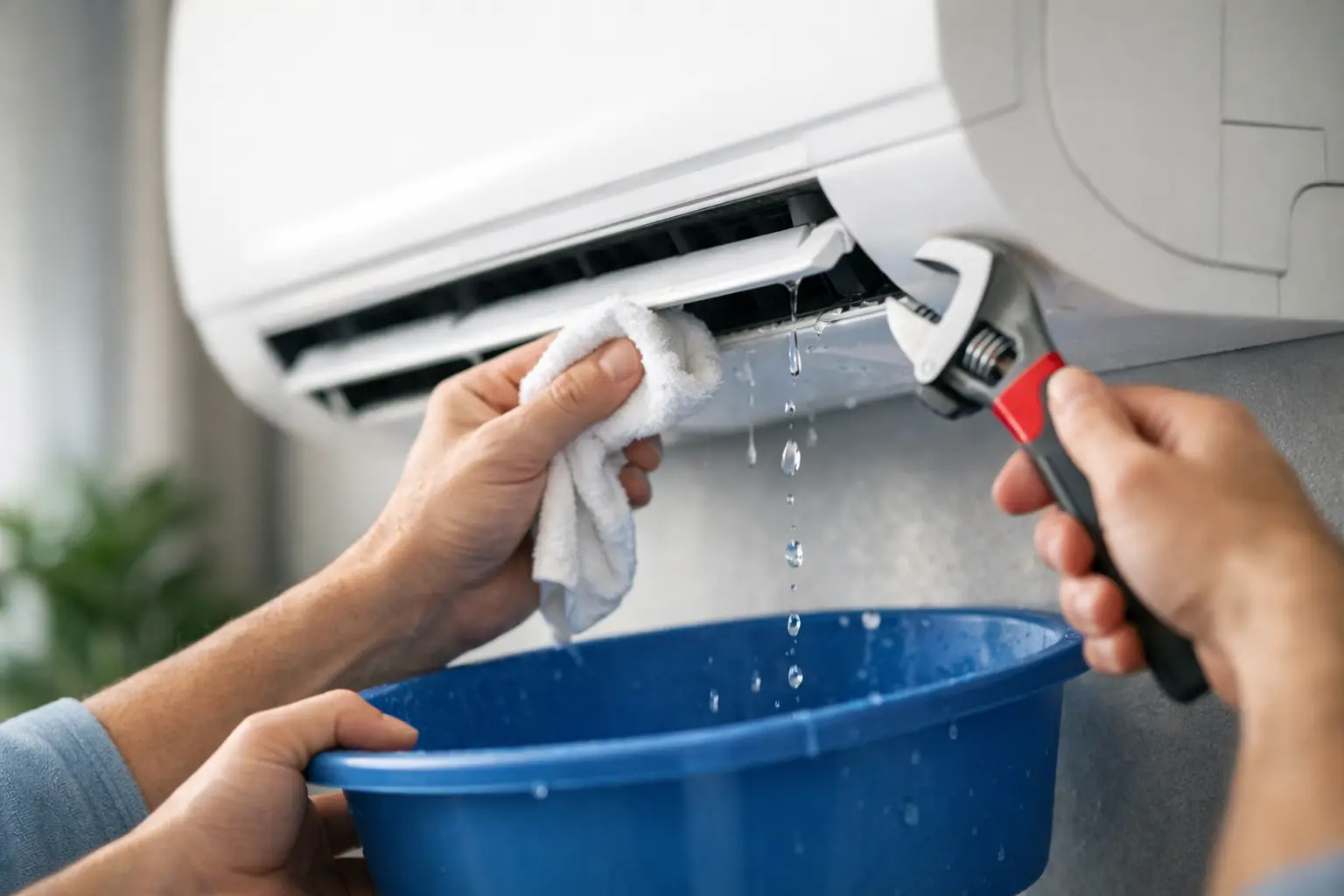
A puddle beneath an indoor air conditioner is more than an inconvenience, particularly if it is close to plaster, timber flooring or electrical fittings. To stop aircon water dripping safely, the first step is working out whether you are seeing normal condensation outside or a drainage fault inside your home.
Air conditioners remove moisture from indoor air as they cool it. That moisture needs a clear path through the condensate drain to the outside or a suitable drain point. When that path is blocked, poorly installed or affected by another fault, water can back up and escape where it should not. Acting early can help protect your property and keep the system working efficiently.
Is aircon water dripping ever normal?
Water dripping from the outdoor drain line while the system is cooling is usually normal. On humid Melbourne or Geelong days, an air conditioner can produce a noticeable amount of condensation. This is simply moisture removed from the air inside.
Water coming from the indoor wall unit, ceiling vents, return-air grille or ducted system outlets is not normal. Nor is water staining the ceiling below a concealed ducted unit. These signs point to a drainage problem, a frozen coil, a failed pump or an installation issue that needs attention.
If the leak is near power points, lights or electrical components, switch the air conditioner off at the controller and, if it is safe to do so, isolate the circuit at the switchboard. Keep people clear of the area and arrange a professional assessment. Do not continue running a system that is leaking indoors in the hope that it will clear itself.
Why is my air conditioner leaking water inside?
Most indoor leaks have a straightforward cause, but the right repair depends on the type of system and where the water is appearing.
A blocked condensate drain
This is one of the most common causes. Dust, mould, algae and airborne debris can build up in the drain line or trap over time. Water then cannot flow away from the indoor coil, so it fills the drain tray and overflows.
A blockage can develop gradually. You may first notice a musty smell, intermittent dripping or reduced cooling before water becomes visible. Professional drain cleaning removes the blockage properly and checks that the line has the correct fall for reliable drainage.
Dirty filters or an iced-up coil
Blocked filters restrict airflow across the indoor coil. When airflow is too low, the coil can become excessively cold and freeze. Once the ice melts, the amount of water may overwhelm the drain tray, creating a leak.
Cleaning reusable filters is a sensible first check for many split systems. Turn the unit off, follow the manufacturer instructions, wash filters gently if appropriate and allow them to dry completely before refitting. If the coil is visibly iced, turn cooling off and let it thaw. Avoid chipping at ice or opening internal components. Repeated icing needs a technician, as dirty coils, airflow faults and refrigerant issues can all be involved.
A damaged or poorly positioned drain line
Condensate drains rely on gravity unless a pump has been fitted. A crushed, disconnected, sagging or incorrectly graded pipe can hold water and cause it to return to the unit. This can be more difficult to identify in ducted systems, where pipework may run through a ceiling space.
Drainage faults are also more likely after renovations, roof work or changes around an outdoor unit. A qualified technician can inspect the full drainage route rather than treating only the visible symptom.
A cracked drain tray or failed condensate pump
Older systems can develop cracks in the drain tray, especially where corrosion or persistent debris has been present. Some installations use a condensate pump to move water to a higher drain point. If that pump fails, water can quickly build up and overflow.
These faults require repair or replacement rather than a simple clean. Continuing to use the air conditioner may cause ceiling damage or affect internal electrical parts.
Low refrigerant or another cooling fault
Low refrigerant can contribute to coil icing and water leaks. It is not a normal maintenance item and should never be treated as a simple top-up. Refrigerant loss can indicate a leak that needs to be located and repaired by a licensed technician.
Poor cooling, ice on pipework, hissing sounds and water leaks occurring together are good reasons to book a repair promptly.
Safe checks that may stop aircon water dripping
Before arranging service, there are a few low-risk checks homeowners can make. Start by turning the system off and placing towels or a shallow container beneath the leak to limit water damage. Do not remove electrical covers or climb into a roof space where water may be present.
Check and clean accessible air filters if they are due. Then look at the outdoor end of the drain line, if it is visible and easy to reach from ground level. Leaves, mud, mulch or insects around the outlet can prevent water from draining freely. Clear surface debris only - do not force wire, high-pressure water or chemical drain cleaner into the pipe. These can damage pipework, dislodge connections or push a blockage further into the system.
Once filters are clean and obvious debris is removed, allow the system to remain off long enough for any ice to thaw. Restart it and monitor closely. If water returns indoors, stop using the unit and book a professional repair.
For a ducted system, water marks around ceiling vents, sagging plaster or dripping from a return-air grille should be treated as an urgent service issue. The equipment and drain tray may be concealed above the ceiling, and further operation can make property damage worse.
When to call an air conditioning technician
A professional diagnosis is the safest option whenever an indoor leak is ongoing, substantial or unexplained. It is especially worthwhile if the unit is still under warranty, as unapproved repairs can affect coverage.
Book a technician without delay if you notice any of the following:
- Water near electrical fittings, switches or wiring.
- A bulging, stained or dripping ceiling.
- Ice on the indoor coil, copper pipework or outdoor unit.
- Weak cooling, unusual noises, error codes or repeated leaks.
A qualified technician can flush and test the condensate drain, inspect the tray and pump, assess airflow, clean relevant components and check for faults affecting the refrigeration circuit. This approach addresses the cause, rather than just drying up the water temporarily.
For homes and small businesses, a fast repair can also prevent disruption at the worst possible time - during a hot spell when the system is working hardest.
Prevent future leaks with routine servicing
The most effective way to prevent a drainage issue is to service the system before it has the chance to overflow. Filters need regular attention, particularly in homes with pets, construction dust or high air conditioner use. The ideal cleaning interval depends on the system and household, but checking filters every few months is a practical habit.
A professional air conditioning service goes further than filter cleaning. It can include checking drainage, airflow, coils, electrical connections and overall cooling performance. For ducted systems and smart climate control setups, servicing also helps confirm that zones, controls and equipment are operating as intended.
There is a trade-off in delaying maintenance: it may seem convenient when the system is still cooling, but small drainage restrictions can become water damage, mould concerns or an unexpected breakdown. Regular servicing helps preserve comfort, energy efficiency and the life of the equipment.
Get the leak assessed before it affects your home
If cleaning the filter and clearing visible debris has not stopped the leak, avoid repeated restarts. Water inside an air conditioning system is a sign that drainage or cooling performance needs closer attention. Air Con Solutions can assess the fault, provide clear advice and carry out the right repair to help restore dependable comfort without guesswork.
A dry, properly draining air conditioner should be something you never have to think about. Booking service early gives your system the best chance to stay that way.