
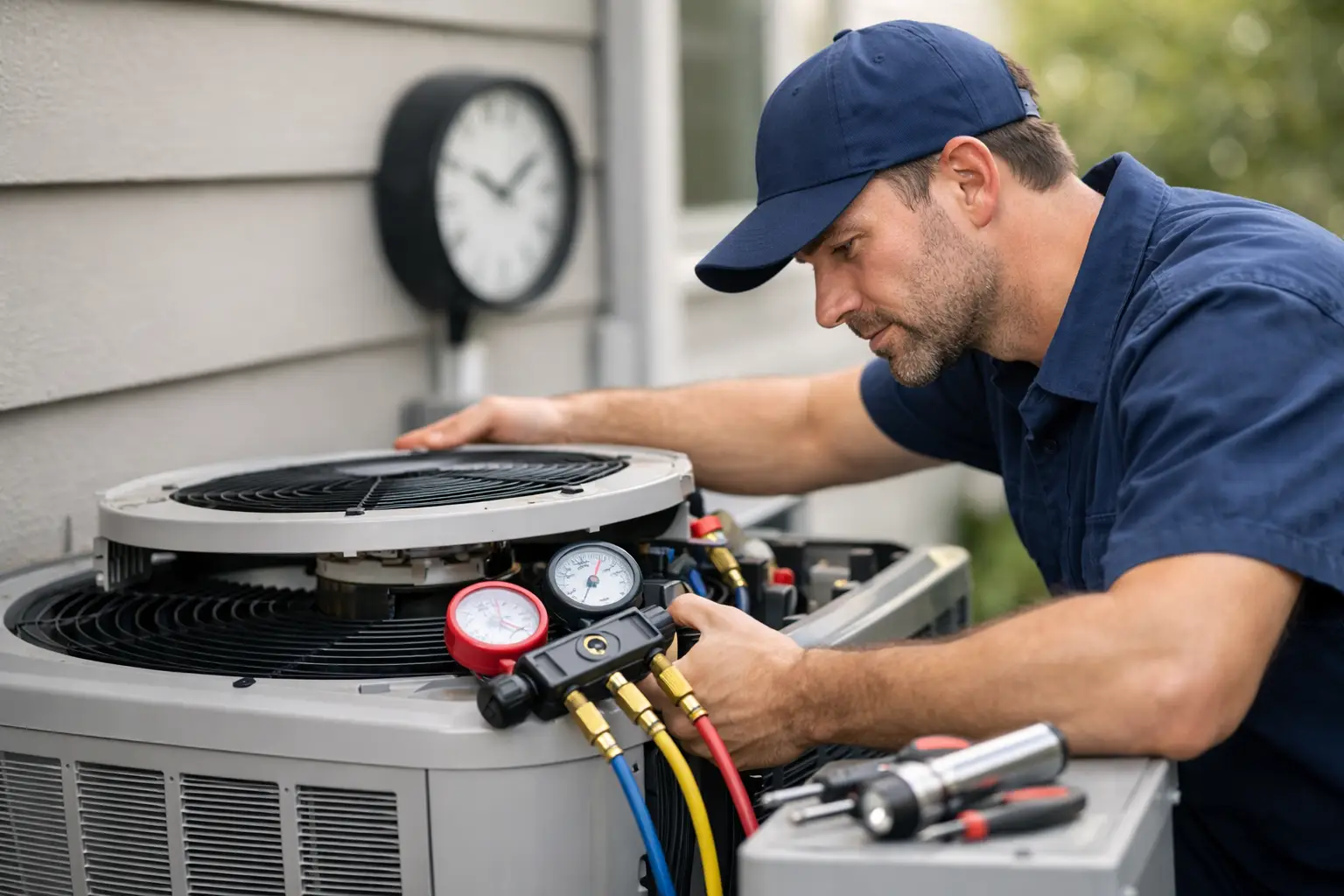
A Melbourne summer heatwave is not the time to find out your air conditioner has a blocked drain, a worn component or reduced refrigerant performance. If you are asking when should air conditioners be serviced, the simple answer is at least once a year, ideally before the season when you will rely on it most.
For many Victorian homes, that means booking a professional service in spring so the system is ready for summer. But the right schedule can vary depending on the type of system, how often it runs, the number of people in the property and whether it also provides heating through winter. Regular servicing is a practical way to protect comfort, manage energy use and reduce the chance of an inconvenient breakdown.
When should air conditioners be serviced each year?
Most residential split systems and ducted air conditioners should receive a professional service every 12 months. This allows a qualified technician to assess system performance, clean key components, check electrical connections and identify small issues before they become expensive repairs.
Spring is usually the best time for a cooling-focused service. Your air conditioner is checked and prepared before high temperatures place it under heavy demand. Booking early can also mean greater flexibility than waiting until the first very hot week of summer, when service requests often increase.
If you have a reverse-cycle system that heats your home in winter and cools it in summer, annual servicing remains the minimum. However, a service every six months may be worthwhile where the unit operates most days of the year. This is particularly relevant for larger homes, properties with multiple occupants, home offices and small commercial spaces.
Ducted systems deserve the same attention. Because much of the equipment and ductwork sits out of sight, declining performance can be easy to miss until rooms start heating or cooling unevenly. A planned service helps keep airflow, zoning and temperature control working as intended.
A service schedule that fits how you use your system
There is no single schedule that suits every property. A lightly used bedroom split system may be fine with an annual professional check and regular filter cleaning. A ducted system serving a busy family home may need more attention, especially if it runs through both heating and cooling seasons.
Consider a more frequent service if your air conditioner is exposed to dust, pet hair, smoke or building works. Filters and indoor coils can collect debris faster in these conditions, restricting airflow and forcing the system to work harder. Homes near busy roads or construction areas can face the same issue.
Small businesses should also plan servicing around operating hours and peak demand. A system that keeps staff, customers or equipment comfortable is not simply a convenience. A fault during a hot afternoon can disrupt the day quickly, so preventative maintenance is often the more cost-effective choice.
Signs your air conditioner needs service sooner
An annual booking does not mean you should ignore changes in performance between visits. Air conditioners often give early warning signs that they need professional attention. Acting promptly may prevent a minor fault from turning into a full breakdown.
Look out for these common issues:
- Weak airflow, even when the fan setting is high
- Rooms that take much longer to cool or heat than usual
- Unusual rattling, buzzing, grinding or clicking sounds
- Musty or unpleasant smells when the system starts
- Water dripping from the indoor unit or around the outdoor unit
- Higher energy bills without a clear change in usage
- Frequent cycling, error codes or a system that shuts down unexpectedly
Some symptoms have simple causes, such as a dirty filter or a blocked condensate drain. Others can involve electrical components, fans, coils or refrigerant systems. It is best not to keep running a unit that is leaking, making loud noises or struggling to maintain temperature. Switching it off and arranging a professional assessment can help avoid further damage.
What happens during a professional air conditioning service?
A proper service is more than a quick wipe of the indoor unit. The exact work depends on the system and its condition, but a technician will generally inspect the indoor and outdoor components, test operation and check whether the system is delivering efficient heating or cooling.
This can include cleaning or assessing filters, checking the evaporator and condenser coils, inspecting fans and electrical connections, testing drainage, reviewing refrigerant performance where required, and confirming the thermostat or controller is responding correctly. For ducted systems, the service may also include checking accessible ductwork, return-air grilles, zones and airflow to different rooms.
The value is in early diagnosis as much as cleaning. A loose electrical connection, partially blocked drain or declining fan performance may not stop the system today, but it can affect reliability when temperatures are at their highest or lowest. Addressing these issues early supports better performance and can extend the working life of the equipment.
If your system uses smart controls or integrated zoning, the technician can also help confirm the settings support how you live. For example, a family may benefit from scheduling temperatures around morning routines, school pick-ups and bedtime rather than running the whole house at one setting all day.
What you can do between professional services
Homeowners can make a real difference to system performance with a few simple checks. The most useful task is cleaning the filters in wall-mounted split systems. As a general guide, check them every one to three months during regular use. If they look dusty, remove them according to the manufacturer instructions, clean them gently and allow them to dry completely before refitting.
Keep the outdoor unit clear of leaves, grass clippings and stored items. It needs space around it to move air effectively. Avoid directing a hose at the unit or trying to clean internal components yourself, as this can damage parts or create an electrical risk.
Inside, pay attention to vents and return-air grilles. Do not block them with furniture, curtains or boxes. For ducted systems, make sure vents are open in the rooms you want conditioned, unless your technician has advised a specific zoning setup. Restricted airflow can make a healthy system appear underpowered.
These simple steps do not replace professional servicing. They help the system run more freely between visits and give you a better chance of noticing a change before it becomes disruptive.
Servicing, repairs and replacement are not the same thing
A routine service is preventative maintenance. It is intended to keep your system clean, safe and operating efficiently. A repair is needed when there is an identified fault, such as a failed capacitor, drainage issue, damaged fan motor or control problem.
Replacement becomes worth discussing when repair costs are increasing, performance is consistently poor or the system is nearing the end of its expected working life. Older units can also be less energy-efficient than current models, particularly when paired with modern zoning and smart temperature management.
That does not mean every older air conditioner should be replaced. A well-maintained system may continue to provide reliable comfort for years. The right decision depends on its condition, the cost of repairs, your energy use and whether the system still suits the layout of your home or business.
Plan your service before extreme weather arrives
Regular air conditioning servicing is one of the simplest ways to avoid discomfort, surprise repair costs and unnecessary energy waste. For most homes, an annual professional service before summer is the right starting point, with filter checks and basic care throughout the year.
If your system is used for both heating and cooling, has started making unusual noises or is no longer keeping every room comfortable, do not wait for the next heatwave or cold snap. Booking a tailored service now gives you a clearer picture of your system's condition and helps keep everyday comfort dependable when you need it most.