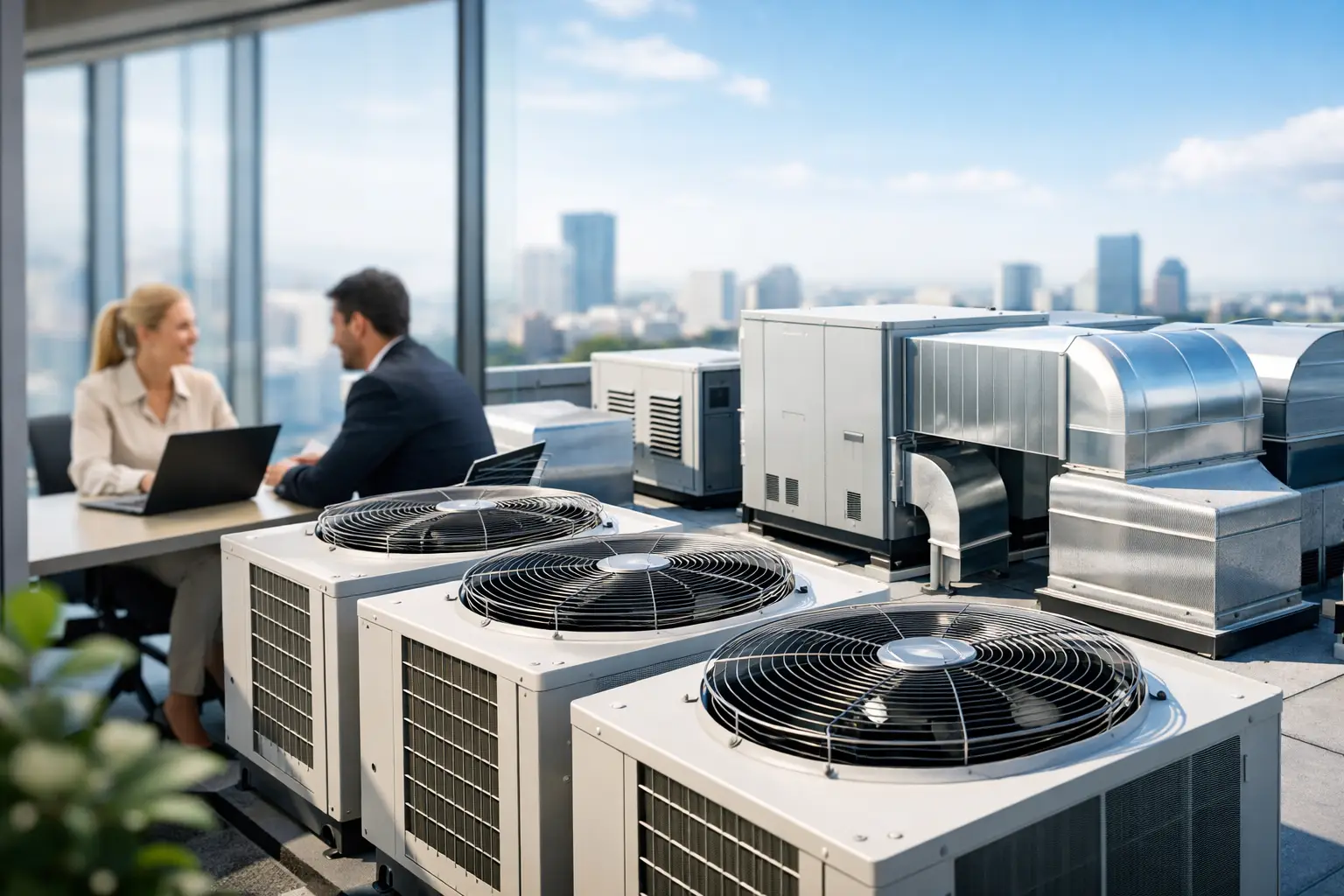
A warm shop floor, a stuffy consulting room or an office that is freezing by 10 am can affect far more than comfort. It can influence staff focus, customer dwell time, equipment performance and your power bills. A well-planned commercial HVAC system gives a small business dependable heating and cooling that suits how the space is actually used, rather than relying on a one-size-fits-all setup.
For light commercial premises, the best outcome is rarely about choosing the biggest unit. It comes from matching the system, controls and maintenance plan to the building, the people in it and the demands placed on it each day.
What commercial HVAC needs to do
Commercial HVAC refers to the heating, ventilation and air conditioning systems used in workplaces and customer-facing spaces. In a café, retail store, clinic, childcare setting, small warehouse or office, the system must manage temperature, air movement and, where required, fresh-air ventilation.
That job becomes more complex when a space has large windows, high ceilings, heat-producing equipment, frequent door opening or rooms with very different comfort needs. A compact office with meeting rooms, for example, may need separate temperature control in each area. A showroom with west-facing glass may need to handle a sharp afternoon heat load, even if it feels comfortable in the morning.
The right design considers the full picture: floor area, ceiling height, insulation, orientation, occupancy, operating hours and internal heat sources. It should also account for future changes, such as adding workstations, altering the layout or extending trading hours.
Choosing the right commercial HVAC system
There is no single best system for every business. The most suitable option depends on the size and layout of your premises, the level of control you need and whether the building can accommodate ductwork.
Split and multi-split systems
Wall-mounted split systems can be a practical choice for smaller shops, individual offices and consulting rooms. They are cost-effective to install when each room can operate independently. A multi-split system connects several indoor units to one outdoor unit, which can help where outdoor space is limited.
The trade-off is that several indoor units may not suit a more polished fit-out, and they need to be positioned carefully to avoid drafts or uneven temperatures. They are often ideal for defined rooms, but less effective in large open-plan areas with varied occupancy.
Ducted air conditioning
Ducted systems distribute conditioned air through ceiling or underfloor ducts to multiple zones. They offer a clean finish and are well suited to offices, retail spaces and professional premises where appearance, quiet operation and whole-site comfort matter.
Zoning is particularly valuable in commercial settings. It allows you to condition occupied spaces without running every area at full capacity. You might cool customer areas during trading hours while keeping back-of-house zones at a different setting, then reduce operation after closing time.
Ducted installation does need enough ceiling space and careful planning around lighting, services and access panels. A site inspection is essential, especially in renovated buildings or spaces with layout constraints.
Larger or specialised solutions
For bigger premises or buildings with more complex requirements, a packaged unit, VRF system or another tailored arrangement may be more appropriate. These systems can provide flexible zone control across multiple areas, but they involve a larger upfront investment and require experienced design, installation and ongoing servicing.
The most efficient choice is not always the lowest-cost unit on the quote. A system that is undersized may struggle on hot Melbourne afternoons and wear out sooner. An oversized system can cycle on and off too frequently, waste energy and create uncomfortable temperature swings. Correct sizing protects both comfort and long-term running costs.
Energy efficiency starts with control
Energy-efficient climate control is about more than selecting a high-efficiency air conditioner. How the system is controlled has a major effect on electricity use.
Smart controls and zoning let you set schedules around real trading hours, adjust temperatures by area and avoid conditioning empty rooms. A sensible setpoint also makes a difference. Pushing cooling too low in summer or heating too high in winter increases demand, often without making the space noticeably more comfortable.
For many businesses, a moderate, consistent setting is the better approach. Staff and customers are more likely to feel comfortable when temperatures change gradually and air is distributed evenly. Using timers, occupancy schedules and zone controls can reduce unnecessary operation while keeping the premises ready before doors open.
AirSmart-integrated solutions can make this easier by bringing temperature management into one straightforward control approach. The value is practical: clearer oversight, less reliance on manual adjustments and a system that responds better to the rhythm of the business.
It also pays to look beyond the air conditioner itself. Closing external doors where practical, shading sun-exposed windows, maintaining seals and keeping supply vents clear all help the system do its job with less effort.
Commercial HVAC servicing prevents costly disruption
Most system failures give warning signs before they become a full breakdown. Reduced airflow, unusual noise, unpleasant smells, water leaks, uneven temperatures and a sudden increase in power use should all be checked early.
Regular commercial HVAC servicing helps identify those issues before they interrupt a busy day. During a professional service, a technician can inspect system operation, clean filters and components where required, check drainage, test controls and look for faults that could affect performance or reliability.
The right servicing interval depends on the environment. A lightly used office may have different needs from a café, salon or workshop where doors open constantly, filters collect more dust or equipment adds heat to the room. Businesses operating long hours should also consider the extra demand placed on their systems.
A planned maintenance arrangement is often easier to manage than waiting for a fault. It supports consistent performance, helps preserve energy efficiency and gives you a clearer record of the system’s condition. Importantly, it allows maintenance to be scheduled around quieter periods rather than during an urgent call-out.
When a repair is enough and when replacement makes sense
A fault does not automatically mean a new system is needed. Many common issues, including blocked drains, failed capacitors, worn fan components, control faults and dirty filters, can be repaired effectively when diagnosed early.
Replacement may be the more sensible path when breakdowns are becoming frequent, parts are difficult to source, the system is no longer meeting the needs of the space or energy use has become difficult to justify. Older systems can also lack the zoning and smart control options that make newer installations easier to run.
Before deciding, ask for clear advice on the likely repair cost, the condition of the existing unit, expected remaining service life and whether a replacement would materially improve comfort or running costs. This helps avoid spending heavily on repeated repairs without a realistic long-term benefit.
Planning a commercial installation with confidence
A quality installation begins before any equipment is ordered. Your provider should inspect the site, discuss how each area is used and identify practical constraints such as roof access, electrical capacity, ceiling space, outdoor-unit location and drainage.
It is also worth considering noise. Outdoor units should be placed with neighbours, staff areas and local conditions in mind, while indoor outlets need to deliver air where people need it without creating cold drafts. Good design is often quiet and unobtrusive, but its impact is felt every day.
For businesses in Victoria and NSW, working with an experienced provider that handles installation, repairs and ongoing maintenance can simplify the process. Air Con Solutions can assess your premises and recommend a tailored system with practical controls, professional installation and a service pathway when support is needed.
Comfort should not be another daily problem for your team to manage. A system designed for your premises, maintained before faults escalate and controlled around your operating hours gives your business a more reliable place to work, visit and grow.