
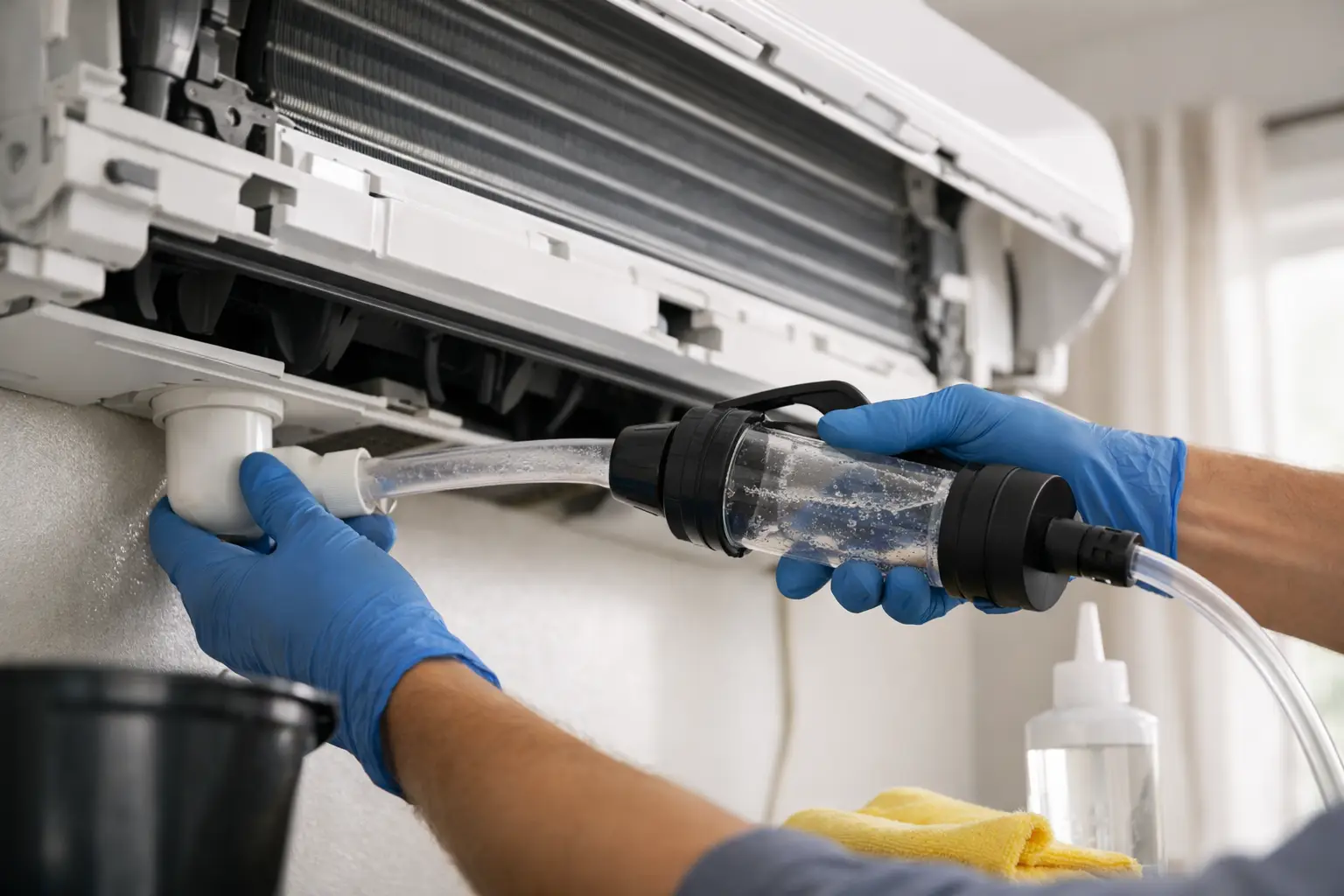
A puddle beneath an indoor unit, a musty smell when cooling starts, or water staining on the ceiling can all point to the same issue: a blocked condensate drain. Knowing how to clean aircon drain lines can help you deal with a minor blockage early, before condensation water ends up where it should not.
Your air conditioner removes humidity from indoor air as it cools. That moisture collects in a tray and flows through a condensate drain line to a suitable outlet. Dust, algae, mould and airborne debris can gradually build up inside the line, slowing or stopping the flow. In Melbourne, Geelong and other areas with humid summer periods, regular use can make this a more common maintenance task.
First, make sure the drain is the problem
A blocked drain is not the only cause of water around an air conditioner. A dirty filter can restrict airflow and cause the indoor coil to freeze, then release excess water as it thaws. Low refrigerant, an incorrectly installed unit, a damaged drain tray or a failed condensate pump can also cause leaking.
Start by switching the system off at the remote and isolating power at the switchboard if you need to access anything near wiring. Never work on a live system or remove electrical covers. Then look for the simple signs: water in or around the indoor unit, dripping from a ceiling vent, gurgling noises, a damp smell, or little to no water coming from the outdoor drain outlet while the system is cooling.
If water is coming through the ceiling, down a wall, or near electrical fittings, stop using the system and arrange professional help. The priority is preventing damage to plaster, insulation, flooring and electrical components.
What you will need to clean an aircon drain
For an accessible split-system drain outlet, you generally need a wet and dry vacuum, a bucket, clean cloths, warm water and a mild cleaning solution suitable for air-conditioning drainage. A small funnel can make pouring easier. Wear gloves and eye protection, particularly if there is visible mould or dirty standing water.
Avoid forcing wire, coat hangers or sharp tools into a drain line. They can puncture soft tubing, disconnect a joint or push debris deeper into the pipe. Bleach is also best avoided unless your system manufacturer specifically permits it. It can create unpleasant fumes and may not suit every component or installation.
Ducted systems are different. Their drain trays and lines are often in the roof space or concealed within the building, and access may be unsafe or limited. Cleaning a visible drain outlet may help, but it does not confirm the entire line is clear. A ceiling leak from a ducted system is a reason to book a technician rather than attempting a roof-space repair yourself.
How to clean aircon drain lines step by step
1. Turn the system off and protect the area
Switch off the air conditioner and place towels beneath the indoor unit if there has been a leak. Move furniture, rugs or electronics out of the area. Condensate water can carry dust and microbial growth, so wipe it up promptly and allow affected surfaces to dry.
2. Check and clean the return-air filters
Open the indoor unit’s front cover if it is designed for customer access and remove the filters. Vacuum loose dust, then rinse washable filters with lukewarm water. Let them dry completely before refitting them. This step matters because poor airflow can create icing and water issues that look like a drain blockage.
3. Find the condensate drain outlet
For many wall-mounted split systems, the drain line exits near the outdoor unit and terminates at a small PVC pipe or flexible hose. It may drip onto the ground, into a drain, or connect to a dedicated outlet. Check that the end is not buried in soil, blocked by leaves or trapped in a container of standing water.
Do not assume every visible pipe is the condensate drain. If you are unsure, refer to the system manual or arrange a service visit. Disconnecting the wrong line can damage your system.
4. Use a wet and dry vacuum at the outlet
Place the vacuum hose over the end of the drain line and create as good a seal as practical with a cloth. Run the vacuum for one to two minutes. This draws out sludge, algae and loose debris without pushing it back towards the indoor unit.
Check the vacuum canister afterwards. Dirty water or debris suggests you have removed at least part of the blockage. If no water comes through and the indoor tray appears full, the blockage may be severe or located elsewhere in the line.
5. Flush the accessible drain carefully
If you can safely access the drain entry point or an approved clean-out point, slowly add a small amount of warm water followed by a mild cleaning solution. Do not overfill the drain tray or pour water into areas that are not clearly intended for drainage. The aim is to rinse the line, not flood the indoor unit.
Watch the outlet outside. A steady flow of water is a good sign. If water backs up, stop. Repeated flushing can make an internal leak worse if the pipe has separated or the obstruction will not shift.
6. Clean surrounding surfaces and refit filters
Wipe down accessible surfaces around the indoor unit, remove any moisture and refit the dry filters. Make sure the front cover closes correctly. Good filter maintenance reduces dust entering the system and helps protect both performance and drainage.
7. Test the air conditioner
Restore power and run the unit in cooling mode for 15 to 20 minutes. Check that it cools normally, without dripping or unusual sounds. At the outdoor drain outlet, you should usually see some water during operation, although the amount depends on humidity levels and how long the unit has been running.
When a DIY drain clean is not enough
A drain clean is suitable for light, accessible blockages. It is not a substitute for diagnosing a recurring leak. If the same issue returns after cleaning, there may be a problem with the drain fall, pipework, pump, indoor coil, refrigerant charge or installation.
Book a professional air conditioning service if you notice persistent leaking, ice on the indoor coil or copper pipework, a burning smell, error codes, water damage, or mould that keeps returning. You should also call for help if your system is high on a wall, installed above stairs, connected to a condensate pump, or part of a ducted setup with ceiling-space access.
A technician can clear the line properly, inspect the drain tray and pump, check the unit’s level, assess airflow and identify the underlying reason the water is not draining. This is particularly valuable before summer, when a small drainage issue can quickly become a comfort problem on a hot day.
Keep the drain clear with routine care
There is no single cleaning schedule that suits every household. A lightly used bedroom split system may only need attention during an annual service, while a system running daily in a busy home or small business may benefit from more frequent checks.
As a practical rule, clean or inspect filters every few months during heavy use and arrange professional servicing at least annually. If you have pets, live near construction dust, use the system for long hours, or notice a musty smell, you may need more frequent maintenance. Keeping the outdoor area clear of leaves and dirt also makes it easier to spot when drainage has slowed.
For homeowners who prefer the certainty of a complete check, Air Con Solutions can assess drainage alongside filters, airflow and system performance during a professional service. The right maintenance plan is the one that keeps your system quiet, efficient and dependable without waiting for a leak to force the issue.
A clear drain line is a small part of your air conditioner, but it protects the comfort and condition of your home. If the leak is anything more than a simple, accessible blockage, stop the system early and have the cause checked before water damage spreads.