
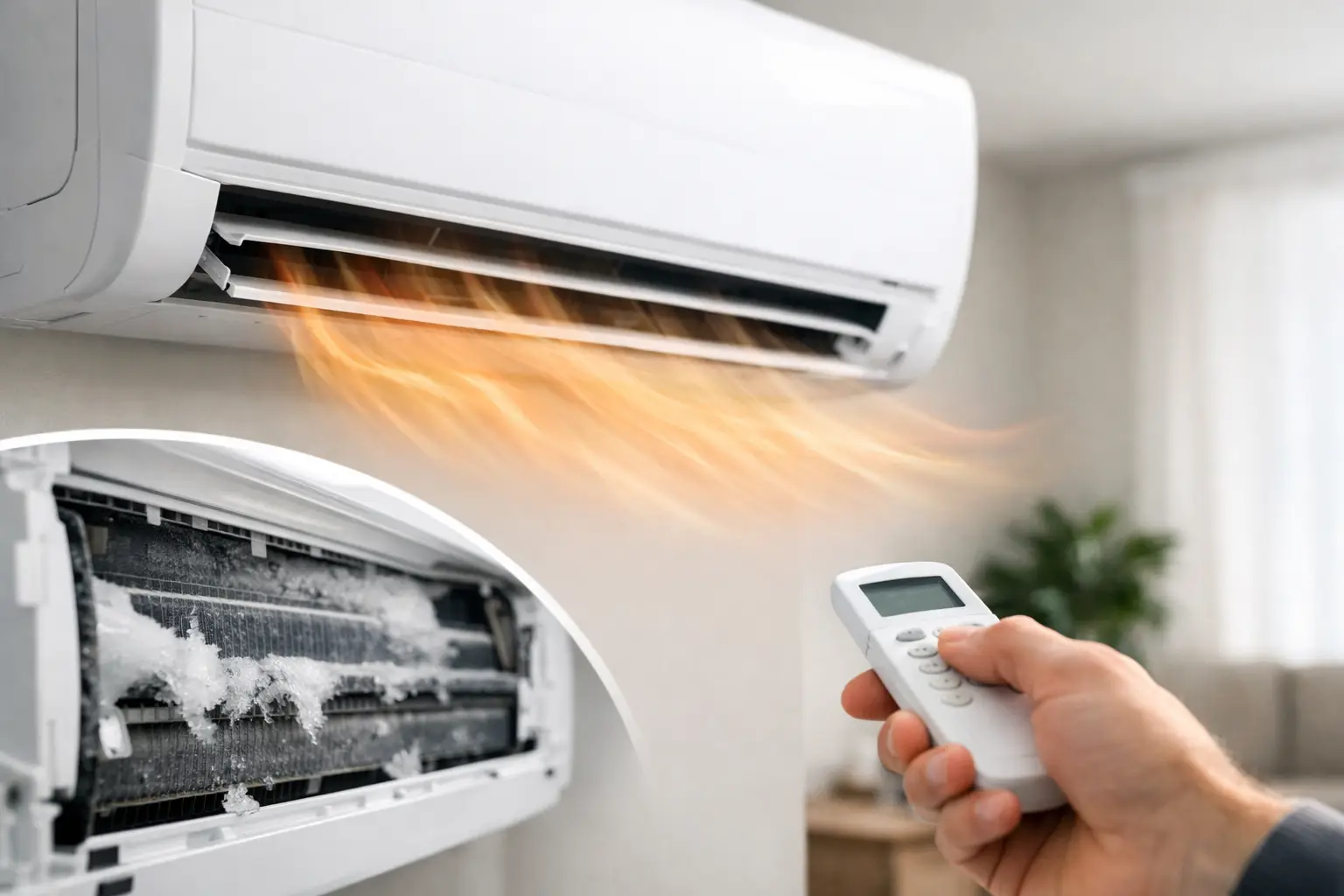
When the temperature climbs and the air from your vents feels warm, comfort can disappear quickly. If you are asking, “why is aircon blowing warm?”, the cause may be as simple as a setting or blocked filter, but it can also point to a fault that needs professional attention. Acting early can help prevent a complete breakdown, unnecessary power use and a much hotter home.
For split systems, ducted air conditioning and reverse-cycle units, the key is to identify whether the system is actually trying to cool and whether it can move heat outdoors as it should. A few safe checks can rule out the obvious. Beyond that, a qualified technician can diagnose the issue accurately and protect your system.
Why is aircon blowing warm instead of cool?
An air conditioner does not create cold air. It removes heat from inside your home and releases it outside. When one part of that process is interrupted, the unit may still run and blow air, but that air will not feel cool.
The most common reasons are incorrect controls, restricted airflow, an outdoor-unit problem, low refrigerant, a sensor or electrical fault, or a system that is struggling to cool the space. The symptoms matter. Air that is mildly cool but never reaches the set temperature suggests a different issue from air that is distinctly warm from the moment the unit starts.
The system is set to heat, fan or an unsuitable temperature
This is the first thing to check, particularly with reverse-cycle air conditioning. Confirm the mode symbol is set to cooling, usually shown as a snowflake, rather than heating, fan-only, dry mode or auto. In auto mode, the system can make its own decision based on the room temperature and may not cool as expected.
Set the temperature well below the current indoor temperature, such as 22°C to 24°C, and allow the unit 10 to 15 minutes to respond. Also check the remote batteries and make sure the controller is communicating with the indoor unit. For ducted systems with zoning, confirm that the zone you are using is switched on and the relevant outlets are open.
A dirty filter is restricting airflow
Filters collect dust, pet hair and household debris. When they become clogged, less air can move across the indoor coil. The system has to work harder, comfort becomes uneven and the air at the outlet may feel warmer than it should.
Most wall-mounted split-system filters can be removed and gently cleaned according to the manufacturer’s instructions. Turn the system off first, allow the filters to dry fully before refitting them, and never force parts that do not move easily. Ducted systems may have return-air filters that need regular cleaning or replacement.
A clean filter supports better airflow and efficiency, but it will not fix every cooling fault. If airflow remains weak after cleaning, or the system still blows warm, arrange a service rather than continuing to run it for hours.
The outdoor unit cannot release heat
Your outdoor condenser needs clear airflow to expel heat. Leaves, grass clippings, stored boxes, garden growth and other obstructions can trap hot air around the unit. During a Victorian heatwave, that added strain can be enough to reduce cooling performance noticeably.
With the power off, clear loose debris from around the unit and ensure there is open space around it. Do not hose electrical components, bend the coil fins or attempt to dismantle the casing. If the outdoor fan is not spinning, the unit is unusually noisy, or it starts and stops repeatedly, switch it off and book a repair. These signs can indicate a fan, capacitor, compressor or control-board issue.
Low refrigerant is affecting cooling performance
Refrigerant carries heat between the indoor and outdoor parts of an air conditioner. It is not a fuel that should be routinely “used up”. If levels are low, there may be a leak, an installation issue or damage within the system.
Signs can include warm air, longer running times, ice on pipework or the indoor coil, hissing sounds, and electricity bills that rise without a clear reason. Refrigerant work must be completed by an appropriately licensed technician. Simply adding more gas without finding the cause can leave you with the same problem again and may damage the system over time.
A thermostat, sensor or electrical component has failed
Modern air conditioning relies on sensors and electronic controls to read room conditions, manage the compressor and protect equipment from overheating. If a temperature sensor is inaccurate, a relay fails or a capacitor weakens, the system may appear to run normally while failing to cool properly.
Some units display an error code or flashing light pattern. Take a photo of the code before resetting anything, as it can help speed up diagnosis. If your air conditioner trips the switchboard, smells burnt, makes a grinding noise or has visible water near electrical components, leave it off until it has been inspected.
Warm air from a ducted system can have a different cause
Ducted air conditioning adds another layer: the central unit may be cooling, but the conditioned air still needs to travel through ducts, zones and outlets efficiently. A damaged or disconnected duct can allow cool air to escape into the roof space. Poorly sealed ducts, a stuck zone motor or an incorrectly balanced system can also leave one part of the home warm while another feels comfortable.
This is why it helps to notice where the problem occurs. If every outlet is warm, the issue is more likely to sit with the main system or controls. If only one room or zone is affected, ductwork, zoning or airflow balance may be the better place to start. A professional assessment can identify the source without guesswork or unnecessary replacements.
Safe checks to make before booking a repair
Before arranging a visit, turn the air conditioner off for five minutes and restart it in cooling mode. Check that the thermostat setting is below room temperature, clean accessible filters, and make sure the outdoor unit is clear of leaves and stored items. Then let the system run for 10 to 15 minutes with doors and windows closed.
Avoid removing covers, touching wiring, straightening fins with sharp tools or trying to repair refrigerant pipework yourself. If ice is present, switch the unit off rather than forcing it to continue. Running an iced-up system can place extra stress on the compressor.
It is also worth considering the conditions. On very hot days, a correctly sized system may take longer to cool a sun-exposed room, especially if blinds are open, doors are frequently used or several heat-producing appliances are running. That is different from an air conditioner consistently blowing warm air. If the unit cannot reach a reasonable temperature under normal conditions, it needs attention.
When professional air conditioning service is the right next step
Book a repair if the unit still blows warm after basic setting and filter checks, if it has lost cooling suddenly, or if airflow is weak. Prompt service is particularly worthwhile when the outdoor unit is not operating, the system is leaking, ice is forming, or you can hear unusual sounds.
An experienced technician can test temperatures, inspect electrical components, check airflow and drainage, assess the outdoor unit, and investigate refrigerant performance where required. For ducted systems, they can also examine zoning and accessible duct connections. The goal is not just to get cold air back, but to address the cause so the system can run reliably and efficiently.
At Air Con Solutions, tailored repair and servicing support helps homeowners and light commercial customers move from uncertainty to a clear solution. Regular maintenance also gives technicians the opportunity to clean critical components, identify wear early and keep smart controls working as intended.
Prevent warm-air problems before summer
Air conditioning is easiest to maintain before it is under peak demand. A professional service ahead of summer can uncover reduced airflow, drainage concerns, worn electrical parts and early signs of refrigerant issues before they turn into a no-cooling callout.
Between services, keep filters clean, maintain clearance around the outdoor unit and use sensible temperature settings. Closing blinds on hot afternoons and sealing obvious draughts can reduce the load on your system too. If your home has been renovated, extended or divided into new work areas, it may be worth reviewing whether the existing system and zoning still suit the space.
Warm air from an air conditioner is frustrating, but it is usually a solvable problem. A quick check can sometimes restore comfort, while an expert diagnosis provides the confidence that your system is safe, efficient and ready for the next hot day.