
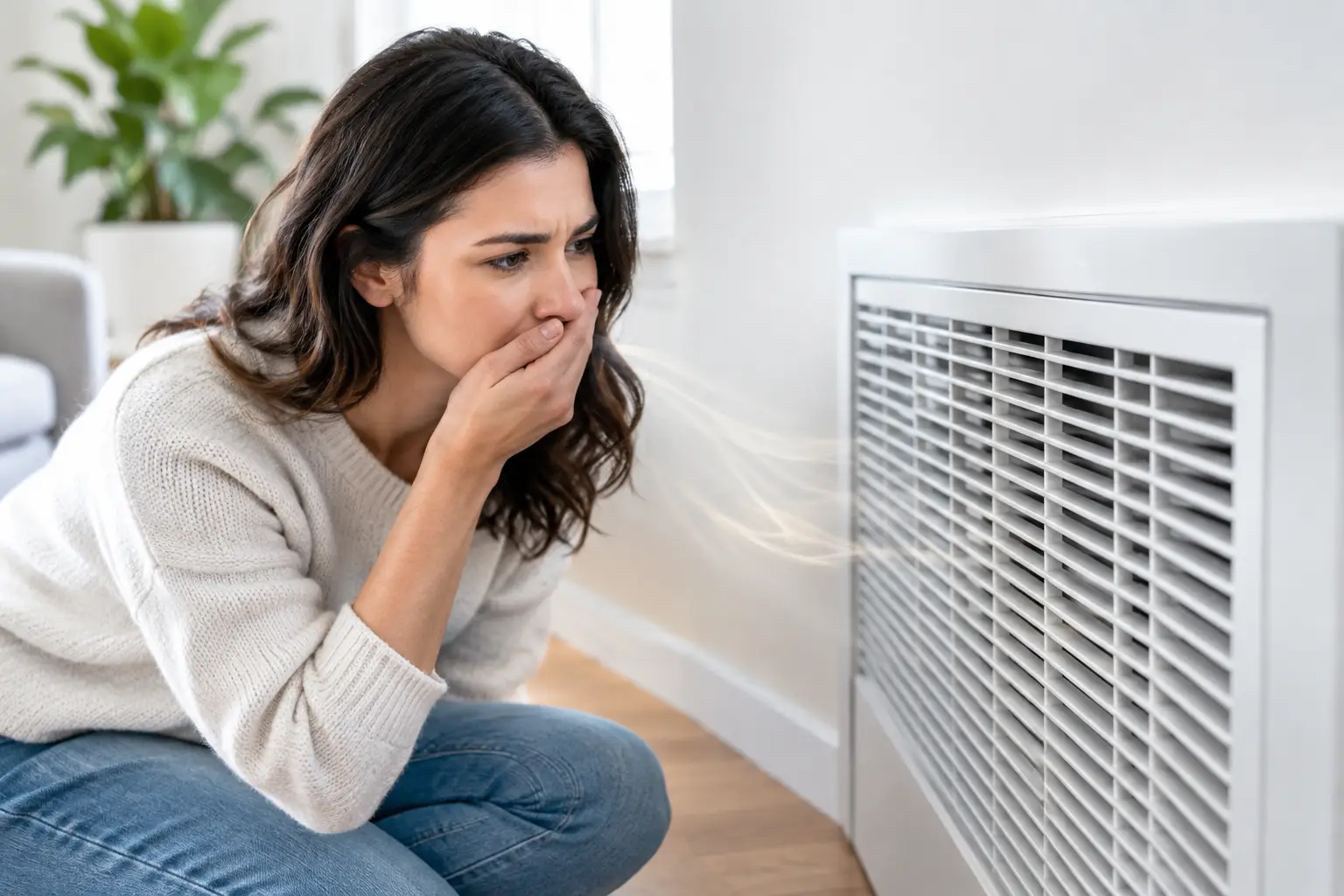
That first blast of warm air on a cold Victorian morning can bring an unexpected smell with it. So, why does heating smell? Sometimes it is simply dust burning away after months of sitting idle. Other times, the odour points to a filter, electrical component, gas connection or moisture issue that needs prompt professional attention.
The key is not to ignore a smell just because the heater is still running. A safe, efficient heating system should deliver comfortable warmth without persistent or worsening odours. Knowing what you are smelling can help you decide whether to let the system clear, clean it safely, or switch it off and arrange a repair.
Why does heating smell when you first turn it on?
After a long stretch without heating, dust can settle on internal components, including the heat exchanger, electric heating elements, fan and ductwork. When those parts warm up for the first time, the dust may give off a dry, slightly burnt smell.
This is common at the start of the heating season and should fade within 15 to 30 minutes. Open a window if practical, keep an eye on the system, and make sure nothing has been stored near vents, outdoor units or the heater itself.
If the smell is strong, continues beyond the first run, returns every time you use the heater, or is accompanied by smoke, turn the system off. Dust may be part of the picture, but a persistent burning smell can also indicate an electrical fault, blocked airflow or an overheated component.
What different heating smells can mean
The character of the odour matters. While you should never try to diagnose an electrical or gas issue yourself, these common smells can help you respond appropriately.
A dusty or dry burning smell
A short-lived dusty smell is usually the most harmless explanation, particularly with ducted heating and reverse-cycle air conditioning after a period of non-use. A clean filter and regular service reduce the amount of dust circulating through the system and help it run more efficiently.
If your system has not been serviced in some time, arrange a professional inspection before relying on it through winter. A technician can clean accessible components, check airflow and identify wear before it becomes a breakdown on the coldest day of the year.
A burning plastic, rubber or electrical smell
This is not a smell to wait out. Overheating wiring, a failing motor, damaged insulation, a worn fan belt or debris contacting hot parts can create an acrid electrical or melting-plastic odour.
Turn the heating off at the controller. If it is safe to do so, isolate power at the switchboard or local isolator, then book a qualified heating technician. Do not restart the system to see whether the smell disappears. Electrical faults can worsen quickly and may pose a fire risk.
A musty or mouldy smell
A damp, stale smell often comes from moisture and build-up around the indoor coil, drain system, filters or ductwork. Reverse-cycle systems can collect condensation, and a blocked drain or dirty components may allow mould and bacteria to develop.
The smell can be more noticeable when the fan starts because it carries air through the affected area and into rooms. Replacing or cleaning filters as directed by the manufacturer can help, but mould, drainage and internal cleaning issues should be assessed professionally. This is particularly worthwhile for households with asthma, allergies or young children.
A rotten egg or sulphur smell
If you have a gas heater and notice a rotten egg, sulphur or strong gas smell, treat it as urgent. Do not use switches, phones, flames or electrical appliances near the suspected leak. Turn off the appliance only if it is safe, leave the building, and contact your gas supplier's emergency line or emergency services from outside.
Do not attempt to find the leak yourself. A licensed gasfitter should inspect the appliance and associated gas connections before the heater is used again.
An oily, smoky or exhaust-like smell
Oil-fired heating, older appliances, blocked flues or combustion problems can produce smoky or exhaust-type odours. With gas ducted heating, poor combustion or a flue issue may also affect indoor air quality, even where there is no obvious gas smell.
Switch the unit off, ventilate the area if safe, and arrange an urgent inspection. If anyone feels dizzy, nauseous, unusually tired or develops a headache, move into fresh air and seek medical advice. Carbon monoxide has no smell, so a lack of odour does not guarantee that a combustion appliance is operating safely.
A dead animal or decaying smell
Small animals can occasionally enter roof spaces, ducts or outdoor equipment. The odour may be strongest from one vent or room and can become more noticeable when warm air moves through the system.
Avoid pushing objects into vents or dismantling ductwork. A technician can help identify whether the source is within the HVAC system, while a pest professional may be needed if there is an active infestation.
When a heating smell needs immediate action
A smell that disappears quickly on the season's first use is different from one that persists, intensifies or arrives with other warning signs. Switch the system off and arrange professional help if you notice smoke, visible scorching, repeated tripping at the switchboard, weak airflow, unusual noises, water leaks, soot around vents, or a burning smell that keeps returning.
For suspected gas leaks, leave the area and follow your gas supplier's emergency instructions. For suspected electrical burning, do not keep operating the system while waiting for an appointment. Comfort matters, but safety comes first.
Safe checks you can make before booking a service
There are a few straightforward checks that do not involve opening the unit or touching wiring. First, look at the return-air filter if it is designed for homeowner access. A heavily clogged filter restricts airflow, makes the system work harder and can contribute to dusty smells. Clean or replace it according to the manufacturer instructions.
Next, check that supply vents and return-air grilles are clear of furniture, curtains, rugs and stored items. In a ducted system, closed or blocked vents can affect airflow and place unnecessary strain on the equipment.
Finally, consider the timing. If the odour only occurred briefly during the first heating cycle and has completely cleared, monitor it. If it occurs again after cleaning the filter and ensuring clear airflow, a service is the sensible next step.
Do not remove panels, spray fragrances into vents, use harsh cleaning products inside the system, or try to repair electrical or gas components. Covering the smell can delay a proper diagnosis and may make the issue harder to trace.
Preventing heating odours before winter
Routine maintenance is the most reliable way to reduce surprise smells and avoid preventable heating faults. A professional service can check filters, motors, electrical connections, safety controls, drainage, ducts and overall system performance. For gas heating, servicing also includes essential combustion and safety checks.
For homes with reverse-cycle air conditioning, regular cleaning and servicing support more than fresh-smelling air. A well-maintained system generally delivers steadier temperatures, better airflow and lower energy use than one struggling with dust or restricted components.
The right maintenance schedule depends on your system, how often it runs, whether you have pets, and the amount of dust around your home or business. Properties with high use or allergy concerns may benefit from more frequent filter attention. Small commercial spaces should also plan maintenance around busy periods so comfort is not disrupted when customers or staff need it most.
Get clear advice for your heating system
A heating smell is not always a major fault, but it is always worth taking seriously. If the odour is new, persistent or concerning, booking a qualified inspection provides a clear answer without guesswork. Air Con Solutions can assess ducted and reverse-cycle systems, identify the cause and recommend a tailored repair or maintenance pathway.
A warm home should feel comfortable from the moment the system starts. If yours smells wrong, trust that instinct and have it checked before a small issue takes away your winter comfort.