
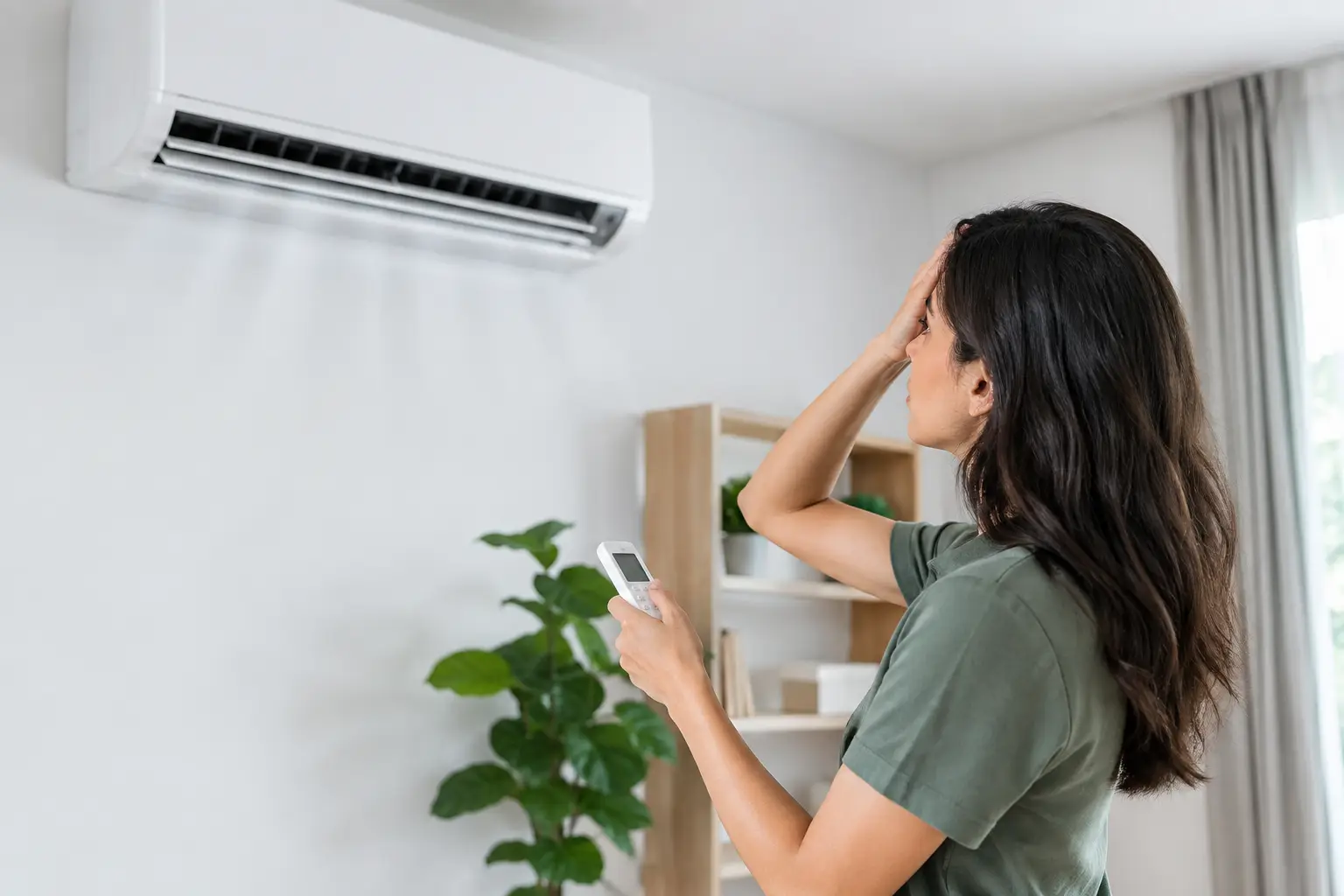
A hot Melbourne afternoon is a poor time to find out your air conditioner is at the end of its life. If you are wondering when to replace aircon, the answer is rarely based on age alone. A system that is expensive to run, unreliable or unable to keep rooms comfortable may be telling you that repairs are no longer the best investment.
A professional assessment can clarify whether a repair will restore dependable performance or whether a replacement will provide better comfort, lower running costs and greater peace of mind. Here are the signs to watch for.
1. Your aircon is more than 10 to 15 years old
Most quality air conditioning systems can provide around 10 to 15 years of service when correctly installed and regularly maintained. Some will last longer, particularly if they have had consistent servicing and have not been pushed beyond their capacity. But as components wear, efficiency can decline and replacement parts may become harder to source.
Age is not an automatic reason to replace a system. A well-maintained 12-year-old unit that cools effectively and has not needed major repairs may still have useful life left. However, if an older system is also noisy, inefficient or breaking down regularly, putting more money into it can become difficult to justify.
Older units may also use refrigerants that are being phased down or are more costly to manage. This can make a major repair less practical than upgrading to a newer, more efficient model.
2. Repairs are becoming regular and expensive
One repair after many years of reliable use is normal. A pattern of call-outs is different. If you have recently paid for a new fan motor, electrical work, refrigerant repairs or control-board faults, and another issue appears soon after, it is worth looking at the bigger picture.
A useful rule of thumb is to compare the likely repair cost with the value and age of the system. When a substantial repair costs close to half the price of a suitable replacement, replacement often makes stronger financial sense. This is especially true when the existing unit is already beyond its expected service life.
The right decision depends on the fault. A minor part replacement on a relatively new system can be excellent value. A compressor failure on an ageing unit is a more serious turning point. An experienced technician can explain the condition of the system clearly, so you can choose with confidence rather than feeling pressured into a quick decision.
3. Your energy bills have risen without a clear reason
If your household habits have not changed but your cooling or heating costs have climbed, your aircon may be working harder than it should. Wear and tear, blocked coils, ageing motors, refrigerant issues and poor airflow can all reduce efficiency.
Start with the simple checks. Clean or replace filters, make sure outdoor units are clear of leaves and debris, and arrange a professional service. Sometimes a thorough service is all that is needed to bring performance back on track.
If bills remain high after servicing, a newer system may deliver worthwhile savings. Modern inverter air conditioners adjust their output to maintain a steadier temperature, rather than constantly switching on and off at full power. Correct system sizing and smart temperature controls can also make a noticeable difference over a Victorian summer and winter.
4. Some rooms are comfortable while others are not
A reliable system should make your main living areas feel consistently comfortable. If the lounge is freezing while bedrooms stay warm, or one end of the office is always stuffy, the problem may not be the air conditioner itself. It could be undersized equipment, ageing ductwork, poor zoning or changes made to the property after the original installation.
This is particularly common after renovations, extensions or converting a spare room into a home office. The system that once suited the home may no longer have enough capacity or the right airflow design.
Before replacing the entire system, have the layout assessed. In some homes, zoning adjustments, duct repairs or a supplementary split system may be the more practical solution. In others, a tailored ducted replacement with properly planned outlets and zones will provide a far better result than continuing to patch an outdated setup.
5. The system is noisy, smelly or leaking
Unusual sounds should not be ignored. Rattling can point to loose parts, banging may indicate a mechanical issue, and grinding can signal worn components. A persistent musty smell may be caused by moisture, mould growth or a drainage problem, while burning smells and repeated electrical trips require prompt attention.
Water leaking from an indoor unit can sometimes be caused by a blocked condensate drain, which is often repairable. Refrigerant leaks are more complex and should only be handled by appropriately licensed technicians. Refrigerant does not simply get used up, so low levels generally indicate a leak that needs diagnosis.
These faults do not always mean replacement is necessary. Yet when they occur alongside poor comfort, high bills and an older unit, a new system may offer the more dependable path forward.
6. You cannot get the temperature you set
If you set the controller to 22°C but the room never reaches a comfortable temperature, the issue could be capacity, airflow, sensor accuracy or a developing mechanical fault. You may also notice the system running for long periods without delivering much change.
Air conditioners work hardest during heatwaves and cold snaps, but they should still be able to maintain reasonable comfort when they are correctly sized and operating properly. A system that has always struggled may have been undersized from day one. One that has gradually lost performance may need servicing, repair or replacement.
A proper assessment looks beyond the unit’s age. Room size, ceiling height, insulation, window orientation, occupancy and heat-producing appliances all affect the capacity your property needs. Choosing a bigger unit without this assessment is not always the answer. An oversized system can cycle too quickly, waste energy and leave indoor humidity less comfortable.
When to replace aircon rather than repair it
The decision usually becomes clearer when several warning signs occur together. Replacement is often worth considering when your aircon is older, needs a major repair, struggles to maintain temperature and costs more to run than it used to.
Replacement can also be a smart choice when you want features your existing system cannot provide. Modern systems can offer quieter operation, more effective zoning, Wi-Fi control and smart temperature management. For busy households and small businesses, being able to manage comfort by zone or adjust settings from a mobile can reduce waste without adding complexity.
For ducted air conditioning, replacement is also an opportunity to review what is behind the ceiling. Existing ducts may be reusable if they are in good condition and suit the new design. If they are damaged, poorly insulated or incorrectly sized, updating them at the same time can help the new system perform as intended.
Choosing a replacement that suits your property
The best replacement is not simply the newest unit or the highest capacity model. It is the one designed around how you use the space. A family home may benefit from ducted zoning that keeps bedrooms comfortable overnight without cooling unused areas. A compact apartment may be better suited to an efficient split system. A light commercial space may need a solution that balances customer comfort with practical running costs.
Look for a system with a strong energy rating, appropriately sized capacity and controls that your household or team will actually use. Consider where indoor and outdoor units will sit, how noise may affect bedrooms or neighbours, and whether the system can be serviced easily in future.
Professional installation matters just as much as the equipment. Even a high-quality air conditioner can underperform if airflow, drainage, electrical connections or refrigerant charge are not handled correctly. Air Con Solutions can assess your property, explain the available options and recommend a tailored solution based on comfort, efficiency and long-term reliability.
Do not wait for a complete breakdown
Replacing an air conditioner before it fails completely gives you time to compare options and choose a system that suits your home or business. You are less likely to make a rushed decision during a heatwave, and installation can be planned around your schedule.
If your system is showing a few of these signs, arrange an inspection before the next season places it under real pressure. A clear professional diagnosis can help you make a practical choice - whether that is a targeted repair, a service to restore performance or a new air conditioning system built for years of reliable comfort.