
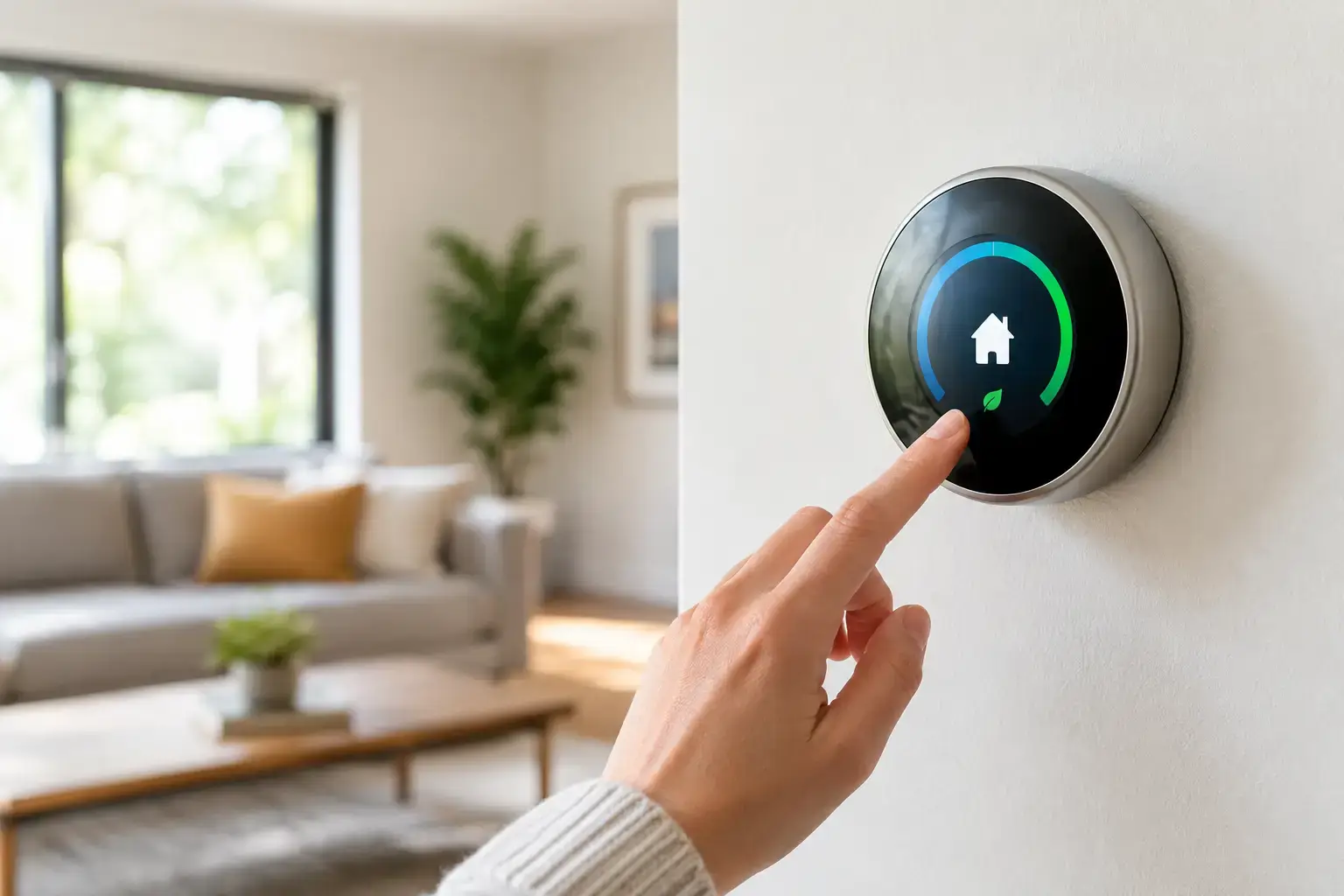
A heater running in an empty house or an air conditioner working hard in rooms nobody is using can make comfort feel expensive. Smart thermostats give homeowners more control over when and how their heating and cooling operates, helping create a more consistent indoor temperature without relying on guesswork.
For Melbourne, Geelong and other Victorian homes dealing with changeable weather, that control can be genuinely useful. The right setup lets you adjust settings from your mobile, schedule your system around daily routines and, in some cases, manage separate areas of the home independently. However, the best result depends on the thermostat, your existing system and the quality of the installation.
What smart thermostats actually do
A smart thermostat replaces, or works alongside, a standard wall controller. It connects to your home network so you can control compatible heating and cooling equipment through an app, and usually from the controller itself.
The practical benefit is not simply being able to change the temperature from the couch. Smart controls can use schedules, occupancy settings and temperature data to make your system respond more closely to the way you live. You may set the living area to warm up before breakfast, reduce output while the household is out, then bring the temperature back to a comfortable level before everyone returns.
Some models also provide usage information. This can help you see whether the system is running at unexpected times or whether a particular setting is using more energy than anticipated. It is useful information, but it does not replace professional advice where a system is underperforming, short cycling or failing to heat or cool properly.
Where smart thermostats make the biggest difference
Smart control is particularly valuable in homes where routines are fairly predictable. Families with school and work schedules, households that are often away during the day, and people who regularly travel can all benefit from being able to set temperatures in advance rather than leaving a system running all day.
It can also improve comfort in larger homes. A single temperature setting may not suit an open-plan living area, bedrooms facing the afternoon sun and quieter rooms at the back of the house. When paired with a compatible ducted system and zoning, smart controls can help direct conditioned air where it is needed rather than treating every room the same.
Small businesses can benefit too. A clinic, office or retail space may need cooling before staff and customers arrive, but not long after closing. A clear schedule can reduce unnecessary operation while keeping the premises welcoming during trading hours.
There are limits. If your home has poor insulation, draughty windows, undersized equipment or blocked airways, a smart controller cannot solve the underlying issue. It can improve how the system is managed, but it cannot compensate for a system that needs repair, servicing or a better design.
Features worth choosing in smart thermostats
Not every feature matters to every household. Start with the functions that will make daily comfort easier, rather than paying for technology you are unlikely to use.
Scheduling that suits real routines
Look for straightforward schedules that can be adjusted for weekdays, weekends and different seasons. The best schedule is one your household will actually maintain. It should also allow a temporary change without wiping out the usual program when plans change.
Remote access with useful alerts
App control can be helpful when you leave home in a hurry, return earlier than expected or want to check that a system has been turned off. Some controllers can send maintenance reminders or alerts when indoor conditions move outside a preferred range. These functions are convenient, but they rely on a stable internet connection.
Zoning and room-by-room control
For ducted heating and cooling, zoning is often the feature with the greatest practical value. It enables selected areas to be conditioned without running every zone at full output. A compatible smart control system can make this easier to manage through a clear screen or app.
True room-by-room temperature control may require additional sensors, dampers or a purpose-designed zoning system. It is worth discussing your goals before installation, especially in homes with challenging layouts, multiple levels or rooms that heat up differently through the day.
Clear controls for everyone at home
A smart system should not make basic temperature control harder. Choose a controller with an easy-to-read display and simple manual adjustment, so visitors, children and less tech-confident family members can use it comfortably. Voice control can be a bonus, but a dependable wall control remains essential.
Check compatibility before buying
Compatibility is the first question to answer. Some smart thermostats work with specific brands or system types only, while others require particular wiring, a control interface or a compatible indoor unit. Reverse-cycle split systems, ducted systems, gas ducted heating and evaporative cooling can each have different requirements.
For ducted air conditioning, the controller needs to work correctly with the unit, zones and any existing sensors. Replacing a controller without checking these details can lead to limited functions, unreliable operation or no operation at all. This is one reason professional assessment is valuable before ordering a device online.
If you are planning a new system, smart controls are easier to incorporate from the beginning. Your installer can recommend a setup that suits the size of the property, number of zones, intended use and preferred level of control. For renovations, a tailored solution can also account for wall locations, wiring access and the appearance of the finished space.
Installation matters as much as the controller
A smart thermostat is part of a larger heating and cooling system. Correct installation ensures it communicates reliably with the equipment and reads the room temperature accurately.
Controller placement matters. A thermostat installed near direct sun, a kitchen, a draughty doorway or an air outlet may receive misleading temperature readings. That can cause the system to switch on or off at the wrong time, leaving other parts of the home less comfortable.
A qualified technician can assess the existing equipment, confirm compatibility, install the controller safely and test its settings. They can also explain how to use schedules, zones and temperature limits in a way that suits your household. Air Con Solutions can assist with smart climate control options as part of a new installation, service or system upgrade.
Using smart controls to reduce wasted energy
Smart thermostats can support lower energy use, but savings are not automatic. The biggest gains usually come from sensible settings and avoiding unnecessary run time.
Rather than setting extreme temperatures to cool or heat a room faster, choose a comfortable target and give the system time to work. In summer, closing blinds and reducing heat from direct sun can ease the cooling load. In winter, sealing obvious draughts and using appropriate zones can help keep warm air where it is needed.
Use scheduling to match occupancy, but leave enough time for your system to bring rooms to temperature. The right lead time varies with the weather, insulation, system capacity and the size of the area. Reviewing your settings after a few weeks will usually deliver better results than setting them once and forgetting about them.
Regular servicing also remains important. Clean filters, clear airflow and well-maintained components help your system deliver the comfort your smart controller is asking for. If you notice uneven temperatures, unusual noise, weak airflow or higher-than-expected bills, arrange a professional inspection rather than relying on app adjustments.
A practical next step for your home
The most suitable smart thermostat is the one that works properly with your system and makes everyday comfort easier. Before choosing, consider which rooms you use most, when the home is occupied, whether zoning would help and what equipment is already installed.
A professional assessment can turn those answers into a practical recommendation, whether you need a simple controller upgrade or a complete smart ducted solution. With the right design, installation and settings, smart temperature management becomes less about technology and more about coming home to comfort that feels just right.