
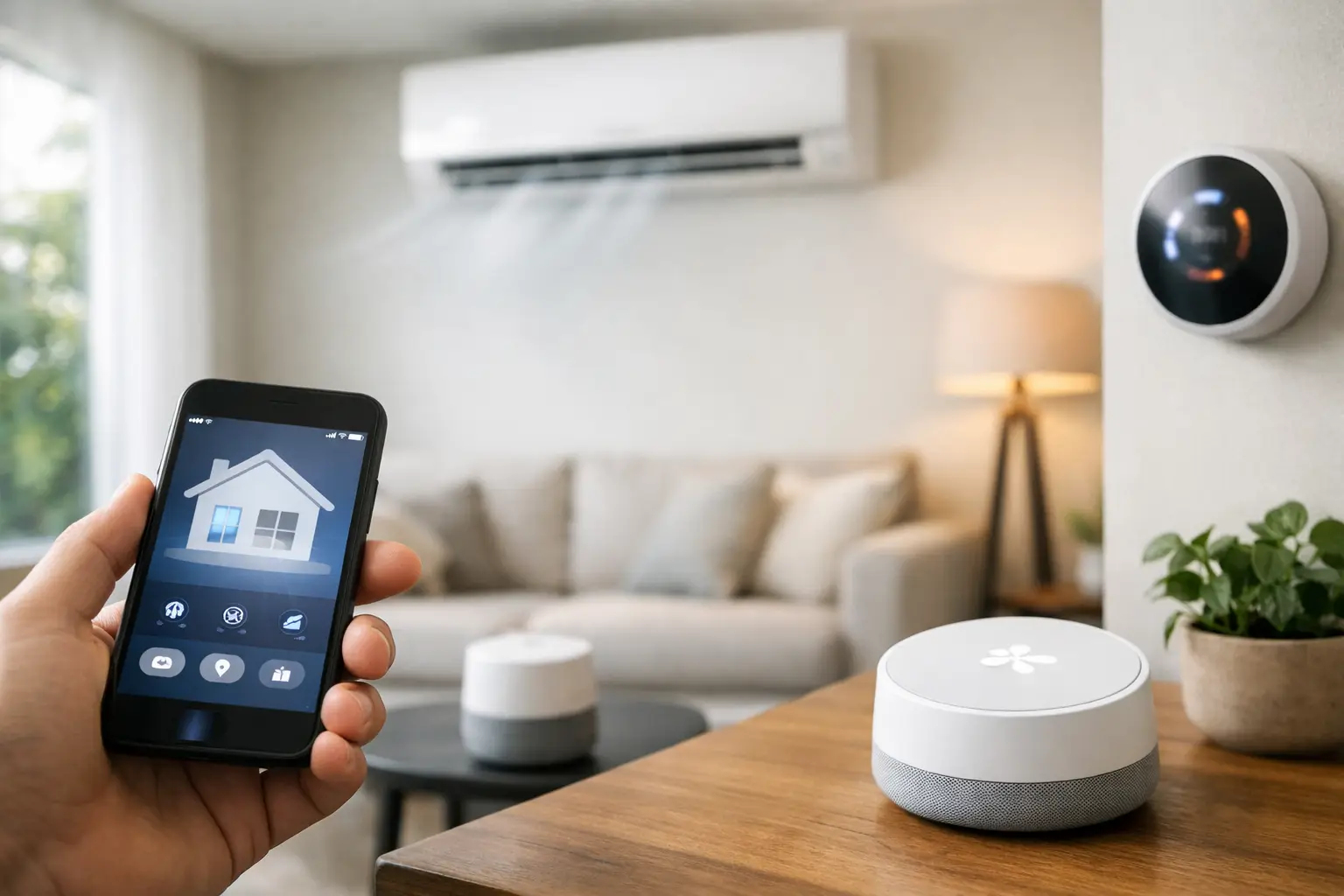
A home that is already warm when you arrive, cooler upstairs before bed, and not running an empty house all day is more than a convenience. Smart home air conditioning gives households practical control over comfort while helping them make better decisions about energy use. The best result, however, comes from matching the technology to the system, the home and the way the people in it actually live.
What smart air conditioning can do
Smart air conditioning connects your heating and cooling system to a controller, app or home automation platform. Rather than relying only on a wall-mounted thermostat, you can adjust settings from your mobile, schedule operating times and, with the right setup, control selected areas of the home independently.
For busy households, this can remove many of the small frustrations that affect everyday comfort. You may be able to turn the system on before the school run, check whether it was left running after you have gone out, or set a lower temperature in bedrooms for the evening. Small business owners can also use scheduling to better manage comfort during operating hours without having to remember manual adjustments each day.
The level of control depends on the equipment installed. Some systems offer basic app access, while others support zoning, temperature sensors, voice control and automation based on time or occupancy. More features are not always better. A well-configured system that is easy to use will usually deliver more value than a complicated setup nobody wants to manage.
The features that make a real difference
The most useful smart features are the ones that reduce wasted running time and make room temperatures more consistent. Scheduling is often the starting point. Instead of cooling or heating the home around the clock, you can set the system to run when occupants are normally there.
Remote access is also valuable, particularly during Victoria's changeable weather. If plans change, you can adjust the system without returning home. This does not mean the air conditioner should run continuously just because it can be controlled from anywhere. The aim is to use the right amount of conditioning at the right time.
Zoning can make an even bigger difference in larger homes. A ducted system with properly designed zones lets you condition the living area during the day and bedrooms later on, rather than treating every room as though it has the same needs. This can improve comfort and may reduce unnecessary energy use, provided the system has been designed to operate correctly with the selected zones open.
Temperature sensors are another worthwhile consideration. The temperature at the main controller may not reflect conditions in a sunny bedroom, a room over a garage or an open-plan living space with large windows. Extra sensors can give the system a more accurate picture of where comfort is needed.
Smart home air conditioning starts with the right system
A smart controller cannot fix an air conditioner that is undersized, poorly located or overdue for service. Before choosing apps and automation, it is worth looking at the fundamentals: the size of the home, insulation, window exposure, ceiling height, room layout and how different spaces are used.
For example, a family home with several bedrooms and a large living area may suit ducted reverse-cycle air conditioning with zoning. A compact apartment, renovated room or small office may be better served by a split system with built-in Wi-Fi control. Homes with layout constraints may need a tailored ducted design that considers available ceiling space, return-air placement and discreet grille locations.
This is where professional advice matters. The right capacity and layout help the system reach the selected temperature efficiently. If a unit is working at its limit every hot afternoon or cold morning, smart scheduling alone will not solve the problem. It may simply mask a system selection or installation issue.
Compatibility is not always straightforward
Not every existing air conditioner can be upgraded in the same way. Some newer systems have smart functions built in, while others may accept an approved add-on controller. Older equipment can have limited compatibility, and fitting an unsuitable device may affect performance, reliability or warranty support.
It is also important to consider the home Wi-Fi network. A smart controller needs a stable connection in the area where it is installed. Weak coverage, outdated routers and frequent network dropouts can make a good system feel unreliable. In some cases, improving Wi-Fi coverage is part of getting the smart setup right.
For homeowners planning a renovation or new build, it is usually easier to consider smart controls during the design stage. That allows the air conditioning layout, zones, controller locations and network requirements to be planned together instead of added as an afterthought.
Better energy habits without sacrificing comfort
Smart controls can support energy efficiency, but they do not eliminate the need for sensible settings. In summer, setting the thermostat extremely low will not cool the home faster. It asks the system to work harder for longer and can increase running costs. In winter, the same applies when the set temperature is pushed too high.
A moderate target temperature, combined with sensible scheduling and zoning, is generally more effective. Closing blinds on hot afternoons, reducing draughts and using ceiling fans where appropriate can also ease the load on your air conditioner. Smart climate control works best when it is part of a whole-home approach, not the only strategy.
Automation can be useful here, but it needs careful setup. An occupancy-based setting may suit a household with predictable routines, while a simple weekday schedule may be more reliable for a family whose days vary. If your system uses sensors, make sure they are not exposed to direct sun, cooking heat or draughts, as this can lead to inaccurate readings.
Why installation quality still matters
Smart technology adds another layer to an air conditioning system, but the core work remains essential. Ductwork needs to be correctly sized and sealed, electrical connections must be completed safely, drainage needs to work properly, and outdoor units require suitable airflow and access for servicing.
Poor installation can show up as uneven temperatures, excess noise, reduced efficiency or repeated faults. These problems are frustrating with any air conditioner, but they are especially disappointing after investing in smart controls. A professional installation gives the system the foundation it needs to perform as intended.
Air Con Solutions can assess the full picture, from system selection and ducted design through to installation, smart control options and ongoing maintenance. This is particularly helpful when a property has awkward roof space, additions to the home or rooms that never seem to hold a comfortable temperature.
Keep your smart system performing properly
An app may alert you to an issue, but it cannot replace routine servicing. Filters still collect dust, outdoor coils still need inspection, drains can still block and mechanical components still wear over time. Regular maintenance helps preserve airflow, efficiency and reliability, while giving a technician the opportunity to identify smaller issues before they become a breakdown.
Between services, keep return-air grilles and indoor filters clean as recommended for your system. Check that outdoor units are free of leaves and stored items, and pay attention to changes in performance. Longer run times, weak airflow, unusual noises, water leaks or rooms that no longer reach temperature are all good reasons to arrange a professional assessment.
If smart controls stop responding, begin with the basics: check power to the system, confirm the Wi-Fi network is working and see whether the controller requires an update. If the air conditioner itself is not operating correctly, avoid relying on repeated resets. A qualified technician can diagnose whether the issue sits with the controller, communications wiring or the unit itself.
Choosing a setup that suits your home
The right smart air conditioning setup should feel simple after installation. You should know how to change temperatures, select zones, use schedules and recognise when the system needs attention. It should also suit the realities of your household, whether that means controlling one split system from your mobile or managing a zoned ducted system across a busy family home.
Before committing, ask what controls are included, which features work with your specific model, whether zoning is appropriate, and how the system will be supported after installation. Clear answers upfront help you avoid paying for functions that will not improve your everyday comfort.
A thoughtfully designed smart system gives you more than a screen full of settings. It gives you a home that responds better to your routine, uses energy more carefully and stays comfortable when it matters most.