
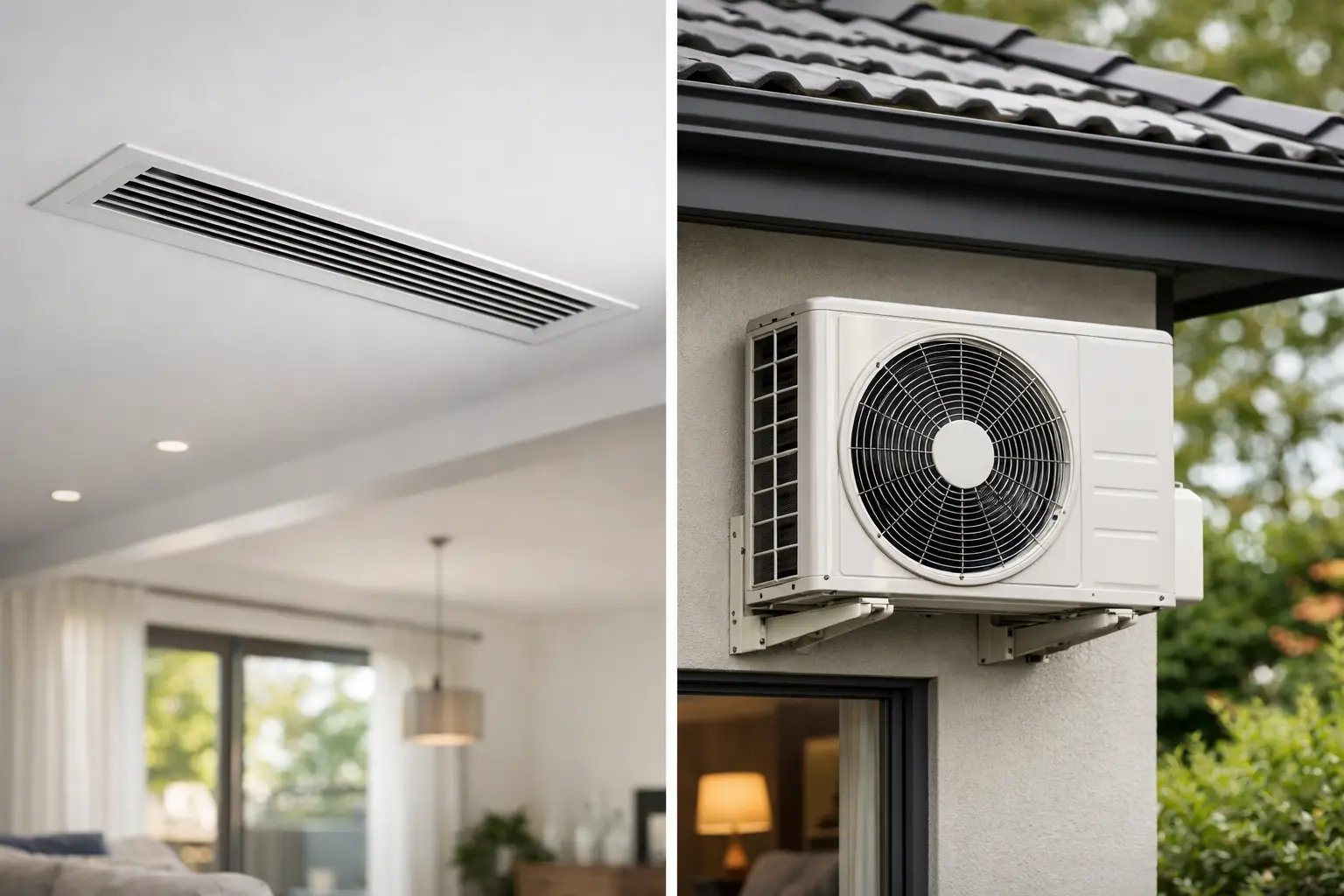
A hot upstairs bedroom, a chilly living room and rising power bills are often the moments that bring the ducted vs split system question into focus. Both options can provide dependable heating and cooling for Melbourne and Geelong homes, but they solve comfort differently. The right choice comes down to your home’s layout, how many rooms you use, your renovation plans and the level of control you want.
Ducted vs split system: the key difference
A split system air conditioner has an indoor wall-mounted unit connected to an outdoor condenser. It is designed to heat and cool a specific room or open area, such as a lounge, main bedroom, shop floor or home office. Multi-split systems can connect several indoor units to one outdoor unit, but each indoor unit still serves its own zone.
A ducted system uses a central indoor unit, usually installed in the roof space, connected to discreet outlets throughout the property. Air is distributed through ducts and controlled from a wall controller, with many modern systems offering zoning and smart controls.
Put simply, split systems are ideal for targeted comfort. Ducted air conditioning is designed for whole-home climate control with a cleaner, more integrated finish.
When a split system is the practical choice
For a single room, a smaller flat or a home where only one or two areas need regular conditioning, a split system is often the most cost-effective starting point. Installation is generally less involved because there is no roof ductwork to design and fit. This can make it a sensible solution when replacing an older unit or adding cooling to a room that has always run warm.
Split systems are also useful where household routines are predictable. If everyone gathers in one living area after work, or you need dependable temperature control in a home office during the day, you can condition that space without paying to heat or cool empty rooms.
Modern reverse-cycle split systems can be very efficient when correctly sized. They provide both heating and cooling, and many models offer Wi-Fi controls, quiet operation and inverter technology that adjusts output as the room approaches the set temperature.
There are trade-offs. Wall-mounted indoor units are visible, and larger homes may need multiple units to achieve consistent coverage. A hallway or closed bedroom at the other end of the house may remain uncomfortable, even when the living room feels perfect. Several separate systems can also mean multiple outdoor units, controllers and maintenance points.
Why ducted air conditioning suits whole-home comfort
Ducted systems are a strong option for families, larger homes, new builds and substantial renovations. With outlets positioned in key rooms, they can deliver more even heating and cooling across the home instead of concentrating comfort in one area.
The main appeal is how the system fits into everyday life. You can move from bedroom to kitchen to living room without a dramatic temperature change, and the visible equipment is limited to slim ceiling grilles and a controller. For homeowners who value a considered interior design, this can be a major advantage over multiple wall units.
Zoning is where ducted systems become especially valuable. Rather than running every outlet at once, zones allow you to select areas such as the living spaces, children’s bedrooms or the master suite. This gives households more flexibility and can reduce energy use when set up around real routines.
For example, a family may cool the living zone in the afternoon, switch to bedroom zones overnight and leave unused rooms off. Smart systems can make this easier by allowing scheduling, temperature adjustments and zone selection from a compatible controller or mobile device.
A ducted installation does require adequate roof space, thoughtful duct design and professional assessment. Ceiling height, insulation, window exposure, floorplan and access all influence the final design. In homes with limited roof space or complex layouts, an experienced installer may recommend a tailored configuration or a combination of systems.
Upfront cost and long-term value
The upfront cost is often the clearest difference between the two. A single split system is usually less expensive to purchase and install than a ducted system because it serves one area and requires less equipment and labour.
Ducted air conditioning is a larger investment. It includes the central unit, ductwork, outlets, return-air grille, zoning components and installation work. However, comparing only the first quote can be misleading. If you need four or five split systems to condition a whole house, the gap can narrow considerably.
Long-term value depends on how you live in the property. A split system may offer excellent value if you only need one room conditioned. A ducted system may deliver better value for a family home where comfort is needed across several rooms most days of the year.
It is also worth considering property plans. If you are renovating, extending or intend to stay in the home for years, installing a well-designed ducted system during building works can be more practical than adding individual units room by room over time.
Energy efficiency depends on how you use it
Neither system is automatically cheaper to run. Energy use is shaped by unit size, insulation, the condition of windows and doors, outdoor temperatures, thermostat settings and maintenance. An oversized system can cycle inefficiently, while an undersized unit may work too hard and struggle on the hottest or coldest days.
Split systems can be highly economical for spot heating and cooling because you only run the room you are using. This suits couples, smaller households and homes with distinct daily routines.
Ducted systems can be efficient when zoning is used properly. Heating or cooling only the occupied parts of the home, closing off unused zones where appropriate and using sensible temperature settings all make a difference. A quality ducted design should account for airflow requirements in each room, rather than treating every area as identical.
For both systems, avoid extreme thermostat settings. Setting cooling slightly higher in summer and heating slightly lower in winter can ease demand while keeping the home comfortable. Clean filters, clear outdoor units and routine servicing also help the system perform as intended.
Comfort, appearance and control
Your preferred level of control can help decide between ducted and split system air conditioning. Split systems give room-by-room independence. One person can run the bedroom cooler while another keeps the living room off. This is helpful when rooms are used at different times or occupants have very different comfort preferences.
Ducted zoning offers a more central approach. It is particularly convenient for busy households that want to manage several spaces from one controller. Advanced control options can add scheduling and individual zone management, making whole-home comfort easier to organise.
Appearance matters too. Split systems are compact and familiar, but each room needs an indoor head. Ducted systems keep most equipment out of sight, which can suit open-plan interiors, feature walls and homes where a less visible solution is preferred.
Noise should be assessed on the specific unit and installation rather than system type alone. A correctly selected and professionally installed split system can be very quiet. A ducted system can also provide low-noise comfort, particularly when equipment location, duct sizing and outlet placement are carefully planned.
Choosing the right system for your property
A reliable recommendation should start with the property, not a one-size-fits-all product. Room sizes, orientation, insulation, glazing, ceiling space, household numbers and the way each area is used all affect the best outcome.
A split system may be right if you want an affordable solution for a key room, have a compact home or need to address a specific comfort problem. Ducted air conditioning may be the better fit if you want discreet, consistent comfort through several rooms and the flexibility to use zones around your lifestyle.
In some properties, the best answer is a combination. A ducted system can manage the main home while a separate split system supports a converted garage, studio, extension or room with unusual heat load. This approach can be practical where the layout does not suit one system alone.
Get advice based on your home, not guesswork
Choosing between systems should feel straightforward once the practical details are clear. A professional on-site assessment can identify the capacity you need, whether ducted installation is viable, how zones should be arranged and where a split system will deliver the best result.
With more than 15 years of local experience, Air Con Solutions helps homeowners across Melbourne and Geelong choose, install and maintain heating and cooling systems built around real homes and real routines. The best system is the one that keeps your household comfortable without adding unnecessary cost or complexity.