
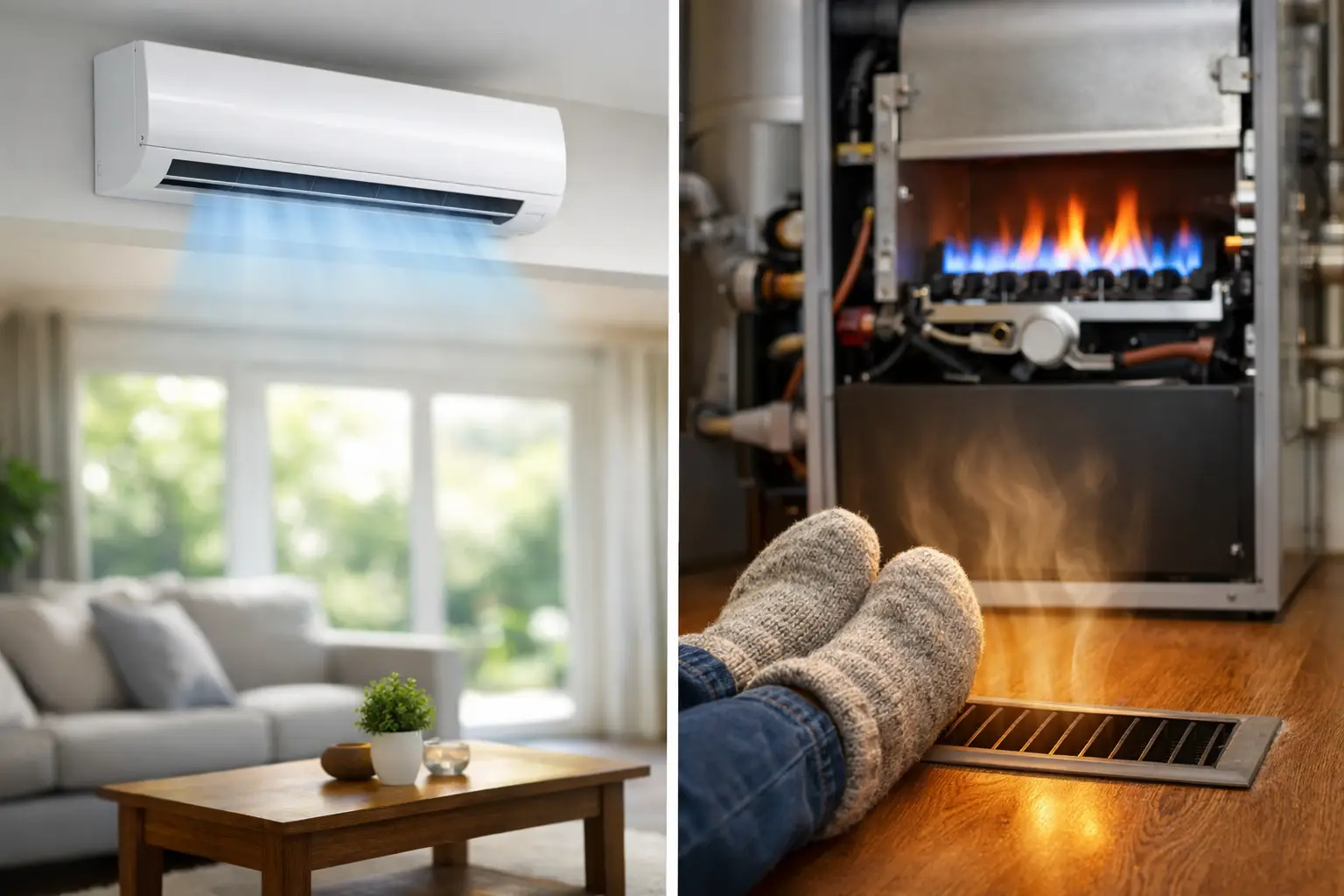
A Melbourne winter morning can expose the weak points in any heating system: cold bedrooms, a living area that takes too long to warm up, and energy bills that arrive with an unpleasant surprise. When comparing reverse cycle versus gas heating, the better choice is not simply the system with the lowest purchase price. It is the one that suits your home, how you use each room, and whether you also need reliable cooling through summer.
Reverse cycle air conditioning and gas heating can both deliver effective warmth. Their running costs, installation requirements and whole-home comfort, however, can look very different. Understanding those differences makes it easier to invest with confidence.
How reverse cycle and gas heating work
A reverse cycle air conditioner is a heat pump. Rather than creating heat by burning fuel, it draws available heat from outside air and transfers it indoors. Even on a cold Victorian day, there is heat energy in the air that the system can use. In summer, the process reverses to provide refrigerated cooling.
Gas heating creates warmth by burning natural gas or LPG. A ducted gas furnace sends heated air through ceiling or floor ducts, while other options include gas wall furnaces, space heaters and hydronic systems. These systems are heating-only, so a separate air conditioner is required if you want cooling.
That distinction matters. A reverse cycle system can replace two separate comfort systems with one tailored solution, while gas may remain practical where an existing system is in good condition or where a particular type of heat suits the household.
Reverse cycle versus gas heating: the key differences
Energy use and running costs
Reverse cycle systems are often highly efficient because they move heat instead of producing it directly. Depending on the unit, outdoor temperature, insulation and how it is operated, one unit of electricity can deliver several units of heat into the home. This can make reverse cycle heating an economical option, particularly for households with rooftop solar or plans to install it.
Gas heating costs depend on the appliance efficiency, gas tariff, condition of the ductwork and the amount of space being heated. Older ducted gas systems can lose heat through poorly sealed or uninsulated ducts, and heating the entire house when only one or two rooms are occupied can add unnecessary expense.
There is no universal winner on a quarterly bill. Energy prices vary, as do household routines. But for many homes, an efficient reverse cycle system provides a strong long-term case, especially when it is correctly sized and used to heat occupied zones rather than every room at once.
Comfort across the whole home
Gas ducted heating is familiar to many Victorian households because it can warm several rooms quickly. With a well-designed zoned system, bedrooms and living spaces can be managed separately. Gas hydronic heating also offers gentle, even warmth and can be appealing to people who prefer radiators over moving air.
Reverse cycle heating is available as wall-mounted split systems, multi-split systems and ducted air conditioning. A split system is an efficient choice for a frequently used living area, while ducted reverse cycle air conditioning can provide discreet, whole-home climate control. Zoning is particularly useful in larger homes, allowing you to heat only the areas in use.
The comfort result comes down to design. A system that is too small may struggle on the coldest nights. One that is oversized can cycle on and off too frequently, reducing efficiency and creating uneven temperatures. Room size, ceiling height, window orientation, insulation and household habits should all be considered before selecting equipment.
Cooling is part of the decision
For many households, this is the deciding factor. Gas heating does one job well, but Victoria’s hot spells still require a separate cooling solution. If you currently have gas heating and a collection of ageing cooling units, reverse cycle ducted air conditioning can simplify the way you manage comfort throughout the year.
A reverse cycle system gives you heating in winter and refrigerated cooling in summer from the same equipment. With smart controls, you can set schedules, manage zones and avoid conditioning empty rooms. That level of control can make everyday comfort easier without constantly adjusting multiple systems.
Installation and upfront investment
Replacing an existing gas heater can appear cheaper upfront than installing a new ducted reverse cycle system, particularly if the gas unit and ducts can be retained. However, the immediate quote is only part of the picture. Consider expected running costs, cooling needs, future maintenance and the likely lifespan of the equipment.
Installing reverse cycle air conditioning may require a new outdoor unit, electrical upgrades, indoor units or new ductwork. In renovations and homes with limited ceiling space, the layout needs careful planning. A professional assessment can identify practical routes for ducts and pipework, suitable locations for outdoor equipment, and the best way to preserve the look and function of the home.
If you are replacing gas ducted heating, do not assume the existing ducts are automatically suitable for reverse cycle air conditioning. Duct sizing, insulation, return-air design and outlets all need to be assessed for the new system. Reusing suitable components can be worthwhile, but only where performance and reliability will not be compromised.
Performance on cold days
Modern reverse cycle systems are designed to operate in low outdoor temperatures, but their output and efficiency can reduce as conditions get colder. During very cold or frosty weather, the unit may enter a short defrost cycle to clear ice from the outdoor coil. This is normal, although heating temporarily pauses while the cycle runs.
For most Melbourne and Geelong homes, a quality, correctly specified reverse cycle system will provide dependable winter heating. The key is selecting equipment with suitable cold-weather performance and allowing for the home’s heat loss. Draughts, single glazing and poor insulation can make any heater work harder.
Gas heating delivers heat through combustion and is less affected by outdoor air temperature. That can be an advantage in very cold locations or in homes with high heat demand. Yet improving insulation, sealing gaps and choosing the right system capacity can often have a bigger impact on comfort than changing fuel alone.
Maintenance, air quality and safety
Both options need regular professional servicing. Reverse cycle systems benefit from clean filters, clear condensate drainage, checked electrical connections and confirmed refrigerant performance. A neglected unit can become noisier, less efficient and less effective at heating or cooling.
Gas appliances need servicing to confirm safe combustion, ventilation and correct operation. Carbon monoxide is colourless and odourless, so gas heaters should never be ignored if you notice soot, unusual smells, yellow flames, headaches or a system that repeatedly shuts down. Unflued gas heaters require particular care because they release combustion products into the room.
For households wanting to move away from gas, reverse cycle heating removes combustion from inside the home. It still requires professional installation and maintenance, but it does not rely on a gas flame to warm indoor air.
Which option suits your property?
Reverse cycle heating is often a strong choice when you want both heating and cooling, have solar or are considering it, want room-by-room control, or are building or renovating. A wall split can be highly effective for a main living zone, while a ducted system suits households seeking consistent whole-home comfort with a discreet finish.
Keeping or replacing gas heating may make sense if you already have a well-maintained, efficient ducted or hydronic system, need heat in a specific configuration, or are working within a limited upfront budget. It can also be a considered choice in homes where the cost or disruption of a full reverse cycle installation is not yet justified.
For many households, the best pathway is staged. You might retain an existing gas system temporarily while installing reverse cycle air conditioning in the most-used living area, then plan a broader upgrade when the gas unit reaches the end of its serviceable life. This can spread costs while improving summer cooling and reducing reliance on gas straight away.
Start with a tailored assessment
The right answer to reverse cycle versus gas heating depends on more than the appliance. It depends on your home’s layout, insulation, existing services, number of occupants and the rooms you use most. A proper assessment should look at these details before recommending a system size or installation approach.
Air Con Solutions can help homeowners and small businesses choose a practical heating and cooling solution, from efficient split systems to zoned ducted reverse cycle installations. If your current heater is unreliable, expensive to run or no longer keeping every room comfortable, arranging a professional assessment is a useful first step towards a home that feels right in every season.