
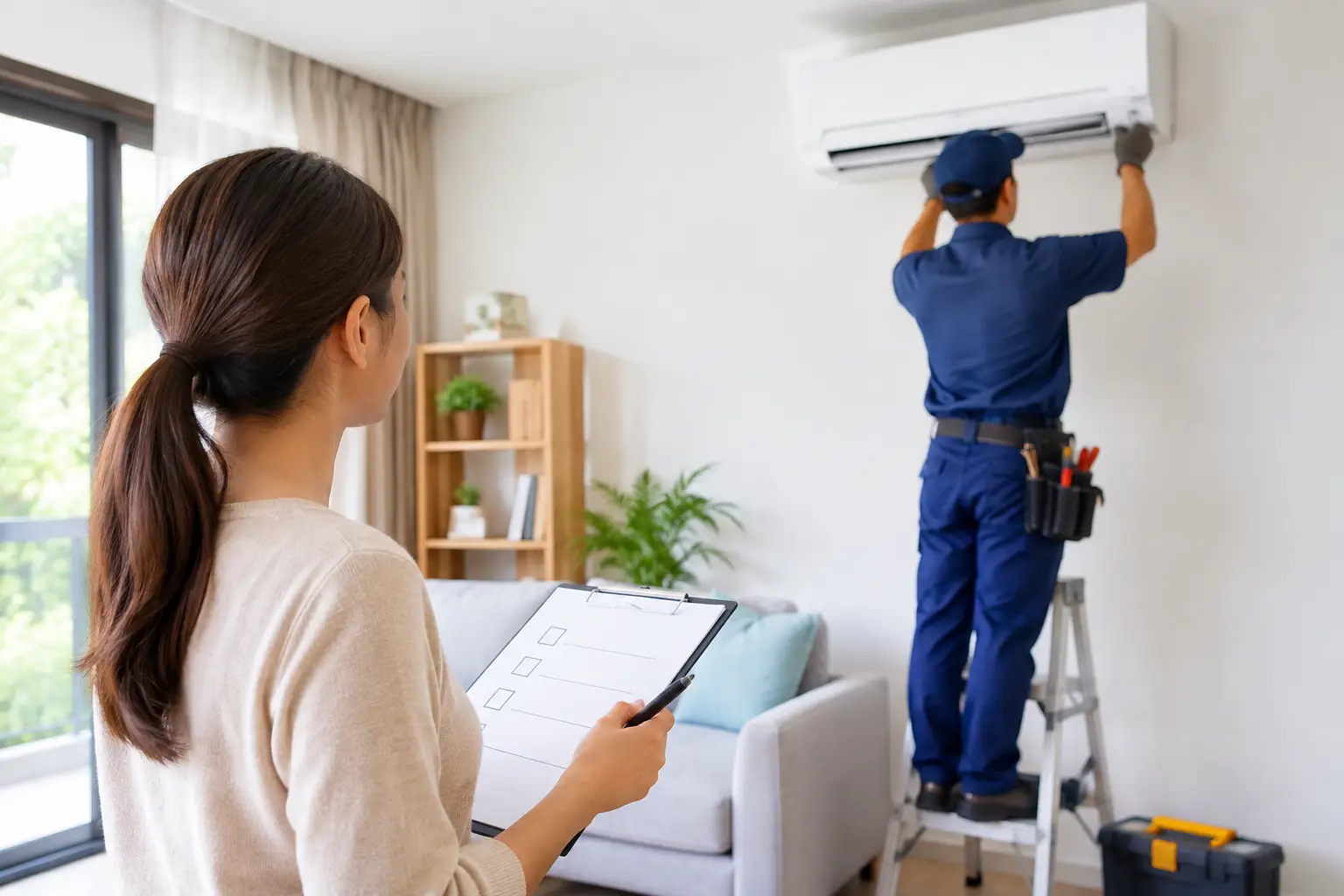
A new air conditioning system should make your home more comfortable, not turn installation day into a scramble to move furniture, clear access or answer last-minute questions. A little preparation helps your installer work safely, protects your home and gives your new system the best chance of delivering efficient comfort from day one. If you are wondering how to prepare for aircon installation, focus on access, system placement, electrical readiness and clear communication before the team arrives.
Whether you are installing a ducted system for whole-home comfort or a split system for a particular room, the details of your property matter. Good preparation gives your installer the information and working space needed to deliver a tailored result.
Confirm the system and installation plan
Before installation day, make sure you understand what is being fitted and where the main components will go. For a split system, this usually means confirming the indoor wall-mounted unit, outdoor condenser, pipework route and controller location. For ducted air conditioning, it can include the indoor unit, outdoor unit, ceiling or roof-space equipment, duct runs, vents, return-air grille and zoning controls.
The best location is not always the most obvious one. Indoor units need clear airflow and a position that can cool or heat the intended area effectively. Outdoor units need ventilation, service access and a stable base. They should also be positioned thoughtfully to manage noise, drainage and visual impact.
If you have had a site assessment, keep a copy of the agreed scope and raise any changes before the installation date. New cabinetry, a pergola, solar equipment, a renovation or even a recently planted garden can affect access or equipment placement. It is far easier to adjust the plan in advance than when installers are already on site.
Consider comfort, appearance and future access
Ask how the proposed placement will work in everyday life. Will furniture block the airflow? Is the controller somewhere convenient? Can a technician safely access the outdoor unit for future servicing? With ducted systems, are vent locations suited to the room layout rather than simply the easiest ceiling position?
There can be trade-offs. Concealing pipework or locating an outdoor unit out of sight may improve appearance, but it can add installation complexity. A trusted installer can explain what is practical for your home without compromising performance or serviceability.
Clear safe access inside and outside
Installers need room to move equipment, ladders, tools and materials safely through the property. Before they arrive, clear a practical path from the driveway or street access to the work areas. Move vehicles if they may block the driveway, gate or garage access, and ensure gates are unlocked.
Inside, shift fragile items, artwork and furniture away from walls where indoor units, pipework or controllers are being installed. For ducted work, clear access to the manhole and create space beneath it. Roof spaces can be dusty and tight, so installers may need room for a ladder and protective coverings around the entry point.
Outside, trim back plants around the proposed condenser location and remove outdoor furniture, pots, bins or stored items. The unit needs breathing room once installed, but the team also needs adequate working space while completing the job.
If access involves a narrow side passage, stairs, a steep block, shared driveway or restricted parking, mention it when booking. These conditions do not necessarily prevent installation, but they may affect the crew, equipment or time required.
Prepare your home for installation day
Air conditioning installation can involve drilling, lifting, ceiling access and electrical work. Professional teams take care to minimise disruption, but some dust and noise are unavoidable. Planning around the work makes the day easier for everyone.
Keep children and pets away from active work areas. Pets can be unsettled by unfamiliar people, open doors and drilling, while children may be drawn to tools and ladders. If possible, arrange a quiet room, secure outdoor area or alternative care while work is underway.
Protect particularly valuable furniture or belongings near the installation area. Your installer may use drop sheets, but moving delicate items yourself provides extra peace of mind. If the system is being fitted in a home office, bedroom or living area, plan for that room to be unavailable for part of the day.
It also helps to nominate one adult who can be available to answer questions and approve any necessary adjustments. This is especially useful when equipment location, pipework routing or controller placement needs final confirmation on site.
Check electrical requirements early
A new air conditioner needs suitable electrical capacity and compliant connections. Depending on the system size, age of the switchboard and existing household load, electrical work may be required before or during installation.
Do not assume an available power point is enough. Air conditioning systems commonly require a dedicated circuit, and any electrical work must be assessed and completed by appropriately licensed professionals. Older homes may need switchboard upgrades, additional safety switches or other work to support the new system safely.
Tell your installer about solar panels, batteries, electric vehicle charging, pool equipment and other high-demand appliances. This information helps them consider your broader electrical setup and recommend the right approach. It can also help avoid surprises after installation.
If you live in a strata, apartment or townhouse property, check whether approval is needed for an outdoor unit, changes to external walls or shared areas. Your body corporate may have requirements about unit placement, noise or appearance. Landlords and tenants should also confirm written approval before work begins.
Think about drainage and weather protection
Cooling creates condensation, and that water needs somewhere appropriate to drain. For split systems, installers will plan a condensate drain route that avoids damage to walls, paths and neighbouring areas. For ducted systems, drainage requirements depend on the equipment design and installation location.
Let the installer know if the proposed area is prone to pooling water, heavy runoff or strong winds. In Melbourne, Geelong and many Victorian and NSW locations, weather can shift quickly, so outdoor equipment must be installed with local conditions in mind. A stable base, sensible placement and suitable clearances all support reliable operation over time.
Avoid covering an outdoor unit with a tight enclosure or storing items around it after installation. It may look tidier, but restricted airflow can reduce efficiency and place unnecessary strain on the system.
Make decisions that support energy efficiency
Installation is the ideal time to think beyond the unit itself. The right-sized system, sensible zoning and smart controls can make a noticeable difference to comfort and running costs. A system that is too small may struggle through extreme temperatures, while an oversized system can cycle inefficiently and create uneven comfort.
For ducted air conditioning, discuss which rooms genuinely need regular conditioning and whether zoning suits your household routine. A family may want separate zones for bedrooms and living areas, while a small business may need different settings across customer spaces and back-of-house areas. Smart temperature management can help you avoid heating or cooling empty rooms.
Your home's insulation, window coverings, draughts and sun exposure also affect performance. Installation will not fix every comfort issue on its own. If one room gets intense afternoon sun or a large open-plan space loses heat quickly, mention it during planning so the system design accounts for it.
Your practical pre-installation checklist
In the days before the appointment, make sure you have completed these key tasks:
- Confirm the agreed system, equipment locations and any requested approvals.
- Clear indoor and outdoor access, including the manhole for ducted installations.
- Move vehicles, furniture, fragile items, pets and children away from work zones.
- Advise the installer of access restrictions, electrical upgrades, solar or other major appliances.
- Keep your mobile nearby and ensure an authorised decision-maker can be contacted.
You do not need to become an air conditioning expert before installation. You simply need to give the right team a clear, safe and accessible site to work with. With a well-planned installation, your new system can be fitted efficiently and set up for the reliable, energy-conscious comfort your home deserves.