
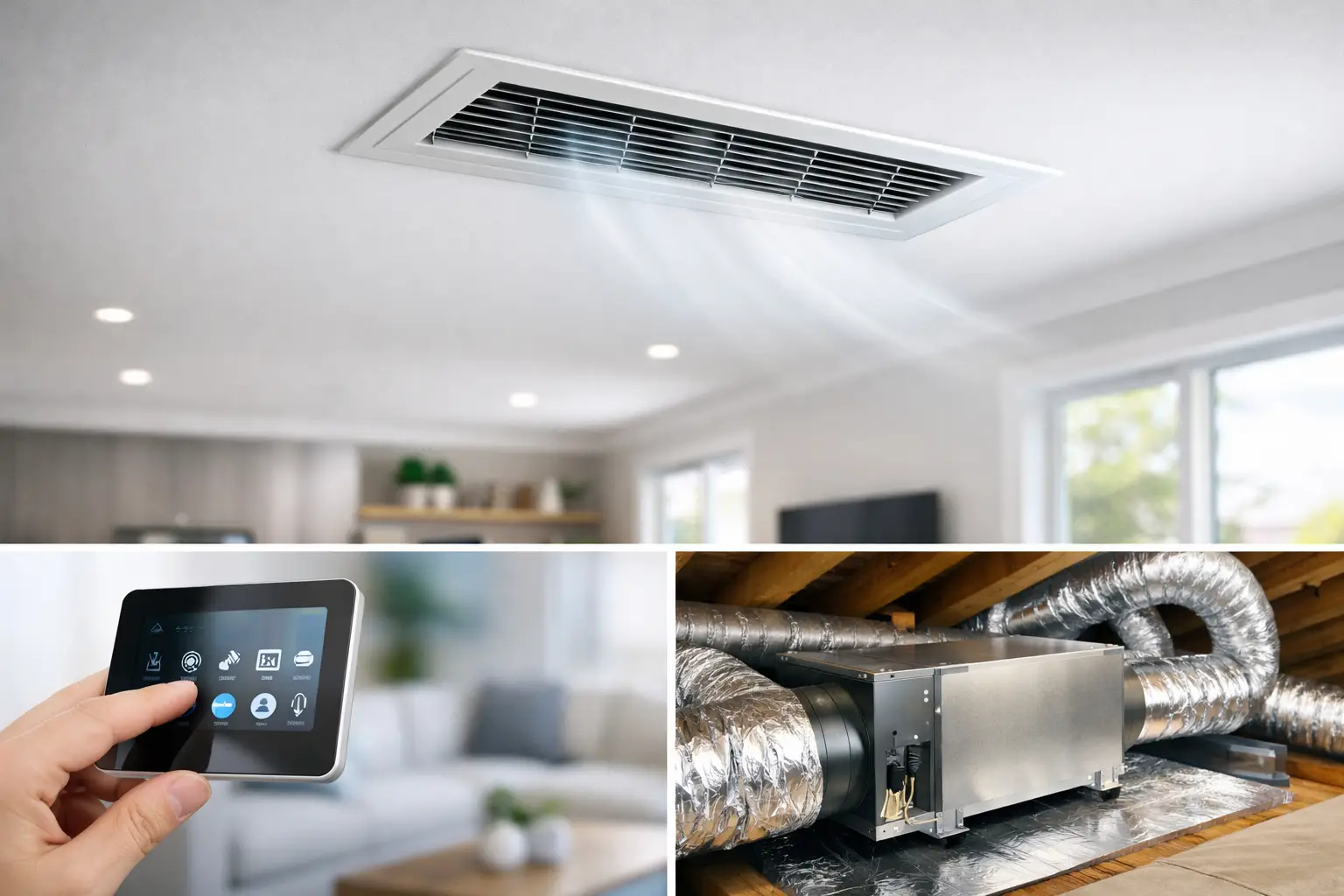
A ducted system can make a Melbourne summer afternoon or a sharp Victorian winter morning far more comfortable - but the right result comes down to more than choosing a well-known brand. The best ducted air conditioning features are the ones that suit how your household uses each room, how your home is laid out and how much control you want over running costs.
A well-designed system should feel easy to live with. It should deliver dependable heating and cooling where you need it, run quietly in the background and give you practical ways to avoid conditioning empty rooms. Here are the features worth discussing before installation or when planning an upgrade.
Best ducted air conditioning features for everyday comfort
Zoned temperature control
Zoning is often the feature that makes ducted air conditioning genuinely efficient for family homes. Rather than heating or cooling the entire house at once, zones let you control separate areas, such as bedrooms, living spaces and a home office.
This means you can cool the living area during the afternoon, switch on bedrooms before bed and leave unused rooms off. It also helps households where people prefer different temperatures. One person may be comfortable at 22°C while another wants their bedroom slightly warmer overnight.
The number and design of zones matter as much as the feature itself. A compact single-storey home may only need two zones, while a larger home with multiple living areas may benefit from more. Too few zones can limit flexibility, but dividing a home into many tiny zones is not always the most effective option. A professional assessment can balance comfort, airflow and system capacity.
Smart controllers and app access
Smart climate control gives you more visibility over how your system operates. Depending on the controller and system selected, you may be able to adjust temperatures, select zones, set timers and check operating modes from a wall controller or mobile app.
For busy households, scheduling is especially useful. You can set the system to warm the home before the first person gets up, then reduce output once everyone leaves. In the evening, you might cool only the family room and bedrooms rather than the whole house.
Some smart systems also offer more advanced zone management, allowing individual rooms to be controlled with greater precision. This can be a strong option in homes with changing routines, shift workers, teenagers or rooms that heat up at different rates. The best choice depends on the system design and how much day-to-day control you will actually use.
Energy-efficient inverter technology
An inverter-driven ducted unit adjusts its output to maintain the set temperature rather than repeatedly running at full power and shutting off. In practical terms, this can provide steadier comfort and reduce unnecessary energy use once the home is close to the desired temperature.
Efficiency is not determined by the outdoor unit alone. Correct sizing, duct design, insulation, zoning and controls all influence electricity consumption. A highly efficient unit can still cost more to run if it is oversized, poorly installed or asked to condition a large home without sensible zoning.
When comparing systems, look at their energy ratings and ask how the recommended capacity has been calculated for your property. Ceiling height, window orientation, insulation, open-plan areas and the number of occupants all affect the answer. A tailored solution is usually more valuable than choosing the biggest unit available.
Features that protect peace and quiet
Low-noise indoor and outdoor operation
Ducted systems are generally quieter inside than wall-mounted split systems because the main fan coil is concealed in the roof space and conditioned air enters through ceiling or floor outlets. However, noise levels still vary between systems and installations.
A quieter setup considers more than the equipment specification. Duct location, return-air grille position, airflow settings and the placement of the outdoor unit all play a part. For example, an outdoor unit placed near a bedroom window, entertaining area or neighbour's boundary may create avoidable disruption.
This is particularly important for homes with young children, light sleepers or a study used for video calls. During design, ask where the indoor unit, return air and outdoor condenser will be located, not just where the outlets will sit.
Thoughtful outlet and return-air design
Outlets are the visible part of a ducted system, so it is tempting to focus on their appearance alone. Slimline grilles, linear slot outlets and discreet ceiling registers can help the system fit the interior design, especially during a renovation or new build.
Their position matters more. Supply air needs to circulate effectively through the room without creating uncomfortable draughts or leaving warm and cold pockets. Return-air grilles must also be sized and located to help the system draw air back efficiently.
A good design works with ceiling space, lighting plans, bulkheads and structural constraints. This is where experienced installation makes a real difference, particularly in older homes or properties with limited roof access.
Humidity and air-quality options
Refrigerated ducted air conditioning naturally removes some moisture from the air while cooling, which can make humid days feel more comfortable. However, humidity control performance varies with conditions, system settings and the building itself.
If allergies, dust or indoor air quality are a concern, ask about available filtration and fresh-air options. Standard filters help protect the equipment and capture larger particles, but they are not all designed to deliver hospital-grade air cleaning. Higher-level filtration can affect airflow and may require more frequent maintenance, so it should be selected carefully.
For most homes, regular filter cleaning, a well-maintained return-air system and sensible ventilation habits make a meaningful difference. A feature is only useful if it can be maintained properly over time.
Reliability features that are easy to overlook
Quality ductwork and insulation
The ducts are the delivery network for your heating and cooling. If they are undersized, poorly sealed, sharply bent or inadequately insulated, comfort and efficiency can suffer regardless of the unit you choose.
Quality insulated ductwork helps reduce heat gain and heat loss in the roof space, while proper sealing limits conditioned air escaping before it reaches the room. It can also reduce noise from airflow. This work is largely hidden once installation is complete, which makes choosing a qualified provider especially important.
Easy maintenance access
Every ducted system needs ongoing care. Filters need cleaning, components should be inspected and drains, electrical connections and airflow should be checked as part of routine servicing. A system designed with practical access is easier to maintain and diagnose when something goes wrong.
Ask how often filters should be cleaned, what servicing is recommended and whether the controller can display maintenance reminders or fault codes. These small details can help you act early instead of waiting for a breakdown on the hottest or coldest day of the year.
Warranty support and professional commissioning
A worthwhile warranty matters, but so does the quality of installation and commissioning. Commissioning is the process of testing the system after installation to confirm it is operating as intended. This includes checking airflow, temperature performance, drainage, controls and zone operation.
It is the final step that turns a collection of equipment into a dependable climate-control solution. Keep warranty documents and service records, and use qualified technicians for repairs and maintenance to protect both system performance and manufacturer requirements.
Choosing features for your property, not a brochure
The most useful ducted air conditioning system is not necessarily the one with the longest feature list. A family in a large double-storey home may place zoning and smart room control at the top of the list. A smaller home may gain more value from quiet operation, accurate sizing and a simple controller that everyone can use confidently.
For light commercial spaces, priorities often shift towards dependable operating hours, zoning for separate work areas and controls that prevent energy being wasted after closing time. In every case, the property layout and daily routine should guide the design.
Before committing, consider which rooms are used most, when the home is occupied, where afternoon sun enters and whether future renovations could change the layout. Air Con Solutions can help homeowners and businesses assess these practical details and recommend a system built around comfort, efficiency and long-term reliability.
The right features should make your air conditioning less noticeable, not more complicated. When the system is properly sized, carefully installed and easy to control, you can simply enjoy a comfortable home through every season.