
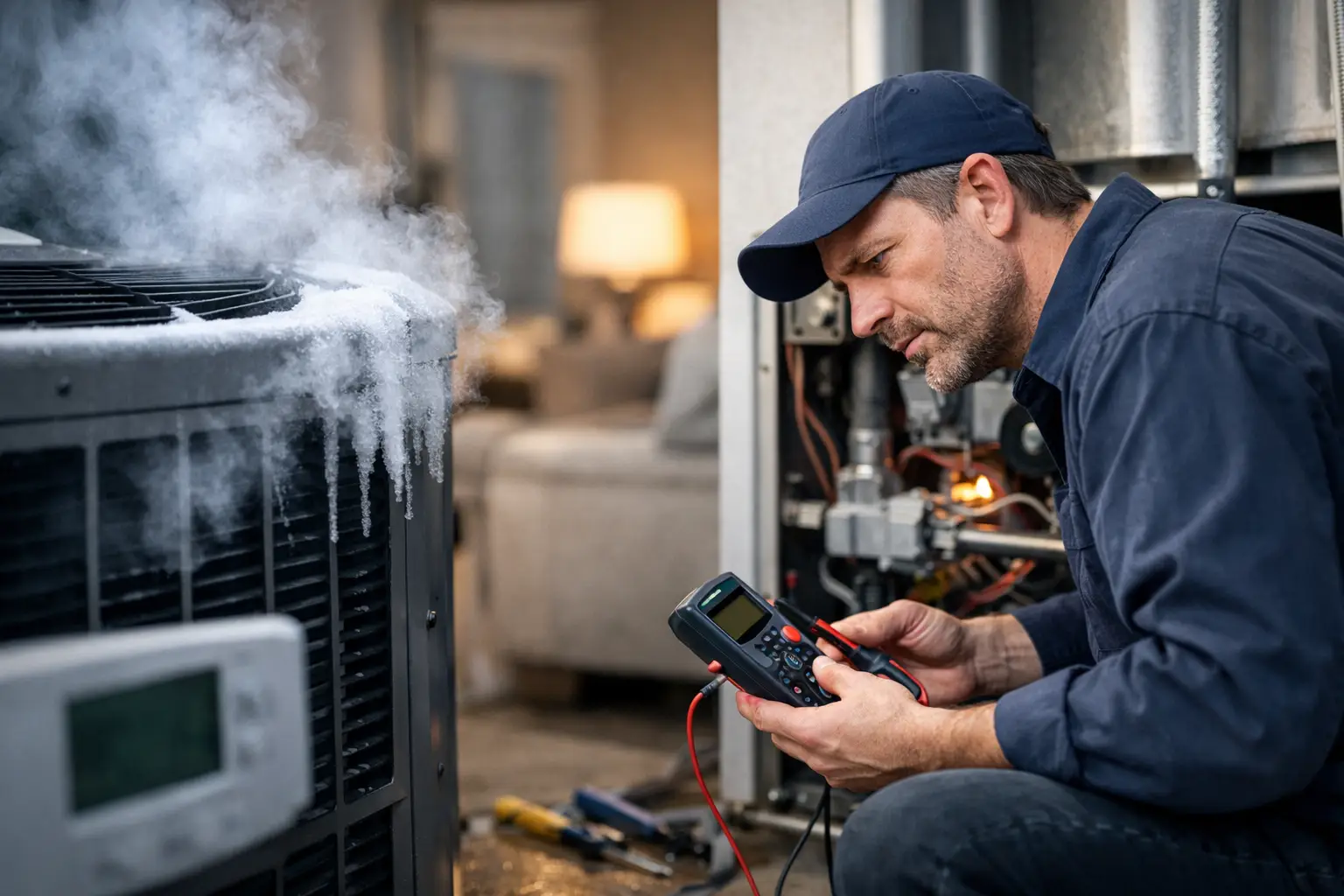
A system that takes ages to warm the house on a cold Melbourne morning, then struggles to cool it later in the day, is doing more than testing your patience. It may be using more power than necessary while placing extra strain on key components. Timely heating cooling repairs can restore reliable comfort, help control running costs and prevent a manageable fault from becoming a complete breakdown.
For homeowners and small business operators, the challenge is knowing whether a problem needs a quick adjustment, a routine service or professional repair. The answer depends on the symptoms, the age of the system and how consistently it has been maintained. What should not be ignored is a clear change in performance.
Signs your system needs heating cooling repairs
An air conditioner or heating system rarely fails without warning. It will often become noisier, less responsive or less effective before it stops altogether. Acting early gives a technician a better chance of repairing the issue before it affects other parts of the system.
Poor airflow is one of the most common signs. If some rooms are comfortable while others remain stuffy or cold, the cause could be a blocked filter, damaged ductwork, a failing fan or an issue with zoning controls. In a ducted system, uneven temperatures can also point to leaks or poorly operating outlets. A technician can test the airflow and identify whether the problem sits in the unit, ducts or controls.
Unusual sounds deserve attention too. Rattling may indicate a loose panel or component, while grinding, screeching or persistent banging can signal a mechanical fault. These noises are not something to turn up the television over. Switching the system off and arranging an inspection can protect the equipment from further damage.
Water where it should not be is another reason to book a repair. A split system that drips indoors may have a blocked condensate drain, damaged drain line or frozen coil. Water can affect plaster, flooring and electrical components, so it is best addressed promptly rather than left until the next service.
You should also arrange a check if the unit cycles on and off frequently, produces an unusual smell, trips the circuit breaker or shows an error code. A musty smell can be linked to moisture and build-up within the indoor unit. A burning smell, however, may indicate an electrical issue and should be treated as urgent.
Why a repair can reduce energy bills
When heating or cooling equipment has to work harder to achieve the selected temperature, energy use rises. That may happen because airflow is restricted, refrigerant levels are not correct, sensors are inaccurate or a worn component is reducing efficiency. The thermostat can say 22 degrees, but the system may be running far longer than it should to get there.
A repair does not automatically make every older system economical to run. If a unit is nearing the end of its useful life, has repeated faults or relies on outdated technology, replacement may offer better long-term value. But for a well-sized system with a repairable fault, restoring proper operation can make a noticeable difference to comfort and power consumption.
Smart controls can help once the equipment itself is working correctly. Zoned temperature management allows you to condition the rooms being used rather than the entire property, while scheduling avoids heating or cooling an empty home all day. These features are most effective when paired with a system that is clean, correctly configured and professionally maintained.
Repair, service or replacement: which is right?
A service is preventative. It generally involves inspecting the system, cleaning accessible components, checking operation and identifying wear before it causes a failure. A repair is required when something has already gone wrong, such as a failed capacitor, faulty fan motor, blocked drain or control problem.
Replacement becomes worth considering when repairs are frequent, parts are difficult to source, the system is significantly undersized or oversized for the property, or energy costs remain high despite servicing. It may also be the practical option during a renovation, particularly when room layouts, insulation or usage patterns have changed.
There is no single age at which every air conditioner should be replaced. Usage, installation quality, exposure to weather and maintenance history all matter. A technician should explain the condition of your existing equipment, the likely repair outcome and the expected costs so you can make a confident decision rather than being pushed into a solution that does not suit the property.
What to do before booking a repair
A few simple checks can help rule out an avoidable issue and give the technician useful information. First, confirm the system is set to the correct mode. Heating and cooling modes can be easily confused, especially with shared remotes or wall controllers. Check the selected temperature as well. Setting the system to an extreme temperature will not make it reach comfort faster, but it can make it run longer.
If it is safe to do so, inspect and clean the return-air filters according to the manufacturer’s guidance. Clogged filters restrict airflow and can contribute to poor performance. Make sure outdoor units are clear of leaves, garden debris and stored items, with adequate room for air to circulate. Do not remove covers or attempt electrical or refrigerant work yourself.
It is also helpful to note what happened before the issue started. Did the problem occur after a power outage, during a heatwave, after a renovation or only when a particular zone is operating? Does the system fail immediately or after running for half an hour? These details can shorten the diagnostic process and help the technician arrive prepared.
For a suspected electrical fault, burning smell, smoke, repeated tripping or significant water leak, turn the system off at the controller and, where appropriate, the isolator. Avoid running it again until it has been assessed by a qualified professional.
The value of professional diagnosis
Heating and cooling systems combine electrical controls, moving parts, drainage, airflow and, in many cases, refrigerant circuits. The same symptom can have several possible causes. Weak cooling, for example, may be a dirty filter, a fan issue, a refrigerant fault, a sensor problem or a ductwork concern. Guesswork can waste time and risk causing more damage.
Professional diagnosis looks beyond the obvious. A qualified technician checks the system’s operation, identifies the underlying fault and explains the repair in straightforward terms. For ducted systems, that may include assessing zones, outlets, return-air paths and equipment performance together, rather than treating one uncomfortable room as an isolated problem.
This approach is particularly valuable in homes with additions, challenging roof spaces or custom layouts. A system that once performed well may need adjustments as the way you use the property changes. Tailored solutions can improve comfort without assuming that a full replacement is the only answer.
Keeping repairs from becoming emergencies
Regular maintenance is the practical way to reduce unexpected failures. Before the peak heating and cooling seasons, arrange a professional service so small issues can be found when demand is lower and comfort is not yet compromised. This is especially worthwhile for systems that run daily, properties with pets, rental homes and small commercial spaces where downtime affects staff or customers.
Between services, clean filters as recommended, keep outdoor units clear and pay attention to changes in sound, airflow and temperature. Avoid closing too many outlets in a ducted system unless your installer has confirmed the zoning setup supports it. Restricted airflow can place unnecessary pressure on the equipment.
For homes and businesses across Victoria and NSW, a fast, knowledgeable response makes a difficult breakdown far less disruptive. Air Con Solutions can assess faults, carry out professional repairs and provide clear advice on servicing, smart controls or replacement where needed.
Comfort should feel dependable, not like something you have to negotiate with every time the weather changes. If your system is showing early warning signs, arranging an expert assessment now can help protect your home, your budget and the people relying on it.