
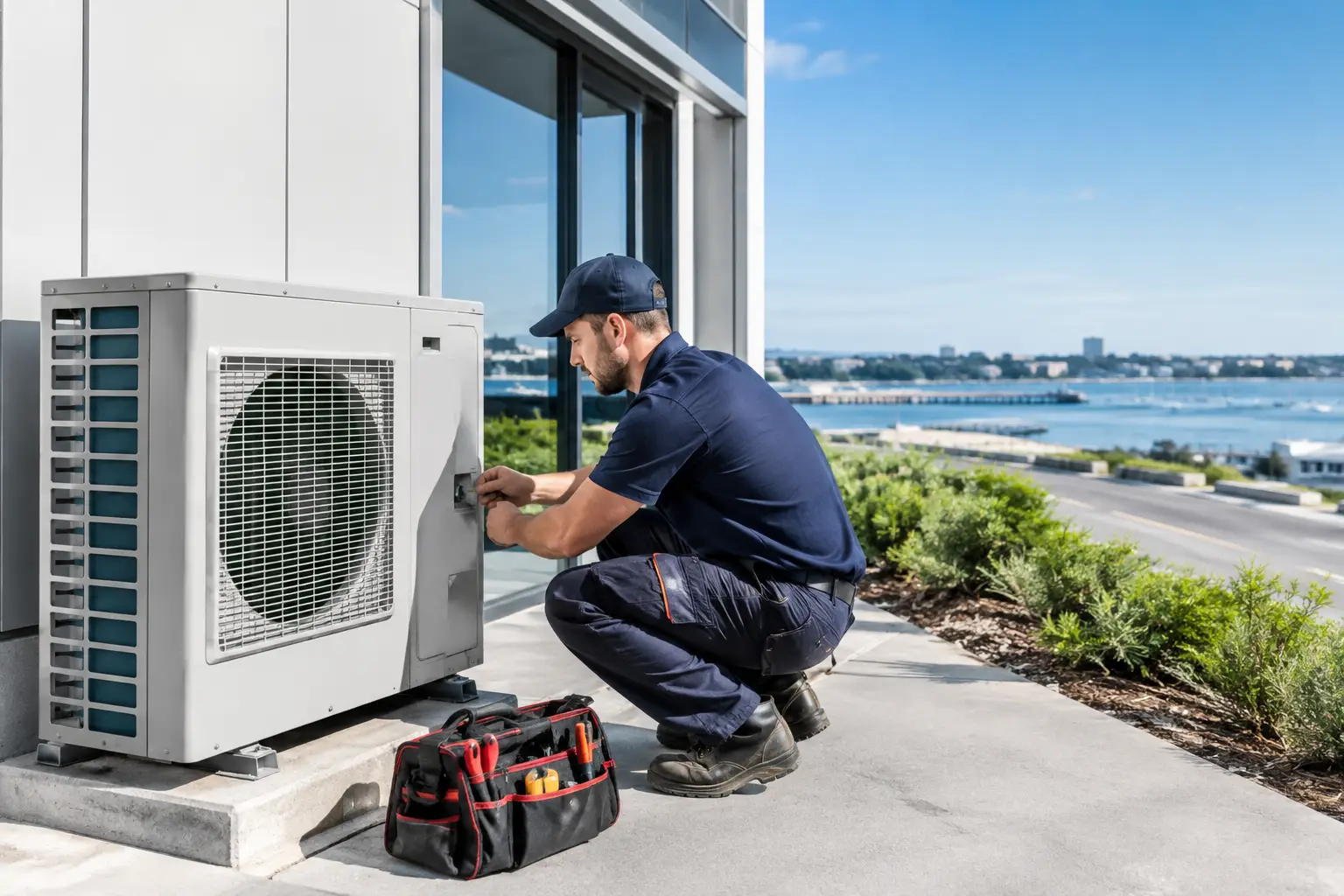
A warm shop floor can change the way customers browse, how long staff can work comfortably and how hard a cooling system has to run. This Geelong retail cooling upgrade example shows how a considered replacement can address uneven temperatures, rising running costs and repeated breakdowns without losing sight of the realities of a busy trading space.
The example is based on a typical light-commercial retail setting: a street-front store with large windows, regular foot traffic, changing heat loads and limited tolerance for disruption. Every site needs its own assessment, but the decision-making process is relevant to many local retailers planning their next heating and cooling investment.
The starting point: a shop that was cool in patches
The retailer had an older split-system arrangement installed in stages as the business grew. Units near the front windows worked hard against afternoon sun, while the rear of the store remained noticeably warmer during busy periods. Staff adjusted set temperatures several times a day, yet customers near the entry still felt blasts of warm air whenever the door opened.
The system was not completely failed, but it was no longer delivering dependable comfort. It also required more frequent repairs, and the owner had little confidence that another repair would provide a lasting answer. This is often the point at which replacement deserves a serious comparison with ongoing reactive repairs.
There was another challenge. The shop could not simply close for several days while work was completed. The upgrade needed to fit around trading hours, protect the presentation of the store and minimise interruption to staff and customers.
Geelong retail cooling upgrade example: assessing what the shop needs
Choosing a larger unit is not automatically the right fix. Cooling capacity has to suit the room size, ceiling height, window exposure, insulation, equipment heat and the number of people likely to be in the space. An oversized system can cycle on and off too quickly, affecting humidity control and wasting energy. An undersized system may run continuously on hot days without catching up.
For this example, the assessment focused on the store layout rather than just its floor area. The technician considered the sun-facing glass at the front, the open doorway, shelving that interrupted airflow and the warmer rear section used by staff. Existing electrical supply, outdoor-unit placement and access for future servicing also formed part of the plan.
The outcome was a tailored ducted solution with zoning capability, rather than adding another wall-mounted unit to an already inconsistent setup. Ducted cooling gave the retailer an opportunity to distribute conditioned air more evenly through ceiling outlets, while keeping the fit-out clean and unobtrusive.
Why zoning mattered
The front retail area and rear work zone did not have identical cooling needs. During quieter periods, conditioning the entire premises at full output was unnecessary. Zoning allowed the operator to direct comfort where it was needed, rather than treating every square metre the same way.
This approach can reduce avoidable energy use, but it is not a guarantee of a specific saving. Results depend on operating hours, electricity pricing, insulation, door use, temperature settings and how the system is maintained. The practical benefit is greater control - especially when staff can make sensible adjustments without constantly changing settings across separate units.
Selecting a system for comfort and daily operation
The replacement system was selected for efficient performance at the required capacity and for compatibility with smart controls. A well-designed installation considers more than the indoor unit itself. Correctly sized ductwork, sensible outlet locations, return-air pathways and a suitable outdoor-unit position all influence comfort, noise and system efficiency.
In a retail environment, appearance matters too. Ceiling outlets kept walls clear for displays and signage, while the outdoor unit was positioned to allow ventilation and technician access without becoming an obstacle for deliveries or customers. These details can seem minor before installation, but they make a meaningful difference over the life of the system.
Smart temperature management was included so the owner could set schedules around opening and closing times. Instead of arriving to an already warm shop and running the system harder to recover, the store could be prepared ahead of trade. Controls also made it easier to avoid leaving cooling on unnecessarily after closing.
For some smaller stores, a high-wall split system or multi-split setup may still be the better-value choice. It depends on the layout, available ceiling space, budget and future plans for the premises. A site inspection is the reliable way to identify the option that balances upfront cost with comfort and running efficiency.
Planning installation around trade
Retail cooling work is most successful when the installation plan respects the business schedule. In this example, the work was organised to limit disturbance during peak periods. Equipment and materials were prepared in advance, access points were confirmed and the team worked carefully around existing stock and fittings.
Where an upgrade involves replacing equipment rather than rebuilding the entire system, some downtime is unavoidable. The goal is to make it predictable and as short as practical. Clear communication before work begins helps the owner plan staff rosters, protect displays and advise customers if needed.
Once installed, the system was tested across its zones, controls were demonstrated and the owner was shown how to use practical settings for everyday trading. A quality handover is not a formality. It helps ensure a new system is operated as designed, rather than being set too low in summer and asked to work harder than necessary.
What changed after the upgrade
The most immediate outcome was more even comfort across the store. The front area was no longer carrying the whole cooling burden, and the rear work zone could be managed independently when required. Staff had fewer reasons to adjust temperatures throughout the day, allowing them to focus on customers instead of the thermostat.
The owner also moved from an uncertain repair cycle to a planned maintenance approach. Regular servicing helps keep filters, drains, electrical connections and airflow components in good order. It can also identify small issues before they become a disruption during a hot spell.
A new system will not remove every source of heat. Strong sun through unshaded glass, frequently opened doors and poor insulation can still affect indoor conditions. In this case, pairing the cooling upgrade with sensible measures such as door management and window shading supported better results without overcomplicating the solution.
When should a retailer consider an upgrade?
Repeated repairs, uneven temperatures, excessive noise, poor airflow and unexplained increases in energy use are all worth investigating. So is a system that technically still operates but cannot keep customers and staff comfortable through a warm Geelong afternoon.
Before deciding, compare the likely repair cost and remaining life of the current equipment with the value of a new, properly designed system. Ask how the proposed solution will handle your layout, sun exposure, operating hours and future changes to the space. A clear answer should include capacity, controls, installation access and ongoing servicing - not simply a model number and price.
Air Con Solutions can assess light-commercial retail spaces and recommend a practical path forward, whether that is targeted repairs, routine servicing or a tailored cooling replacement. The right upgrade should feel straightforward: dependable comfort for customers and staff, sensible control of energy use and confidence that help is available when it is needed.
If your shop is relying on a system that is always struggling to catch up, a professional assessment can turn a frustrating daily compromise into a comfortable, more manageable place to trade.