
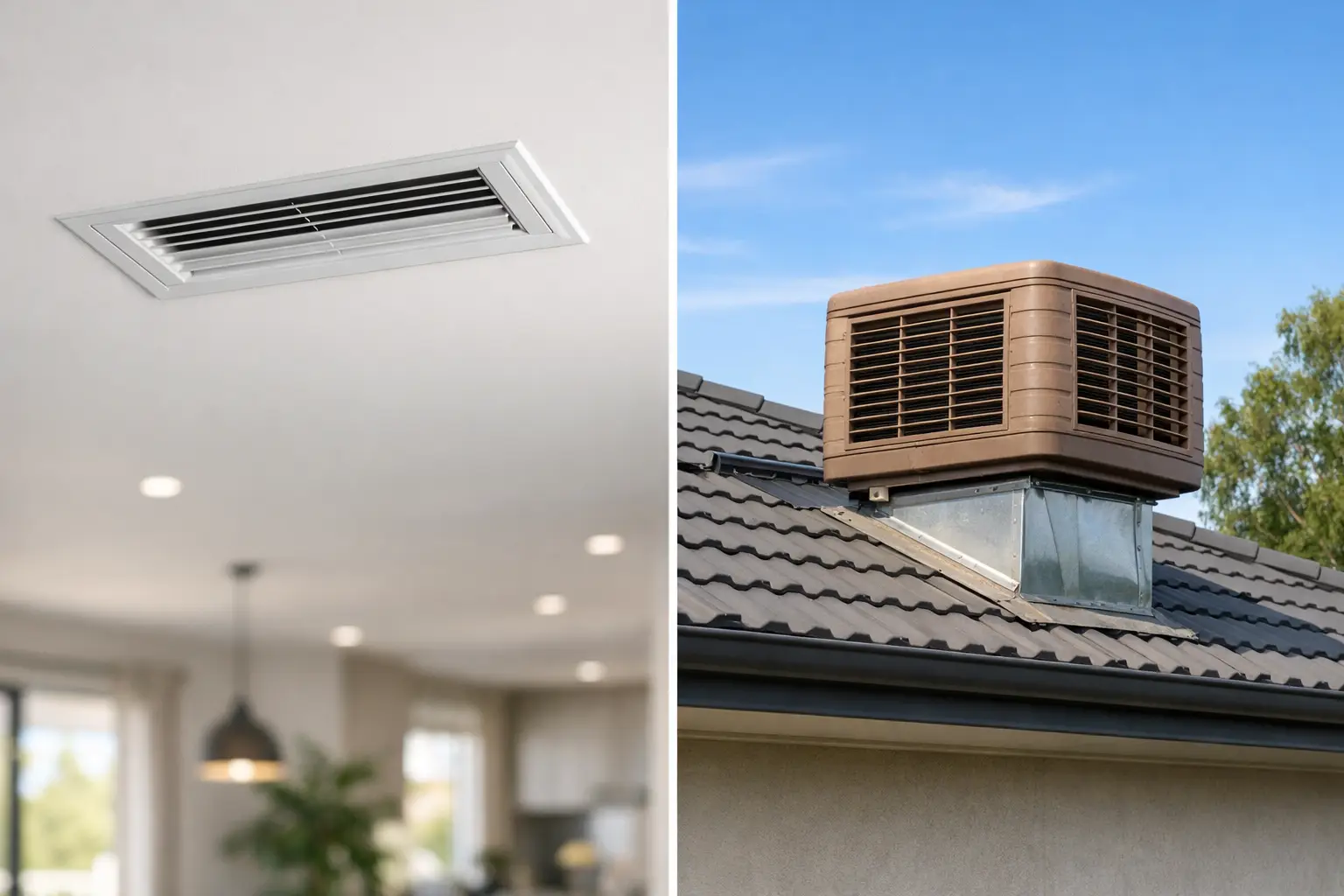
A run of hot Victorian days can expose the limits of a cooling system quickly. If bedrooms stay warm, the living area feels sticky or everyone is competing for the one cool room, choosing between ducted versus evaporative can feel more complicated than it should. Both can cool a whole home, but they work very differently - and the better choice depends on your house, your comfort expectations and how you use heating.
For most homeowners, the comparison is really between ducted reverse-cycle refrigerated air conditioning and evaporative cooling. Both use ceiling vents and a central unit, yet the type of air they deliver, their efficiency in different weather and their ongoing care are not the same.
Ducted versus evaporative cooling at a glance
Ducted reverse-cycle air conditioning moves refrigerated air through insulated ducts to individual rooms or zones. It can cool your home in summer and provide heating in winter, with a thermostat controlling the temperature you select. Modern systems can also be paired with smart controls, making it easier to manage comfort around your household routine.
Evaporative cooling draws fresh outside air through water-soaked cooling pads. As the water evaporates, the air temperature drops before it is distributed through ducts and ceiling outlets. Because it continually brings fresh air into the home, windows or doors need to be left open for the air to escape.
That distinction shapes almost every practical difference. Ducted refrigerated air conditioning recirculates and conditions indoor air in a more closed environment. Evaporative cooling works best as an open-air cooling method.
When ducted air conditioning is the better fit
Ducted reverse-cycle systems suit households wanting reliable year-round temperature control. They are particularly effective on very hot days, during humid weather and in homes where occupants prefer to keep windows shut for security, noise reduction or pollen management.
The major benefit is precision. You set a target temperature and the system works to maintain it, rather than simply reducing the temperature of incoming air. This makes a noticeable difference during Melbourne’s hot, humid spells, when evaporative cooling can lose much of its cooling effect.
Heating and cooling from one system
A reverse-cycle ducted system also provides efficient heating. For homeowners replacing an older gas ducted heater and adding cooling, a single reverse-cycle solution can simplify the home’s climate control. Instead of maintaining separate heating and cooling equipment, you have one integrated system designed for every season.
This can be especially practical for new builds, major renovations and homes where ceiling space, external unit placement and duct routes need careful planning. A professional design can account for room sizes, orientation, insulation and areas that receive strong afternoon sun.
Zoning can reduce unnecessary running costs
Ducted systems can be configured with zones so you only condition the rooms in use. You may cool living areas during the day and bedrooms at night, rather than running the entire home. The actual savings depend on the system design and household habits, but zoning gives you more control over where energy is used.
Smart controllers can add further convenience by allowing schedules, temperature adjustments and, in suitable systems, mobile control. This is useful for busy families and small business operators who want comfort ready when it is needed without relying on a system running all day.
A better option for closed-up homes
On smoky days, high-pollen days or when outdoor noise is an issue, keeping windows closed is often preferable. Ducted refrigerated air conditioning supports that approach. Quality filtration can help manage airborne particles, although filters should be cleaned or replaced as recommended and should not be treated as a substitute for specialist air purification where that is required.
Where evaporative cooling makes sense
Evaporative cooling remains a good option for the right property and lifestyle. It often has lower upfront installation costs than a full ducted reverse-cycle system, and its electricity use can be lower in dry conditions because it does not rely on a compressor to produce chilled air.
Many people also enjoy the fresh-air feel. With windows partly open, an evaporative system creates gentle airflow through the house instead of the more enclosed feeling some people associate with refrigerated air conditioning. It can work very well in dry heat, particularly in homes with good ventilation and occupants who are comfortable leaving selected windows open.
The weather matters more than many people expect
Evaporative cooling depends on evaporation, so it performs best when the air outside is dry. When humidity rises, there is less capacity for moisture to evaporate and the delivered air is not as cool. It will still move air through the house, but it may not deliver the relief you expect on a muggy afternoon.
That does not make evaporative cooling a poor system. It simply means the choice needs to match local weather patterns and your tolerance for variable cooling performance. If consistent indoor temperatures are a priority, ducted refrigerated air conditioning is usually the stronger option.
It is cooling only
An evaporative system does not provide winter heating. If your home already has dependable heating and you only need summer cooling, that may be perfectly acceptable. If your heater is ageing or you would prefer one system for both seasons, it is worth comparing the combined cost and convenience of ducted reverse-cycle air conditioning.
Running costs are not just about the unit
It is tempting to choose based on a single running-cost claim, but the result depends on more than the technology. Home size, insulation, ceiling height, window coverings, number of occupants, preferred temperature and how long the system runs all affect electricity use.
Evaporative cooling may cost less to run in dry conditions, but it also uses water and may need to run longer during humid weather to achieve a modest change in comfort. Ducted refrigerated systems use more electricity when cooling, especially if the whole home is conditioned at once. However, a correctly sized unit, well-designed zoning and sensible thermostat settings can make a substantial difference.
For either option, an oversized or poorly designed system can waste energy. A tailored assessment should look beyond floor area alone. Rooms with large west-facing windows, open-plan living spaces and lightly insulated extensions have different loads from shaded bedrooms or compact offices.
Installation details can decide the outcome
The quality of installation matters as much as the equipment choice. Ductwork needs adequate sizing, sensible outlet placement and proper sealing to support even airflow. With ducted refrigerated systems, the outdoor unit location, electrical requirements, condensate drainage and return-air grille position all need consideration.
Evaporative units sit on the roof and require water supply, drainage arrangements and regular roof access for servicing. Their cooling pads, pump and water distribution components need attention to prevent reduced performance. The system should also be checked before summer, rather than waiting until the first heatwave.
Older homes can present layout constraints, but they are rarely a reason to settle for an unsuitable system. Experienced installers can assess roof cavity access, heritage considerations, room additions and practical routes for ducts and services before recommending a solution.
Maintenance requirements are different
Both systems need regular care to protect efficiency and reliability. Ducted refrigerated air conditioning generally needs filter cleaning, outdoor-unit checks, drain inspection and professional servicing at recommended intervals. If airflow drops, unusual noises develop or cooling becomes inconsistent, it is best to arrange a service before a minor issue becomes a breakdown.
Evaporative systems need particular attention to water-related components. Pads, pumps, bleed-off systems and drains should be inspected, while units should be cleaned and prepared for the season. At the end of summer, the water supply is commonly turned off and the unit drained or placed into its appropriate winter setting.
How to make the right choice for your home
Choose ducted reverse-cycle air conditioning if you want dependable cooling in dry and humid weather, efficient heating from the same system, room-by-room zoning and the ability to keep windows closed. It is often the better long-term solution for households seeking controlled, consistent comfort.
Choose evaporative cooling if you live in a well-ventilated home, value fresh airflow, are comfortable opening windows and mainly need cooling during dry heat. It can be a cost-effective option when reliable winter heating is already in place.
The best system is not necessarily the one with the lowest quoted price or the biggest capacity. It is the one designed around your home, your family’s routine and the conditions you want to feel comfortable in. A professional on-site assessment gives you the confidence to choose a system that will keep working when the weather puts it to the test.