
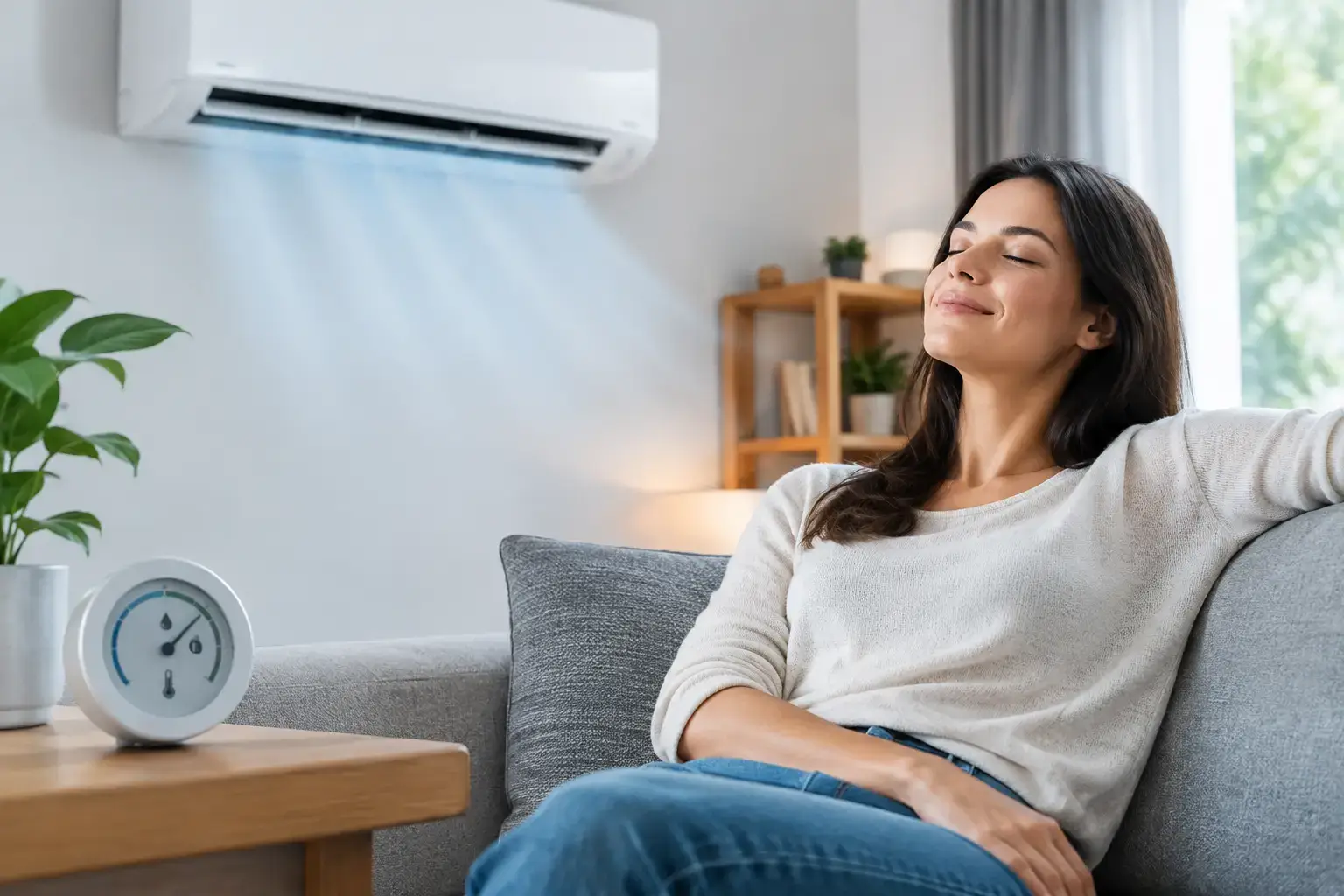
A sticky bedroom at 24°C can feel far less comfortable than a dry room at the same temperature. So, does cooling reduce indoor humidity? Often, yes - but only when your air conditioner is actually removing moisture from the air, not simply lowering the temperature. The difference matters when you are trying to manage condensation, mould risk, sleep comfort and running costs.
For Melbourne, Geelong and other Victorian homes, humidity can become noticeable during wet weather, on humid summer days and in tightly sealed homes with limited ventilation. Understanding what your system is doing helps you choose the right setting and know when a service may be needed.
Does cooling reduce indoor humidity?
A refrigerated air conditioner can reduce indoor humidity as it cools. Warm indoor air passes over the system's cold indoor coil. When that coil is colder than the air's dew point, water vapour condenses into liquid water on the coil, much like moisture forming on a cold drink. The condensate then drains away through the system's drain line.
This is why a properly operating split system or ducted air conditioner usually makes a room feel drier as well as cooler. It removes both sensible heat, which lowers the air temperature, and latent heat, which is associated with moisture in the air.
However, cooling does not automatically mean dehumidifying. If air is cooled without moisture being removed, its relative humidity can actually rise. Cooler air holds less moisture before it reaches saturation. That is why a cool, clammy room is possible, particularly if a system is not running long enough to draw moisture from the air.
Why air conditioning sometimes leaves a home feeling clammy
An air conditioner needs sufficient run time for meaningful moisture removal. In the first part of a cooling cycle, the system is mostly dealing with heat. Once the indoor coil is cold, condensation begins to form and drain away. Frequent short cycles can cool the room quickly but do little to reduce the moisture load.
This commonly happens when an air conditioner is oversized for the room, when the thermostat is set too low for a short burst of cooling, or when a system is poorly matched to the home's layout. A large unit may reach the selected temperature quickly, switch off, then repeat the process before effective dehumidification occurs.
Airflow also plays a part. A dirty filter, blocked return air grille or fault affecting the fan can reduce the amount of air moving across the coil. That can affect cooling performance and moisture removal. Equally, a blocked condensate drain can lead to water leaks, odours or system shutdowns rather than safe removal of collected moisture.
Relative humidity is the number that counts
Humidity is often described as a percentage, known as relative humidity. It compares the amount of moisture in the air with the maximum amount that air could hold at its current temperature.
For most homes, a relative humidity range of around 40% to 60% is generally comfortable. Below this range, some people notice dry skin, irritated eyes or static electricity. Above it, rooms may feel muggy, laundry dries slowly and condensation or mould becomes more likely in poorly ventilated areas.
A basic indoor hygrometer is a useful, low-cost way to check what is happening. Many thermostats show temperature only, so a home can appear cool while the humidity remains higher than expected. Measurements are most useful when taken away from kitchens, bathrooms, open windows and direct supply air from the conditioner.
Cooling methods do not all manage moisture the same way
The type of cooling in your home makes a genuine difference.
Refrigerated split and ducted systems
Reverse-cycle split systems and refrigerated ducted air conditioning can reduce humidity during cooling mode because they use a cold coil to condense moisture. Their real-world results depend on correct sizing, installation quality, settings, airflow and maintenance.
Ducted systems can be particularly effective for whole-home comfort when the design accounts for room sizes, sun exposure, insulation and zoning. A tailored system should not just chase a temperature at one thermostat location while leaving bedrooms or living areas uncomfortable.
Evaporative cooling
Evaporative cooling works differently. It cools air by passing it through wet pads, so it adds moisture to the incoming air. It can provide excellent relief in hot, dry conditions, but it is not designed to lower indoor humidity. During humid weather, its cooling effect can be limited and homes may feel more damp than comfortable.
Fans and portable coolers
Ceiling fans and pedestal fans help sweat evaporate from your skin, making you feel cooler. They do not remove moisture from the air. Some portable appliances are marketed as air coolers but work through evaporation, so they may increase humidity rather than reduce it.
A dedicated dehumidifier does remove moisture, although it also produces a small amount of heat. It can be a practical addition in a damp room, laundry, basement or poorly ventilated space where cooling is not required.
Settings that support drier, more comfortable air
If your refrigerated system is working well, a few simple choices can improve comfort without pushing energy use unnecessarily high.
Set a realistic cooling temperature, often around 23°C to 25°C depending on the household and outdoor conditions. Setting the thermostat dramatically lower does not cool the home faster. It simply makes the system run longer and can increase electricity use.
Use dry mode when your system has it and the room feels clammy rather than especially hot. Dry mode is designed to prioritise moisture removal, though its performance varies by model and conditions. It is often useful on mild, humid days when full cooling feels excessive.
Keep windows and external doors closed while cooling is running. Humid outdoor air entering continuously can quickly replace the moisture your system has removed. In bathrooms and kitchens, use exhaust fans during showers and cooking, then allow them to run long enough to clear lingering steam.
It also helps to avoid drying clothes indoors where possible. One load of laundry can release a surprising amount of moisture into the home. If indoor drying is unavoidable, use ventilation or a dehumidifier in that room rather than relying on your living-area air conditioner to manage the entire moisture load.
When humidity points to an air conditioning issue
If the air conditioner is running but rooms remain cool and clammy, the cause may be simple or it may require professional diagnosis. Start by checking the filters. They should be clean and fitted correctly. Also look for unusual water dripping indoors, musty smells, weak airflow, ice on the indoor unit or error messages.
Persistent humidity can also indicate an incorrect system size, a thermostat issue, poor duct design, leaking ducts, restricted airflow, refrigerant faults or a drainage problem. These issues are not always obvious from the room, and attempting repairs yourself can cause further damage.
Routine servicing helps keep the coil, filters, drain and airflow components operating as intended. It also gives a technician the opportunity to assess whether the system is delivering balanced comfort, rather than just cold air. For homes with ongoing dampness or uneven temperatures, Air Con Solutions can assess the system and recommend a practical repair, maintenance step or tailored upgrade.
Do not ignore condensation and mould
A little condensation on a cold morning does not necessarily mean your air conditioner has failed. But repeated condensation on windows, damp patches, peeling paint, a mouldy smell or visible mould should be addressed promptly. These signs can point to high indoor moisture, inadequate ventilation, building leaks, poor insulation or a combination of factors.
Air conditioning is one part of the solution, not a cure for water entering through a roof leak, plumbing fault or rising damp. Find and repair the source of moisture first. Then use effective ventilation, sensible heating and cooling, and targeted dehumidification to keep indoor conditions stable.
The goal is not the coldest possible home. It is a home that feels consistently comfortable, protects the building and uses energy wisely. When your system is correctly selected, well maintained and set for the conditions, cooling can do much more than lower the temperature - it can make humid days far easier to live with.