
A west-facing living room that holds the afternoon sun can become uncomfortable quickly, especially when opening a window only brings in warm air and traffic noise. The right apartment aircon options can make a major difference, but choosing one is rarely as simple as selecting the biggest unit available. Your layout, tenancy arrangements, building rules, outdoor space and electrical capacity all shape what will work well.
For most apartments, reverse-cycle air conditioning is the practical starting point. It provides cooling in summer and efficient heating through Melbourne, Geelong, Victoria and NSW winters, giving you one system for year-round comfort. The best choice is the one that fits the building as well as it fits your room.
Start with what your apartment allows
Before comparing brands or features, check whether you can install an outdoor unit and where it may be located. Apartment buildings often have owners corporation or strata by-laws covering changes to balconies, external walls, common property, drainage and noise. Some buildings have designated condenser locations, while others prohibit equipment from being visible from the street.
If you own the apartment, approval may still be required before installation begins. A professional installer can help identify practical unit locations and provide the information your building manager or committee may need, including equipment details, proposed placement and drainage arrangements.
Renters should obtain written approval from the landlord or property manager before making any fixed alteration. Portable systems may seem like the easy alternative, but they still need safe window venting and can be noisier or less efficient than a properly installed split system.
The main apartment aircon options
Wall-mounted split systems
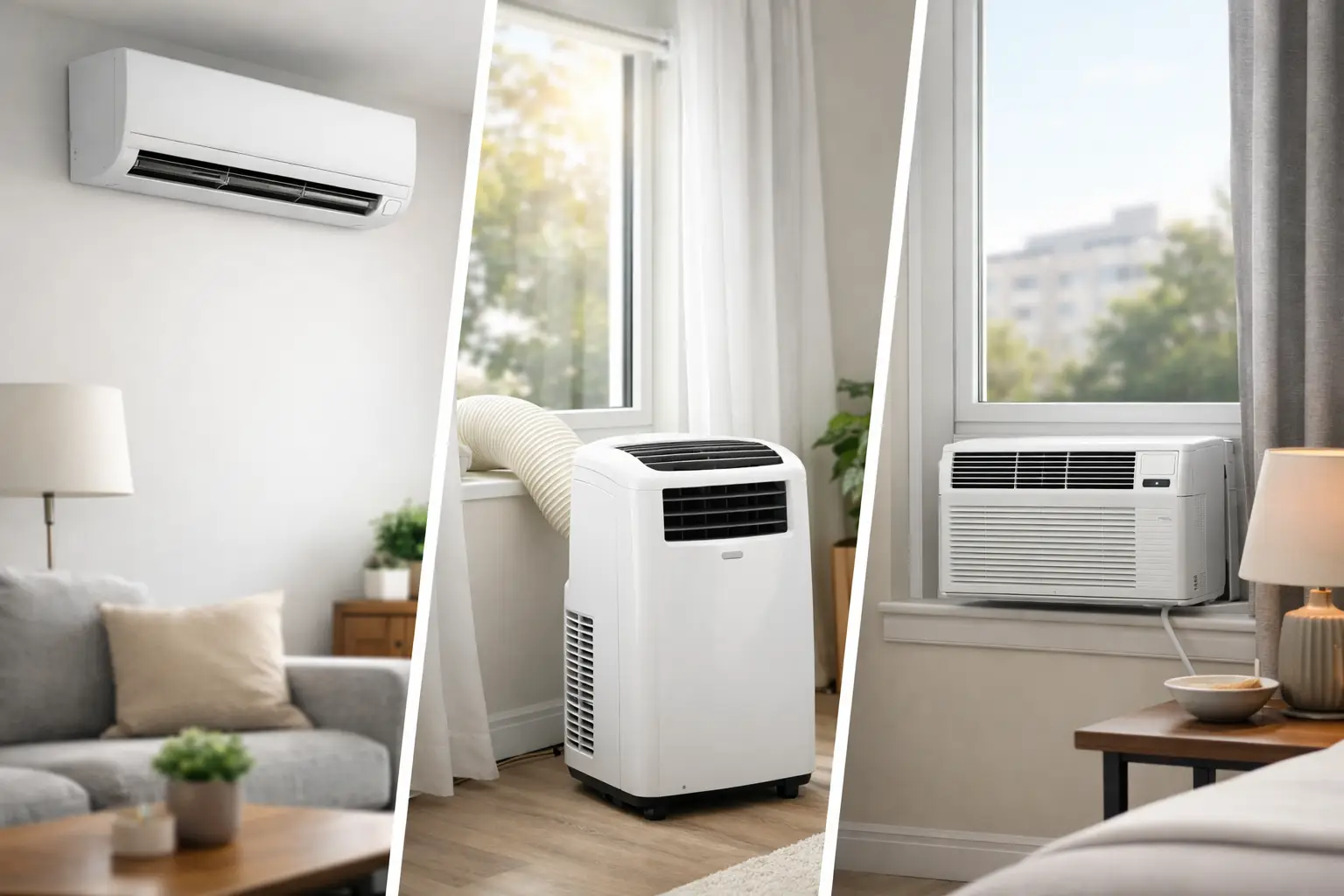
A wall-mounted split system is the most common choice for apartments. It has an indoor unit fixed high on a wall and an outdoor condenser installed on a balcony, service ledge, rooftop area or another approved location. These systems are generally quiet, efficient and well suited to cooling and heating a bedroom, living area or compact open-plan space.
For a one-bedroom apartment, a single split system in the main living area may be enough if doors can stay open and the layout allows air to travel. It will not cool every closed-off room evenly, though. A separate bedroom unit may be worth considering for people who work from home, have young children, sleep lightly or want comfort without running the whole apartment overnight.
The key trade-off is coverage. One larger unit does not always solve a multi-room layout. Oversizing can also cause short cycling, where the system reaches the set temperature too quickly and switches on and off frequently. This can reduce comfort and dehumidification while increasing wear.
Multi-head split systems
A multi-head system connects two or more indoor units to one outdoor unit. It can be a strong option when an apartment needs independent temperature control in several rooms but has limited space for condensers.
For example, indoor units in the living room and two bedrooms can run from a single outdoor unit, depending on the system design and building approvals. Each room can usually be controlled separately, which helps avoid cooling empty spaces.
Multi-head systems can be more complex to design and install than separate single splits. They also need carefully planned pipework, electrical work and condensate drainage. They are most worthwhile where comfort across multiple rooms is a priority and the building permits only one outdoor unit.
Ducted air conditioning
Ducted reverse-cycle air conditioning offers discreet, whole-apartment comfort. Supply vents can be integrated into ceilings, with the indoor fan coil concealed in a bulkhead, ceiling cavity or service area. Zoning allows you to condition selected areas rather than every room at once, which can improve day-to-day efficiency.
This option is often best suited to larger apartments, penthouses, major renovations or new builds with enough ceiling space. It delivers a clean finish and consistent comfort, but it requires more planning than a split system. Ceiling access, return-air placement, structural constraints and available space for the outdoor equipment all need to be assessed.
Ducted systems are not automatically the best choice for every apartment. In a compact property, the cost and space required may outweigh the benefit. In a larger home with multiple bedrooms and regular occupancy across different zones, however, it can be an excellent long-term solution.
Portable air conditioners
Portable air conditioners are movable units that exhaust warm air through a flexible hose fitted to a window kit. They require no permanent installation, making them an option for renters who cannot get approval for a split system.
Their limitations are worth understanding. They take up floor space, usually create more indoor noise and tend to use more power for the amount of cooling delivered. The window seal must be fitted properly, otherwise warm air can re-enter the room. They are best viewed as a short-term or low-commitment answer for a single small room rather than a whole-apartment solution.
Size the system for the room, not just the floor plan
Air conditioner capacity is commonly expressed in kilowatts, but room size is only one part of the calculation. Ceiling height, insulation, glazing, orientation, top-floor exposure, kitchen heat and the number of occupants can all change what capacity is appropriate.
A sun-exposed apartment with large west-facing glass may need more cooling capacity than a similarly sized, shaded apartment. Conversely, an oversized system can be unnecessarily expensive to buy and operate. A site assessment provides a more reliable recommendation than choosing by square metres alone.
Placement matters just as much. An indoor unit should distribute air across the occupied area without blowing directly onto a bed, dining table or regular workstation. It also needs clear airflow around it. Furniture, tall shelving and curtains can interfere with performance.
Do not overlook noise, drainage and outdoor-unit access
Apartment comfort includes the neighbours. Check the sound rating of both the indoor and outdoor units, particularly if the condenser will sit on a small balcony near bedrooms. Correct installation, anti-vibration mounts and thoughtful positioning all help reduce noise transmission.
Condensate drainage needs equal care. Cooling removes moisture from the air, and that water must drain to an approved point. It should never drip from a balcony, onto a footpath, over neighbouring property or onto common areas. Poor drainage arrangements can create building complaints and water damage risks.
Outdoor-unit access is also important for future servicing and repairs. A condenser tucked into an inaccessible corner may look neat on installation day but can add difficulty and cost later. Leave room for safe access, airflow and routine maintenance.
Choose features that reduce running costs
Reverse-cycle systems are generally an energy-efficient way to heat and cool an apartment, especially when compared with portable electric heaters. The actual result depends on the unit, how it is used and how well the apartment retains conditioned air.
Look for a model with a strong energy rating, inverter technology and controls that suit your routine. Wi-Fi control can be useful when you want to cool the apartment before arriving home or check whether the system was left running. Smart zoning, timers and sensible temperature settings can further reduce unnecessary energy use.
For cooling, a moderate set point is usually more comfortable and economical than driving the temperature very low. Close blinds on hot days, seal obvious draughts and keep filters clean. These small steps reduce the load on the system and support more even temperatures.
Plan for professional installation and ongoing care
A quality system can only perform as intended when it is correctly designed and installed. Refrigerant pipework, electrical connections, drainage, wall penetrations and commissioning all require professional attention. In apartment buildings, the installation also needs to respect fire-rated walls, common-property requirements and building appearance.
Air Con Solutions can assess your apartment’s layout, discuss approval and placement considerations, and recommend a tailored split, multi-head or ducted solution. The goal is not simply to fit a unit, but to create reliable comfort with practical access for future servicing.
Once installed, clean the filters regularly and arrange professional servicing to check airflow, drainage, electrical components and overall performance. If you notice reduced cooling, unusual noises, water leaks or rising power bills, booking a repair early can prevent a smaller issue from becoming a breakdown during extreme weather.
The most effective apartment system is one you barely have to think about: quiet when you are resting, efficient when bills arrive, and properly matched to the way you use each room.