
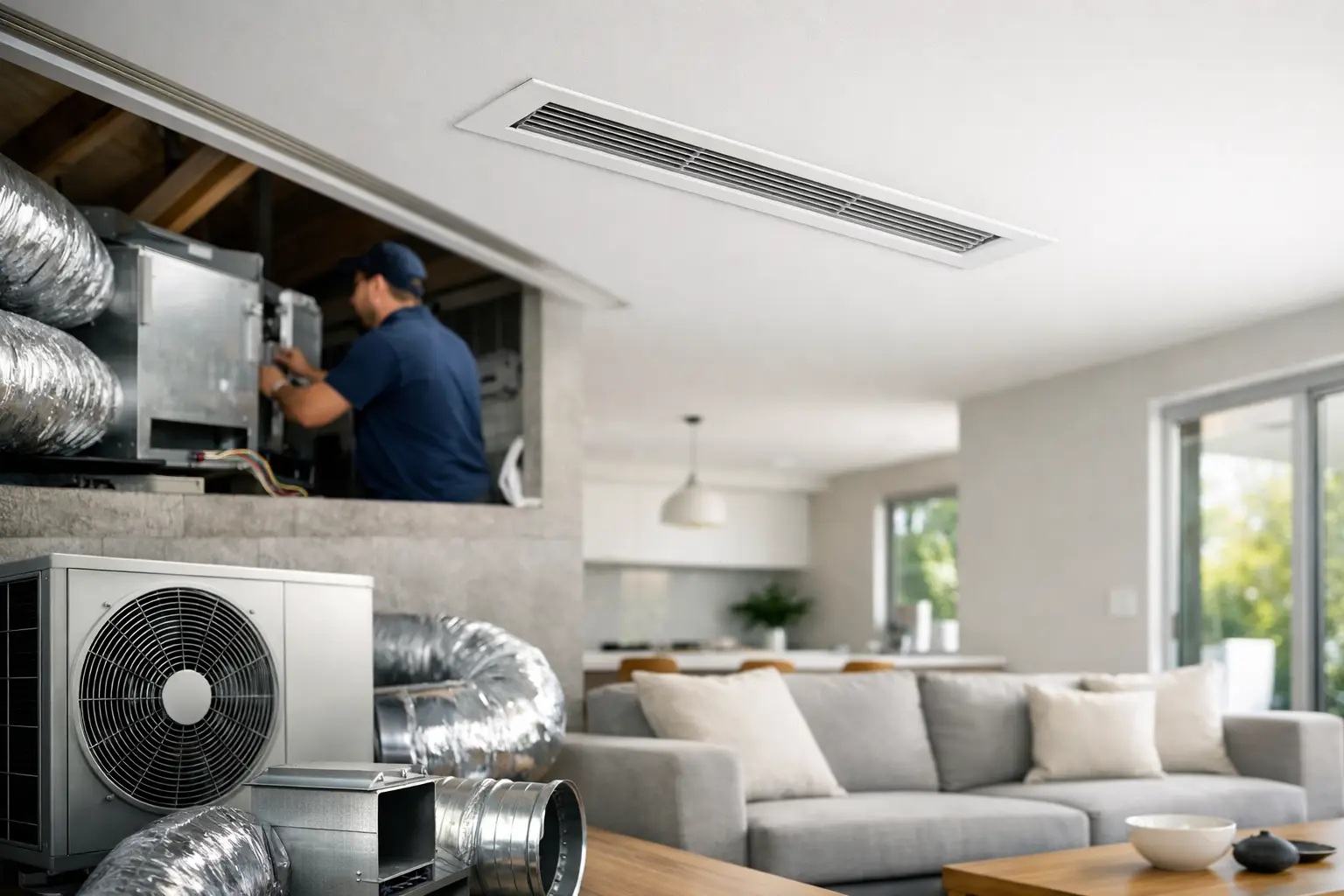
A ducted air conditioning review needs to answer one practical question: will the system make your home more comfortable without making energy bills or future maintenance harder to manage? For many Melbourne and Geelong households, the answer is yes - provided the system is properly designed for the home, not simply selected by floor area.
Ducted reverse-cycle air conditioning delivers heating and cooling through discreet ceiling or floor outlets, controlled from a central thermostat and often divided into zones. It is a popular choice for new homes, major renovations and established properties where families want whole-home comfort without wall-mounted units in every room.
The appeal is clear, but it is not the right answer for every property. This review looks at where ducted air conditioning performs best, what to watch for and how to make a confident decision.
Ducted air conditioning review: the everyday experience
The biggest advantage of ducted air conditioning is consistency. Instead of cooling one living room while bedrooms remain warm and stuffy, a well-designed system can manage temperatures across the areas you use most. In winter, it can provide dependable heating without needing separate gas heating and cooling equipment.
For busy households, that central control matters. You can set a comfortable temperature before the family gets up, cool living spaces before the afternoon heat builds, and use zoning to avoid conditioning empty rooms. Smart controls can add another layer of convenience, allowing you to adjust settings from your mobile or schedule the system around daily routines.
A ducted system is also visually tidy. Most of the equipment is concealed in the roof space or under the floor, with only the grilles and controller visible inside. That can be especially valuable in open-plan homes, renovations and light commercial spaces where wall space, layout and appearance all matter.
There is a comfort difference between a correctly designed ducted system and one that has been treated as a standard package. Room size, insulation, window orientation, ceiling height and the way your household uses each area all affect performance. A system that is too small may struggle during a Victorian heatwave or cold snap. One that is too large can cycle on and off too quickly, reducing efficiency and leaving rooms feeling less stable.
The benefits that make ducted systems worthwhile
A ducted reverse-cycle system can replace several standalone heating and cooling solutions with one integrated setup. For homes already considering an upgrade, this can simplify operation and create a more consistent result from room to room.
Zoning is usually the feature that has the greatest effect on running costs and comfort. Rather than conditioning the entire home every time, zones allow you to focus on bedrooms overnight, the living area after school, or the office during the workday. The exact savings depend on the size of the system, the property and how it is used, but zoning gives you more control over unnecessary energy use.
Quiet operation is another strong point. The louder components are generally located away from the rooms you occupy, while carefully selected outlets and airflow settings can reduce noticeable draughts and noise. This is particularly useful in bedrooms, nurseries, meeting rooms and living areas where a quieter environment makes a real difference.
Ducted systems can also add long-term appeal to a property. Buyers and tenants often value fixed heating and cooling, particularly when it is modern, energy-efficient and easy to control. It should not be the only reason to install one, but it can be a worthwhile improvement when paired with everyday comfort.
Where the trade-offs sit
The initial investment is usually higher than installing one or two split systems. A ducted installation involves the indoor unit, outdoor unit, ductwork, outlets, electrical work, controls and the labour needed to fit everything safely and neatly. Access to the roof space or subfloor can also affect the scope of work.
Installation is more involved, especially in an existing home. Technicians may need to work in ceiling cavities, position return-air grilles and run ductwork around structural elements. A professional assessment should explain where components will go, what access is required and whether any building works are likely before the job begins.
Not every property has an easy path for ducting. Homes with limited roof clearance, complex rooflines, concrete construction or tightly constrained layouts may require a tailored design. In some cases, a multi-split system or a mix of ducted and wall-mounted units may be the more sensible solution. The best option is the one that suits the building and the people using it, rather than the one with the most features.
Running costs also depend on more than the air conditioner itself. Poor insulation, unshaded west-facing windows, gaps around doors and frequent use of every zone can all place extra demand on the system. Air conditioning works best as part of a home comfort plan that includes sensible temperature settings and good building efficiency.
What to look for before choosing a system
A quality ducted quote should be based on an on-site assessment or detailed design process, not a quick estimate based only on the number of bedrooms. Ask how the capacity has been calculated and whether the design accounts for ceiling height, glazing, insulation, orientation and local climate conditions.
It is also worth asking how many zones are included and whether they suit your household routine. Two broad zones may be enough for a compact home, while a larger family home may benefit from separate living, bedroom and study areas. More zones are not automatically better if they make the system harder to use or add cost without matching how you live.
Pay attention to the controller as well. A straightforward wall controller may be all some households need. Others may prefer app control, timers, temperature sensors or smart integration that helps manage energy use across the day. The right choice should feel simple enough that everyone in the home will actually use it.
Finally, consider the installation team and aftercare. Ducted air conditioning is a long-term system, so workmanship matters. Proper duct sizing, secure connections, effective return-air placement and careful commissioning all influence comfort, noise and efficiency. Ongoing servicing is equally important for protecting performance and identifying small issues before they become inconvenient breakdowns.
Is ducted air conditioning right for your home?
Ducted air conditioning is often an excellent fit for families who want reliable heating and cooling across most of the home, particularly in new builds, larger properties and renovations. It is also a strong option where appearance matters and the home has suitable roof or subfloor access.
It may be less suitable when only one or two rooms need regular conditioning, the budget is tightly focused on upfront cost, or structural access makes ducting impractical. A split system can be a very effective choice in these situations. There is no benefit in paying for whole-home capacity if your needs are limited to a living room and main bedroom.
For small business operators, ducted air conditioning can create a comfortable customer and staff environment without filling the walls with indoor units. However, the design needs to account for occupancy, equipment heat, opening hours and the layout of the premises. A solution designed for a home will not always perform well in a shop, office or studio.
Getting the installation right
The best ducted system is not necessarily the highest-capacity model or the lowest-priced quote. It is the one that has been selected and installed around your property, your comfort priorities and your likely energy use.
Before booking, think about the rooms that are uncomfortable now, the times of day you need heating or cooling most, and whether your household could benefit from zoning or smart controls. Sharing that information during an assessment helps the technician recommend a tailored solution rather than a one-size-fits-all system.
With more than 15 years of local experience, Air Con Solutions can help Melbourne and Geelong property owners assess ducted options, plan a professional installation and keep their system performing through regular service. The most useful next step is a clear conversation about how your home feels now and how you want it to feel through every season.