
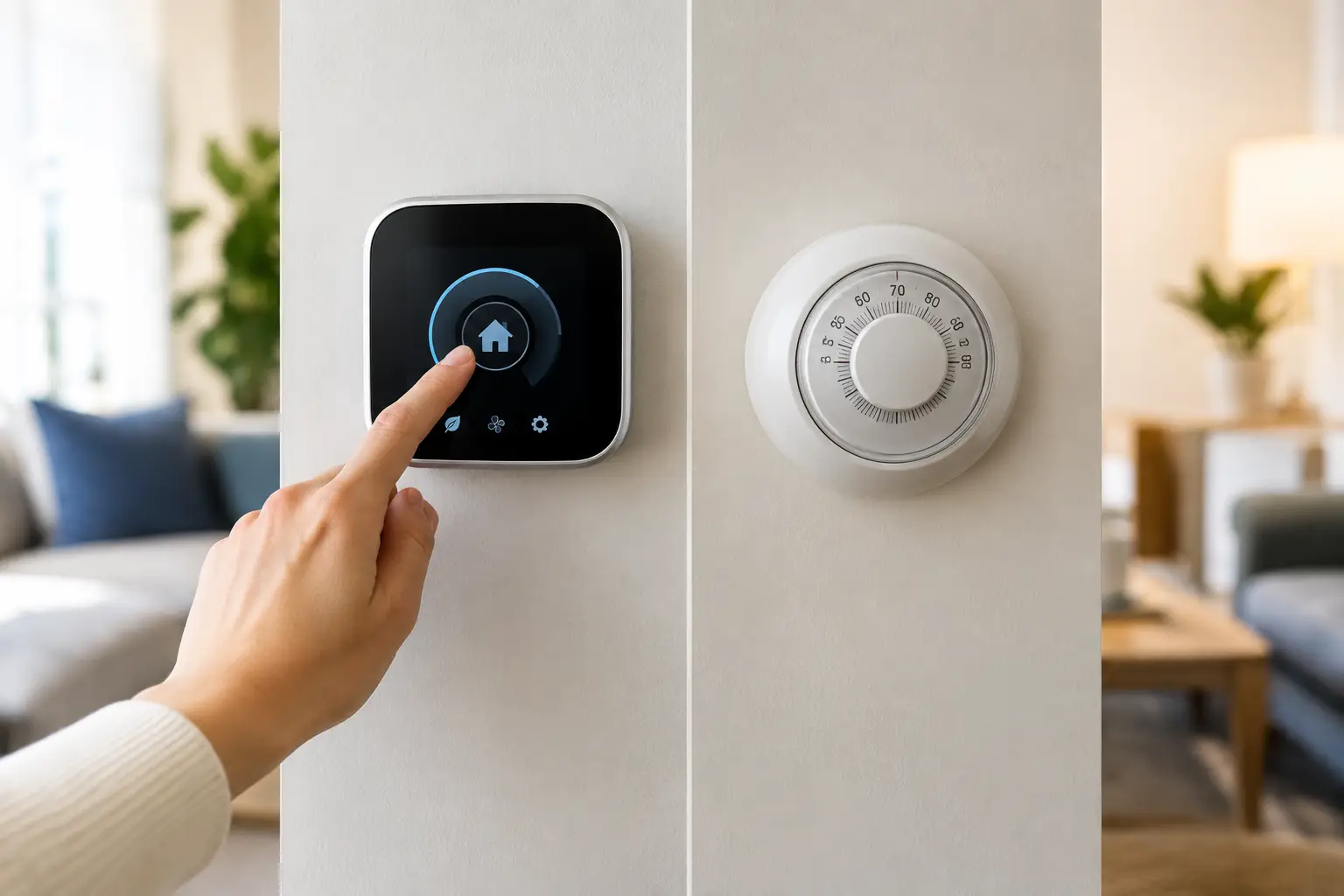
A thermostat can make a capable heating and cooling system feel either effortless or frustrating. When comparing AirSmart versus standard thermostat control, the real question is not which screen looks more modern. It is whether your home gets the right temperature in the rooms you use, when you use them, without wasting energy conditioning empty areas.
For many Victorian homes, a standard thermostat remains a sensible, dependable option. But for larger homes, families with different comfort preferences, or properties with ducted air conditioning, AirSmart control can provide a more tailored way to manage indoor comfort. The right choice depends on your system, layout, budget and how you live in the space.
What a standard thermostat does well
A standard thermostat controls your heating or cooling system from one central point. You select a temperature, choose heating or cooling mode, and the system works to bring the home to that setting. Some models add timers, programmable schedules or basic fan-speed control.
This approach is simple, familiar and often cost-effective. In a compact home or apartment with an open-plan layout, one well-positioned thermostat may be all that is needed. It is also a practical solution when every room is used at roughly the same time and occupants are comfortable with one shared temperature setting.
The limitation is that one thermostat only measures conditions where it is installed. A hallway, living area or central wall may not reflect how warm a west-facing bedroom becomes in the afternoon, or how cool a back office feels on a winter morning. The system responds to that single reading, even when comfort varies elsewhere.
AirSmart versus standard thermostat: the key difference
AirSmart is designed to give a ducted system more intelligent, room-focused control. Rather than treating the whole property as one climate zone, an AirSmart-integrated setup can be configured to manage separate areas of the home. Depending on the selected system and installation, this may include individual room temperature sensing, zoning, scheduling and app-based control.
That changes the everyday experience. Instead of cooling every bedroom, living room and spare room at once, you may be able to condition the occupied areas and reduce output to rooms not in use. If one person prefers a cooler bedroom while another needs a warmer study, zoned control can help accommodate both preferences within the practical limits of the system.
A standard thermostat is focused on whole-home operation from a single temperature reference. AirSmart is focused on making a ducted system respond more closely to how each part of the home is actually used.
Comfort is about more than the set temperature
A home can be set to 22 degrees and still feel uneven. Sun exposure, insulation, ceiling height, windows, occupancy and room orientation all influence comfort. This is why a single central control point can struggle in multi-room homes, especially across Melbourne and Geelong where a day can move quickly from a chilly morning to a warm afternoon.
With a standard thermostat, people often compensate by lowering or raising the set temperature for the entire house. That may improve one room while making another less comfortable. It can also lead to ongoing adjustments throughout the day.
AirSmart zoning is particularly useful where household routines vary. Parents may want bedrooms comfortable overnight, while the living areas do not need conditioning. A home office may need heating on weekdays without warming the rest of the house. In a light commercial setting, occupied work areas may have different requirements from meeting rooms or storage spaces.
That said, zoning is not magic. If a room has poor insulation, large unshaded windows or airflow restrictions, a controller alone cannot solve the underlying issue. A professional assessment should consider duct design, outlet locations, system capacity and the building itself.
Can AirSmart reduce energy use?
Potentially, yes. The energy-saving opportunity comes from reducing unnecessary heating and cooling, not from the controller operating independently of the system. When a zoned ducted system conditions only the areas in use, it may run more efficiently than conditioning the entire home for one occupied room.
Schedules can also help. Setting the system to prepare living spaces before the family gets home, then reducing operation overnight, can be more efficient than leaving the system running longer than necessary. App control may be useful if plans change and you want to adjust settings without returning to the wall controller.
However, savings will vary. The result depends on the size and efficiency of the air conditioning unit, the number of zones operating, insulation quality, outdoor temperatures and household habits. If every zone is regularly switched on, energy use may be similar to whole-home operation. The greatest benefit usually comes when the control setup matches genuine occupancy patterns.
Installation and upfront cost
A standard thermostat is generally the lower-cost option, particularly when replacing an existing controller or installing a straightforward split system. It has fewer components and is easy for most people to operate from day one.
An AirSmart solution typically involves a greater upfront investment because it may require compatible ducted equipment, zone dampers, room sensors, control hardware and detailed commissioning. The installation needs to be planned around the home's layout and the performance of the ducted system. Retrofitting is possible in some properties, but suitability must be checked rather than assumed.
For a small home with one main living area, that additional cost may not offer enough practical value. For a larger home with several bedrooms, distinct living zones and changing daily routines, the benefit can be far more compelling. It is a decision best made around how the home operates, rather than simply choosing the most feature-rich controller.
Ease of use for the household
A standard thermostat wins on straightforward operation. There are fewer settings, fewer decisions and less chance of someone accidentally changing a zone or schedule. This can suit households that prefer simple controls and are happy with one consistent setting.
AirSmart offers more flexibility, which naturally means more options. Once configured well, the controls should make daily comfort easier, not more complicated. The difference is in the setup. Clear zone names, sensible schedules and a proper handover are essential, especially for families, tenants or businesses where several people may use the system.
A good installer will explain how to adjust temperatures, select zones, use schedules and recognise when a service issue may be affecting performance. The technology should fit the household, not ask the household to work around it.
When a standard thermostat is the better fit
Choose a standard thermostat when your property is compact, mostly open plan, and used as one shared space. It is also a sound choice if your current system performs evenly and you mainly want reliable, uncomplicated temperature control.
It can be the right answer for a rental property, a small shop or a room-by-room system where each split air conditioner already has its own controller. Spending more on advanced zoning does not always deliver better value.
When AirSmart is worth considering
AirSmart is worth considering for homes with ducted heating and cooling, multiple bedrooms, separate living spaces or occupants who use different areas at different times. It is especially relevant during a new ducted installation or renovation, when zoning and control requirements can be considered as part of the overall design.
It can also suit households dealing with familiar comfort complaints: bedrooms that are too warm at night, unused rooms consuming energy, disagreements over the thermostat, or a living area that reaches temperature while other spaces lag behind. These concerns may point to a control issue, but they can also reveal sizing, ductwork or insulation problems. An experienced technician should diagnose the full picture before recommending an upgrade.
Start with the way you use your home
The best controller is the one that supports consistent comfort without unnecessary running costs or daily frustration. Before choosing between AirSmart and a standard thermostat, consider which rooms are occupied most, when they are used, and whether your existing system is capable of serving those spaces properly.
Air Con Solutions can assess ducted system performance and help match controls, zoning and installation design to your property. A tailored recommendation gives you a clearer path to comfortable rooms, practical energy use and a system that feels easier to live with every season.