
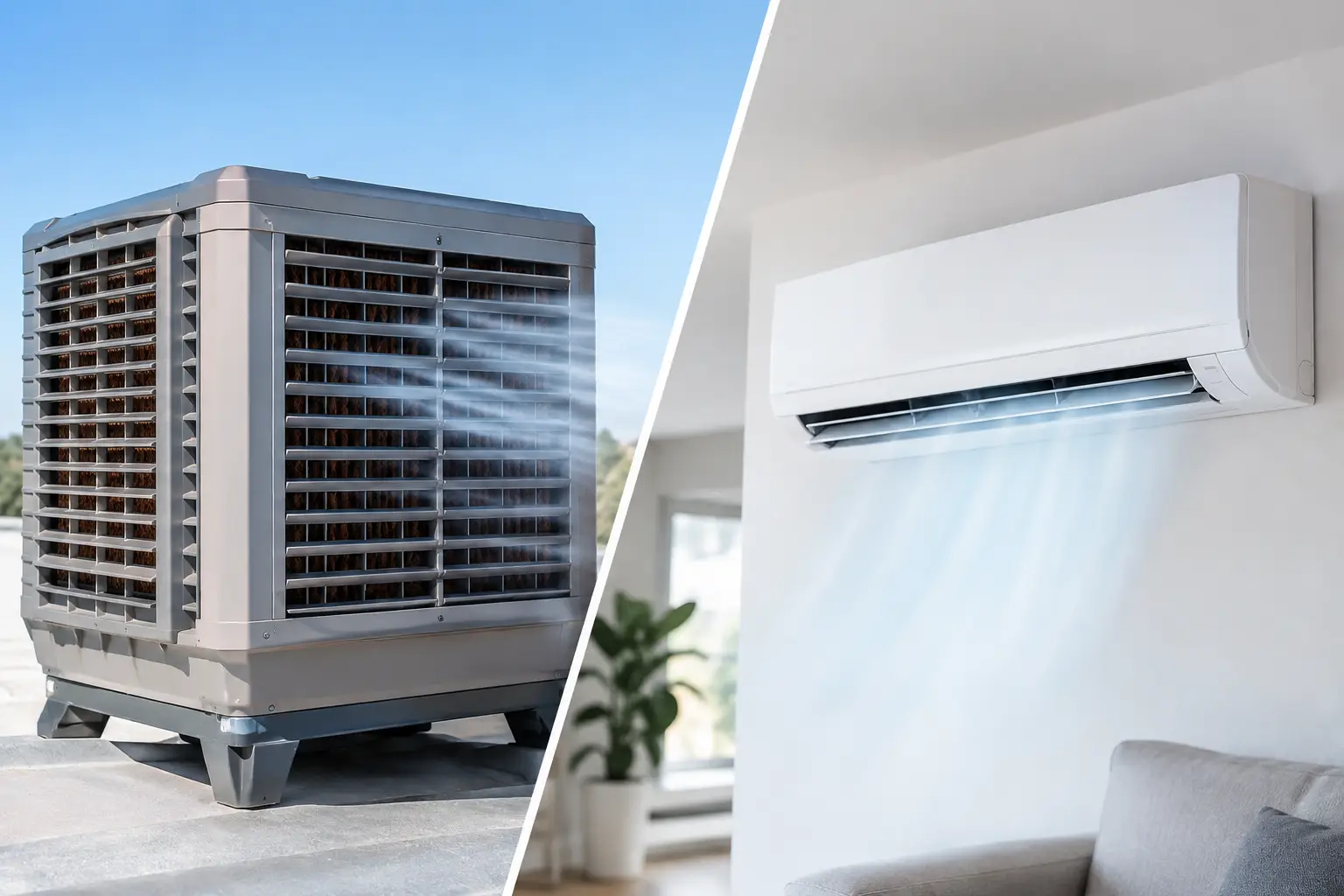
A hot Melbourne afternoon can expose every weakness in a home’s cooling system. One room feels stuffy, another is too cold, and the running cost starts to weigh on your mind. When considering evaporative cooling versus refrigerated air, the right choice comes down to more than the upfront price. Your home’s layout, insulation, household habits and the local climate all shape how comfortable and efficient each system will be.
Both options can provide dependable relief through a Victorian summer. They work in very different ways, however, and each suits particular homes, budgets and comfort expectations.
How evaporative cooling works
Evaporative cooling draws warm outdoor air through water-soaked cooling pads. As the water evaporates, it lowers the air temperature before the system circulates that fresh, cooled air through ceiling vents.
It is often recognised by the large unit positioned on the roof. Unlike a refrigerated system, an evaporative cooler works best with doors or windows slightly open. This allows the continuous supply of fresh air to move through the house rather than becoming trapped indoors.
For many households, the appeal is clear: evaporative cooling can cool a whole home using relatively low electricity consumption. It also avoids the dry, closed-up feeling some people associate with air conditioning.
Where evaporative cooling performs well
Evaporative systems are particularly effective in dry heat. On a hot, low-humidity day, they can make a significant difference throughout a well-designed home. They are a practical option for families who like fresh airflow and want to cool several rooms at once.
Running costs can be lower than refrigerated air conditioning, especially when cooling large areas for long periods. The system uses electricity to operate its fan, pump and controls, while water provides the cooling effect.
There are trade-offs. Performance reduces as humidity rises because the air cannot absorb as much additional moisture. In Melbourne and Geelong, summer conditions can change quickly. An evaporative cooler may feel excellent during dry heat but less powerful on a humid evening or during a stretch of muggy weather.
How refrigerated air conditioning works
Refrigerated air conditioning removes heat from inside the home and transfers it outdoors using refrigerant. It circulates cooled, dehumidified air through ductwork or indoor wall-mounted units, depending on the system type.
Ducted refrigerated air conditioning is a popular choice for homes that want controlled comfort across multiple rooms. Zoned systems can allow you to cool only the areas being used, such as the living zone during the day and bedrooms overnight. Many systems can also provide heating, making them a year-round climate solution.
Unlike evaporative cooling, refrigerated air conditioning operates with windows and doors closed. It gives the system a controlled indoor environment, helping it hold a selected temperature more consistently.
Where refrigerated air is the stronger option
Refrigerated air performs reliably across a wider range of weather conditions, including humid days. It actively removes moisture from the air, which can make indoor spaces feel more comfortable even when the outside temperature is not extreme.
This control matters for households with young children, older family members, allergies or heat-sensitive pets. If you want to come home, set the temperature and expect the same result in each selected room, refrigerated air generally offers greater precision.
It can also suit modern homes with strong insulation, double glazing and tightly sealed building envelopes. These features help retain conditioned air and reduce the workload on the system.
Evaporative cooling versus refrigerated air: the key differences
The biggest difference is not simply how cold each system can make a room. It is the type of comfort they create.
Evaporative cooling provides cool, fresh air with gentle circulation. It suits people who prefer an open home and do not mind adjusting windows to maintain airflow. Refrigerated air provides more controlled cooling, lower humidity and the ability to maintain a chosen temperature with the home closed up.
Water use is another consideration. An evaporative system uses water while it runs, and consumption can vary based on the model, settings and weather conditions. Refrigerated air does not use water for cooling, but it generally draws more electricity, particularly if the system is undersized, poorly maintained or used to cool the entire house unnecessarily.
Installation requirements differ too. An evaporative system needs roof space, ductwork and suitable vents, while ducted refrigerated systems require carefully planned ductwork, an outdoor condenser and indoor equipment. In homes with limited roof cavity space, difficult access or renovation constraints, the best option may depend on what can be installed properly without compromising performance.
Upfront and ongoing costs
Evaporative cooling is often less expensive to install than a fully ducted refrigerated system, although the real cost depends on the size of your home, the number of outlets, electrical work and access requirements. It can also be economical to operate in suitable dry conditions.
Refrigerated air usually involves a higher initial investment, particularly for a whole-home ducted design. In return, it offers stronger temperature control, zoning options and heating capability in many reverse-cycle systems.
The most cost-effective system is not always the one with the lowest purchase price. A system that is too small will run hard and struggle on hot days. One that is too large may cycle inefficiently and cost more than necessary. Correct sizing, thoughtful duct design and professional installation have a direct effect on comfort and energy use.
For larger homes, zoning deserves careful attention. Being able to condition only occupied areas can reduce wasted energy and give different household members more control over their space.
Maintenance that protects comfort and efficiency
Both systems need regular care. Skipping servicing can lead to higher running costs, reduced airflow, inconsistent temperatures and avoidable breakdowns when you need cooling most.
Evaporative cooling systems should be serviced before summer. This usually involves checking the pads, pump, water distribution, fan, drains and roof-mounted unit for wear or blockages. At the end of the season, proper shutdown and drainage can help protect the unit during colder months.
Refrigerated systems benefit from routine checks of filters, airflow, refrigerant performance, electrical components and condensate drainage. Dirty filters are a common cause of poor performance, so homeowners should clean or replace them in line with the manufacturer’s guidance.
If your system is noisy, leaking, producing weak airflow or failing to reach the set temperature, booking a professional assessment early can prevent a smaller issue becoming a costly repair.
Which system is right for your home?
Choose evaporative cooling if you value fresh air, typically cool your whole home, live in an area where dry heat is common and want lower electricity use during suitable conditions. It can be an excellent, practical system when it is maintained well and matched to the home.
Choose refrigerated air if consistent temperature control is your priority, you want cooling that performs well in humidity, or you prefer to keep windows closed for security, noise reduction or allergy management. It is also the more flexible option when you want integrated heating and smart zoning in one system.
For some properties, the decision is influenced by the existing setup. Replacing an ageing evaporative cooler with a new one may be straightforward. In other homes, a renovation, extension or ongoing comfort issue creates the right opportunity to move to refrigerated air conditioning designed around the way the household actually uses each room.
Get advice based on your property, not a generic recommendation
There is no one-size-fits-all winner between evaporative cooling and refrigerated air. A reliable recommendation should consider your floor plan, roof space, insulation, electrical capacity, windows, household routine and budget before installation begins.
Air Con Solutions can assess these practical details and recommend a tailored cooling solution that delivers dependable comfort without unnecessary complexity. A professional site assessment gives you a clear path forward, whether you are replacing an older unit, planning a renovation or looking for more efficient control over summer comfort.