A warm meeting room, a stuffy shop floor or a system that trips during a heatwave can quickly affect staff, customers and day-to-day operations. The best commercial aircon maintenance checks are not about finding faults for the sake of it. They are about protecting reliable comfort, avoiding avoidable downtime and giving your system the best chance of running efficiently when your business needs it most.
For light commercial spaces, regular professional servicing is usually far more cost-effective than waiting for a breakdown. The right checks also help identify small issues - such as a blocked filter, worn electrical component or drainage concern - before they become an urgent repair.
Why commercial aircon maintenance deserves a planned approach
Commercial air conditioning often works harder than a typical home system. Longer operating hours, changing occupancy levels, heat from equipment and frequent door openings all place extra demand on the unit. A café, office, clinic, retail store or small warehouse may have very different cooling requirements, but each depends on consistent temperature control.
Maintenance should be tailored to the system, the building and how the space is used. A lightly used office may need a different servicing schedule from a busy premises with doors opening all day. Systems in coastal or dusty locations can also require closer attention because salt, debris and airborne particles can affect outdoor equipment and airflow.
A professional maintenance plan gives you a clear record of the system’s condition, supports better energy management and reduces the chance of a surprise failure during peak summer or winter demand.
Best commercial aircon maintenance checks for reliable operation
A thorough service looks beyond whether the unit simply turns on. It assesses the parts that influence airflow, temperature performance, power use and system safety.
1. Clean and assess air filters
Filters are one of the first places to look when airflow feels weak or rooms take too long to cool or heat. Dirty filters make the system work harder to move air, which can increase energy use and strain key components.
During maintenance, filters should be cleaned or replaced as required and checked for correct fit. In a commercial setting, the right replacement timing depends on operating hours and the amount of dust or foot traffic in the premises. A clean filter supports better airflow and helps maintain a more comfortable indoor environment for staff and visitors.
2. Check indoor and outdoor coils
Evaporator and condenser coils transfer heat, so a build-up of dust, grime or debris can affect performance quickly. When coils cannot exchange heat efficiently, the system may run for longer without reaching the desired temperature.
A technician will inspect the indoor coil and outdoor condenser for contamination, damage and signs of restricted airflow. The outdoor unit also needs clear space around it. Leaves, dirt and stored items can prevent heat from escaping properly, particularly where equipment is located near car parks, gardens or service areas.
3. Test drainage and inspect for water leaks
Air conditioners remove moisture from the air during cooling. That condensation needs to drain away correctly. A partially blocked drain can cause water leaks, unpleasant smells, internal damage or disruptions to business operations.
Maintenance checks should include the condensate drain, drain pan and associated pipework. If there is recurring water around an indoor unit, it is worth booking a service promptly rather than assuming it will resolve itself. A small drainage issue can become a larger repair if it affects electrical components or ceiling finishes.
4. Inspect electrical connections and controls
Commercial aircon systems rely on electrical connections, capacitors, contactors, circuit protection and controls that need to operate safely. Loose connections and worn components can contribute to unreliable starts, tripped breakers or intermittent performance.
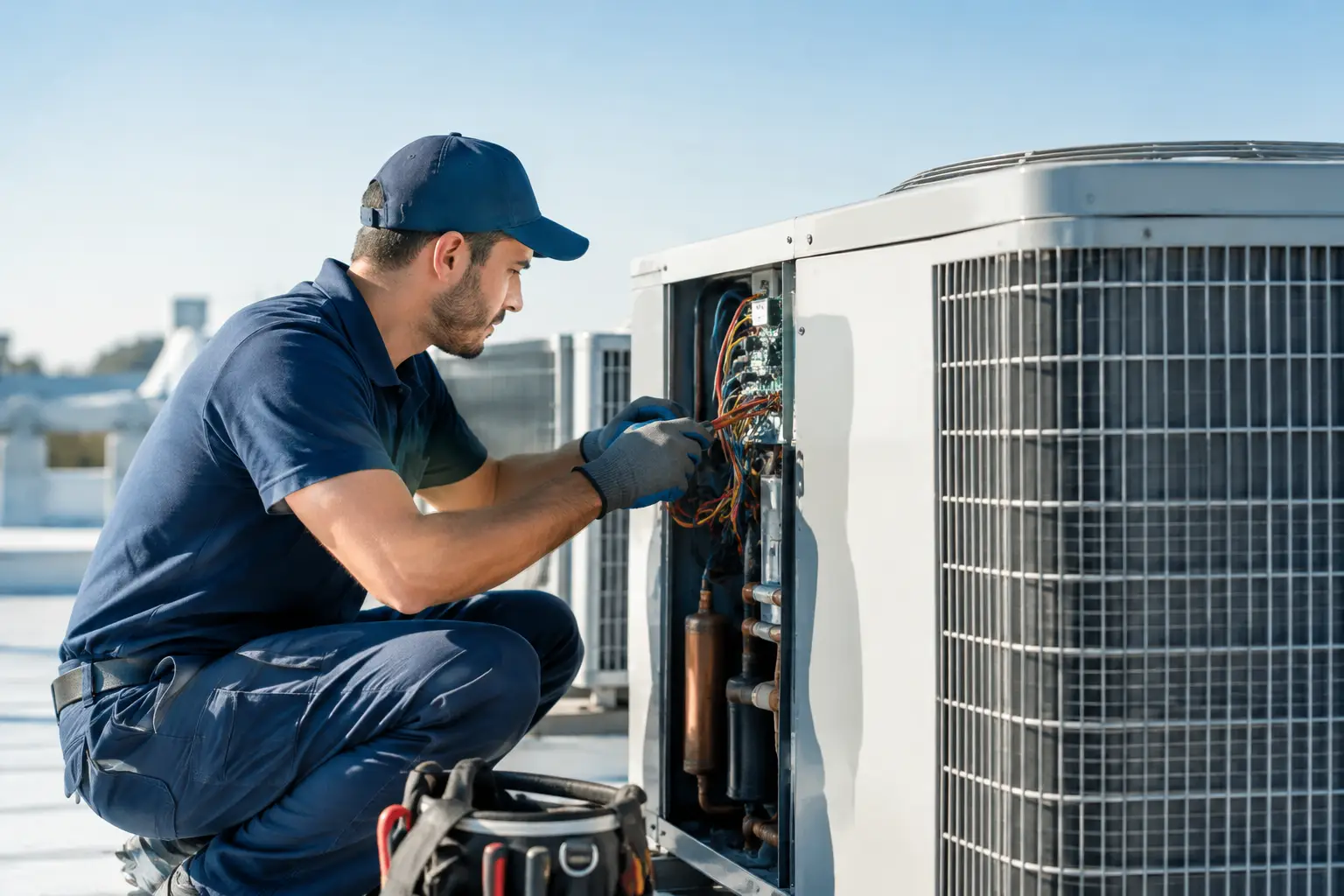
A qualified technician can inspect electrical components, test operation and look for signs of overheating or wear. They can also check thermostats, wall controllers and programmed settings. For businesses using smart temperature management, this is a useful opportunity to confirm schedules and zoning settings still suit current trading hours and room use.
5. Review refrigerant performance
Refrigerant is central to cooling performance, but it is not something that should simply be topped up as part of a routine service. If refrigerant is low, there may be a leak that needs to be identified and repaired.
A technician can assess operating pressures and temperatures to determine whether the system is performing as expected. Poor cooling, ice forming on pipework, unusual hissing sounds or a system that runs continuously can all point to a problem requiring professional diagnosis.
6. Confirm airflow, fan operation and duct condition
Uneven temperatures are often caused by airflow problems rather than the thermostat itself. Fans, fan motors, grilles, return-air paths and ductwork all influence how effectively conditioned air reaches each part of the premises.
For ducted commercial systems, maintenance should include a practical assessment of airflow at outlets and any visible duct connections. Damaged or poorly sealed ductwork can waste conditioned air in ceiling spaces, while a blocked return-air grille can make rooms feel stuffy. The best solution depends on the system design, but identifying the cause is the first step towards better comfort and lower running costs.
7. Test heating and cooling modes
In Victoria and NSW, commercial systems often need to handle both hot summers and cool winter mornings. Testing only the cooling mode can leave a hidden heating issue unnoticed until the first cold spell.
A complete service should confirm that both heating and cooling modes respond properly, temperatures change as expected and the unit cycles on and off correctly. This is particularly valuable before the season changes, when repair demand can rise quickly.
8. Listen for unusual noise and vibration
Rattling, buzzing, grinding or excessive vibration should never be ignored. These noises may be linked to loose panels, fan issues, worn bearings, mounting problems or electrical faults.
A technician can determine whether the sound is minor or a sign that a component is nearing failure. Early action may prevent damage spreading to other parts of the system and can help avoid a disruptive breakdown during business hours.
How often should a commercial system be serviced?
For many light commercial properties, a professional service every six months is a sensible starting point. This allows the system to be checked before the heaviest cooling and heating periods. However, there is no single schedule that suits every business.
Premises with extended operating hours, high occupancy, kitchens, dusty work areas or critical comfort needs may benefit from more frequent checks. A small office with moderate use may require less attention, provided filters are monitored and any changes in performance are addressed quickly. The right approach is a maintenance schedule based on workload, system age and the environment around the equipment.
Between scheduled services, staff can make a meaningful difference by keeping vents clear, avoiding thermostat changes throughout the day and reporting leaks, odours or unusual sounds early. Outdoor units should also be kept free of rubbish, vegetation and stored stock.
Signs your business should book maintenance sooner
Do not wait for a complete failure if the system is showing a change in behaviour. Rising electricity costs without an obvious reason, hot and cold spots, reduced airflow, musty smells and frequent cycling are all worth investigating.
A system that needs constant temperature adjustments may be struggling with airflow, controls or capacity. Likewise, if some rooms are comfortable while others are not, the issue could involve zoning, ducts, sensors or the system’s overall design. Professional assessment provides clearer answers than repeatedly lowering the thermostat and hoping for a different result.
Turn maintenance into a comfort plan
The most useful maintenance visit leaves you with more than a cleaned filter. It should give you confidence in how your system is operating, flag developing concerns and provide practical advice on improving efficiency in your particular premises.
Air Con Solutions can help businesses plan servicing around their system, operating hours and comfort priorities. Booking maintenance before peak demand is a simple way to protect the indoor environment your staff and customers rely on every day.